 PLATE + FIT
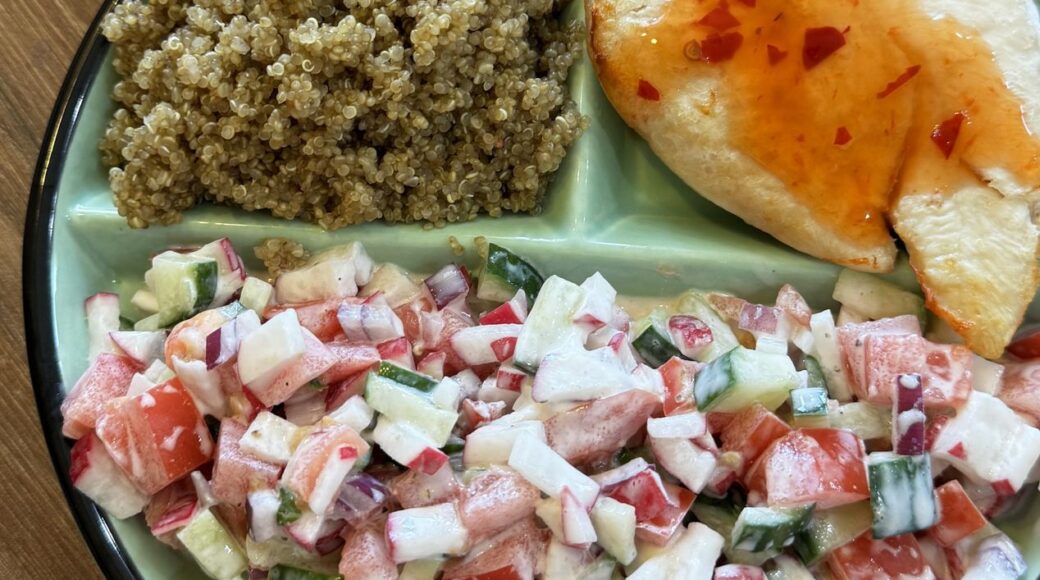
You order the same dish you’d make at home, and somehow the restaurant version could feed two people. That gap has a name: portion distortion at restaurants, and it isn’t about your willpower or your appetite. Decades of steadily growing plates, bigger default servings, and an eating-out culture built around “more for your money” have quietly reset what a normal-looking meal looks like. A cheeseburger that used to sit around 333 calories now regularly comes in near 590. A soda that once filled a 6.5-ounce glass now arrives in a 20-ounce cup as the default pour. None of this is an accident, and none of it means you’ve lost the ability to judge food. Here’s how restaurant portions actually grew, why your eyes get fooled by a plate before your fork even moves, and one simple way to recalibrate your sense of “normal” using a fixed visual reference at home.
What Portion Distortion Actually Means
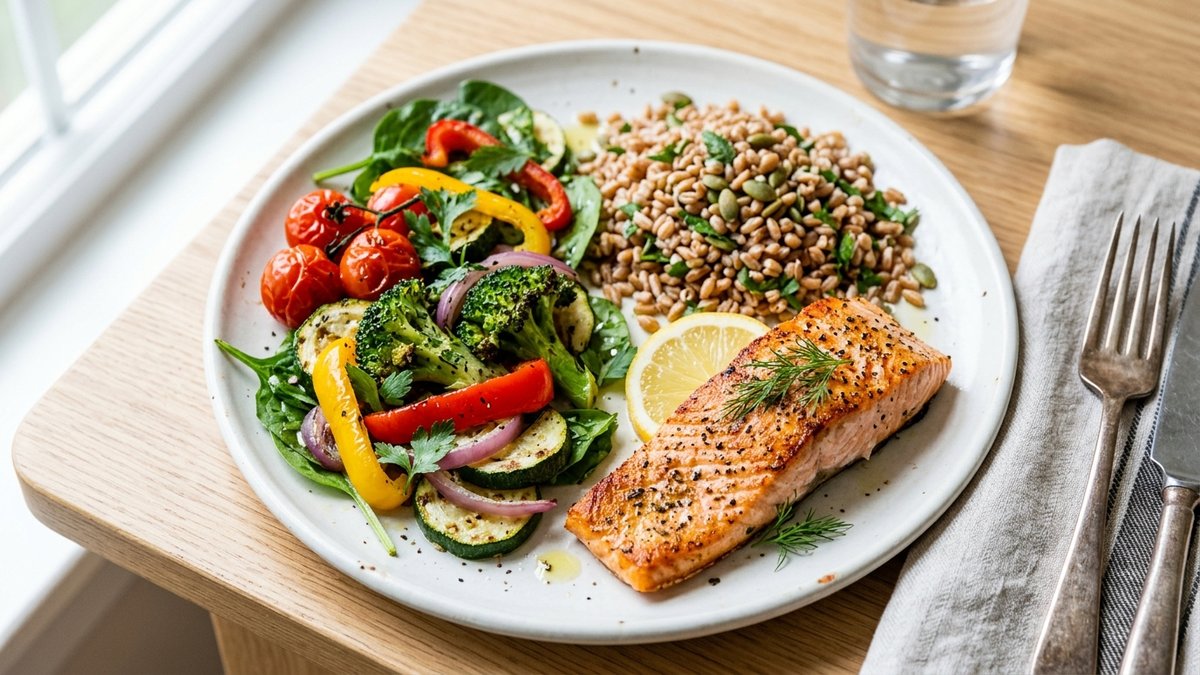
Portion distortion at restaurants describes a specific, measurable shift: the amount of food served as “one portion” has grown so gradually that it now reads as normal, even though it’s often two or three times what a body actually needs in one sitting. The comparison data behind this is well documented. A bagel that measured 3 inches across and held 140 calories a few decades ago is now routinely 6 inches and 350 calories. A serving of spaghetti and meatballs that used to land around 500 calories now shows up as roughly 1,025 calories — about 2 cups of pasta with sauce and three large meatballs on one plate.
The pattern holds across fast food and sit-down dining alike. Because the growth happened over 20-plus years rather than overnight, your visual baseline moved with it. Nobody consciously decided a burger should be 77% bigger; the size crept up a little at a time until the old “regular” started to look skimpy. That’s the core mechanism behind why some meals pack far more calories into the same visual space than you’d expect just by looking at the plate.
Why Your Eyes Get Fooled Before You Even Eat
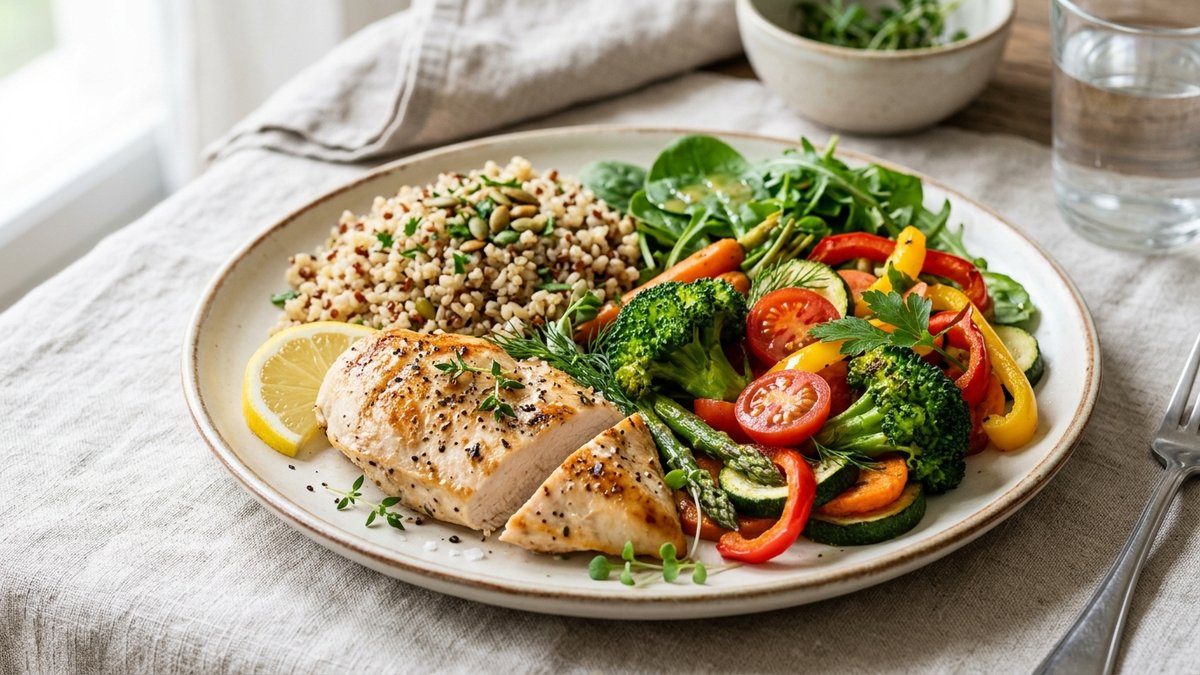
Long before the food itself is a factor, the dinnerware is already working against your judgment. This is the Delboeuf illusion at play: identical amounts of food look larger on a small plate and smaller on a large one, because your brain estimates portion size by comparing the food to the edge of what it’s sitting in, not by an absolute measurement.
A 2012 study published in the Journal of Consumer Research tested this directly with bowls of soup. Compared to a control bowl, people poured 9.9% more soup into a larger bowl, and 8.2% less into a smaller one — without noticing they’d changed anything. A related study on plate rim width found that a wider, more prominent rim made the same portion look bigger than it actually was, which is one reason plate design itself can shift perceived serving size.
Restaurants rarely engineer this on purpose, but a few common patterns compound it:
- Large, wide-rimmed plates that make an entree look smaller than it is next to bread, sauce, and garnish
- Family-style serving dishes that hide the per-person amount you actually take
- A bread basket or chips-and-salsa starter that lands before you’ve judged the main course at all
- Combo plates that stack two or three separate portions (protein, starch, side) onto one visual field, so each piece looks smaller in isolation
None of this requires you to distrust every meal out. It just explains why “this looks like a normal amount” is a much less reliable signal at a restaurant table than it is in your own kitchen.
How Much Bigger Are Restaurant Portions, By the Numbers
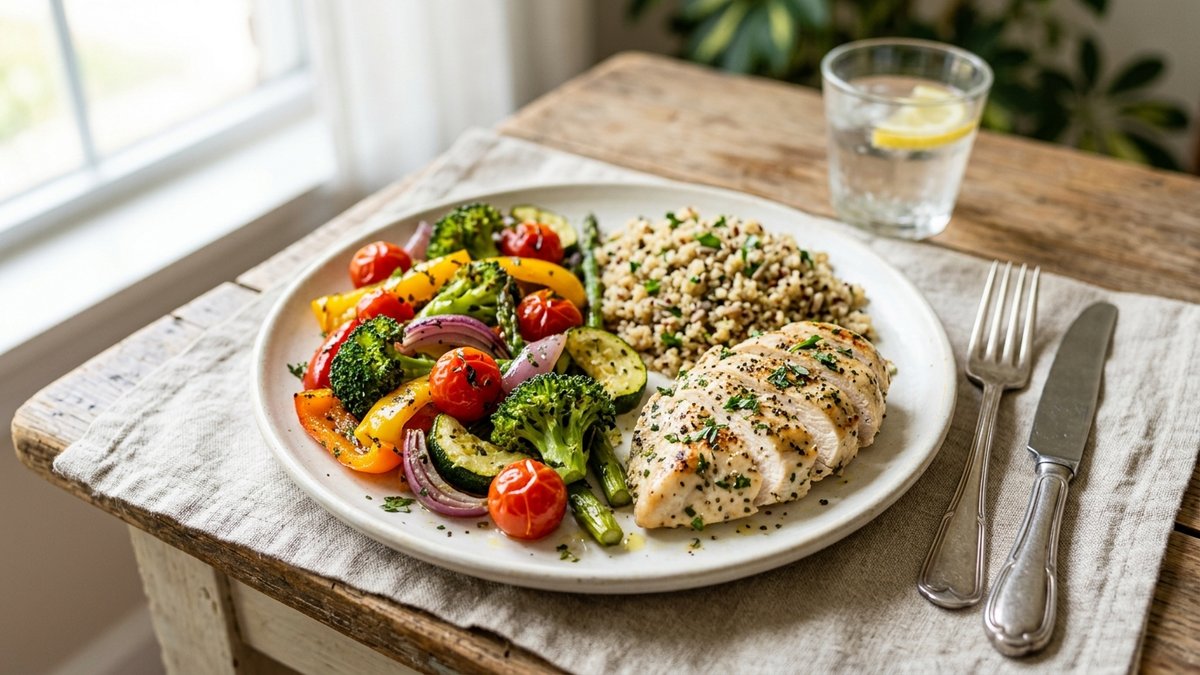
Put next to standard serving sizes, the scale of portion distortion at restaurants is easier to see. A USDA protein serving is about 3 ounces — roughly the size of a palm. A typical restaurant entree serves 8 to 12 ounces of protein on its own, which works out to 2 to 4 standard servings before the starch or vegetables are even counted. On the labeling side, FDA guidance for an entree making a “healthy” claim caps it at 3 ounces (85 g) without sauce or 5 ounces (140 g) with sauce — a useful reference point for how far a typical restaurant plate has drifted from what regulators consider one reasonable serving.
Fries tell a similar story on their own. In 1955, a standard order of French fries weighed 2.4 ounces and had about 210 calories. By the early 2010s, a large order at the same type of restaurant had grown to roughly 5.4 ounces and 487 calories — more than double, from a single side item. Multiply that kind of growth across a burger, a soda, and a dessert, and one meal out can easily double the calories of the same meal made at home, which is exactly the gap covered in this side-by-side comparison of restaurant portions and home cooking.
A quick way to check yourself against these numbers without a scale:
- Compare the protein on your plate to your palm — each palm-sized, finger-thickness portion is roughly 3-4 ounces
- Compare starch (rice, pasta, potatoes) to a cupped hand — about 1/2 to 1 cup per cupped handful
- Count how many “palm-and-cupped-hand” units are actually on the plate before you eat
- If it’s 2-3 units of any one food, treat it as 2-3 servings, not one — box half before you start, not after you’re full
That last step matters more than it sounds: deciding the portion before the first bite works with your hunger cues, while deciding after you’re already full works against them.
Reset Your Eye With a Fixed Portion Reference
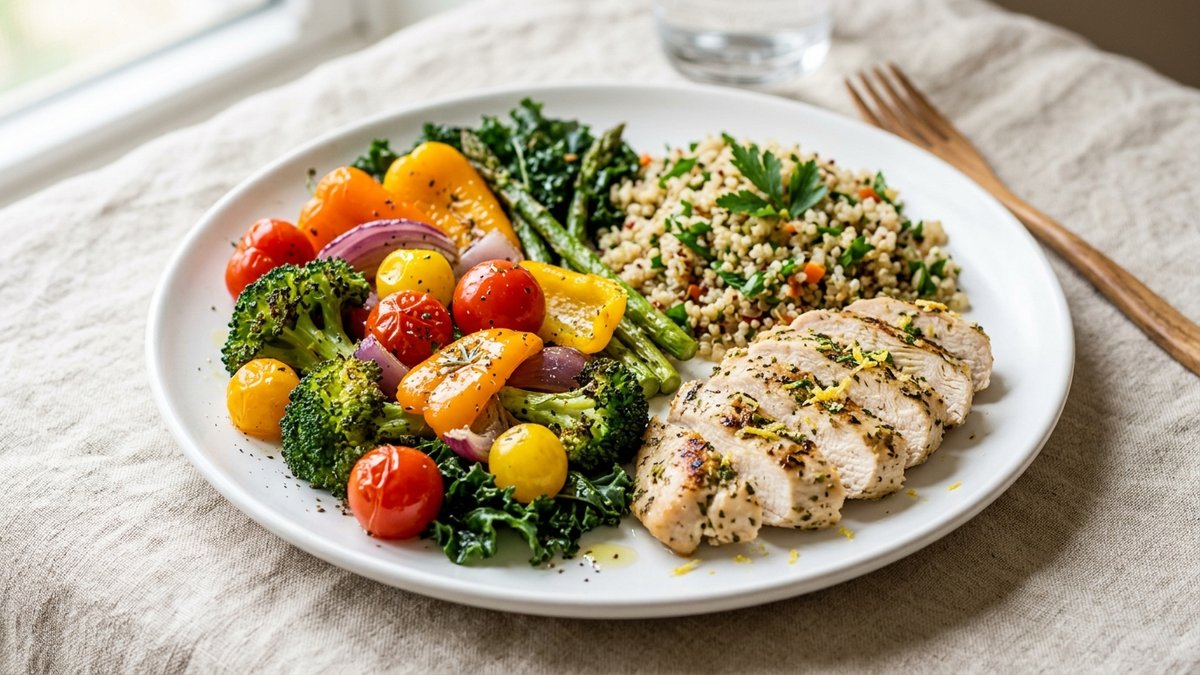
Because portion distortion is a perception problem as much as a food problem, the most reliable fix is a visual anchor that doesn’t drift the way restaurant plates have. That’s the entire idea behind the Portion Plate: a fixed, pre-marked layout — half the plate for vegetables, a quarter for protein, a quarter for carbohydrates — that stays the same size every time you use it at home.
Using it regularly does something a mental rule can’t: it recalibrates what “normal” looks like on your own dinnerware, so a restaurant plate that’s clearly bigger stands out instead of blending in. You’re not counting calories or memorizing gram amounts; you’re comparing what’s in front of you to a shape you’ve seen hundreds of times. Over weeks, that comparison gets faster and more automatic, which is the same mechanism — visual anchoring — that made distorted portions feel normal in the first place, just working in your favor this time.
Frequently Asked Questions
What is portion distortion at restaurants, exactly?
It’s the gradual shift in what counts as a “normal” serving, driven by portions that grew over decades. A cheeseburger once averaging 333 calories now commonly runs near 590, and a 20-ounce soda has replaced the 6.5-ounce serving as the default pour, so the old normal now looks small by comparison.
Why are restaurant portions so much bigger than what I’d cook at home?
Restaurant entrees typically serve 8-12 ounces of protein, or 2-4 standard USDA servings, versus the roughly 3-ounce serving most home recipes are portioned around. Larger servings also read as better value, which pushes portion sizes up independent of what one person actually needs to eat.
Does plate size actually change how much I eat, or is that just a theory?
It’s been tested directly. In one controlled study, people poured 9.9% more soup into a larger bowl and 8.2% less into a smaller one than into a same-sized control bowl, purely because of how the food looked relative to the dish’s edge.
How can I judge a normal portion when I’m eating out?
Use your hand as a built-in reference: a palm-sized piece of protein is about 3-4 ounces, and a cupped handful of rice, pasta, or potatoes is about 1/2 to 1 cup. Count how many of those units are on the plate before you eat, rather than judging by how full the plate looks.
Will a smaller plate at home actually help?
It can nudge portions down, but a plate with no reference points still leaves the amount up to guesswork. A plate with fixed section markings gives you the same visual anchor every time, which is more consistent than plate size alone.
Key Takeaways
- Restaurant portions grew gradually over decades, so “normal” quietly got bigger
- A cheeseburger’s calories rose from about 333 to 590; soda size nearly tripled
- Larger plates alone made people pour 9.9% more soup in controlled testing
- Restaurant entrees often equal 2-4 standard USDA protein servings on one plate
- Palm and cupped-hand comparisons work without a scale
- A fixed portion layout resets your visual sense of normal over time
Restaurant-sized portions are easy to underestimate when nothing on the table gives you a fixed reference point. The Portion Plate gives you that reference at every home meal, so spotting an oversized restaurant portion becomes obvious instead of guesswork.