 PLATE + FIT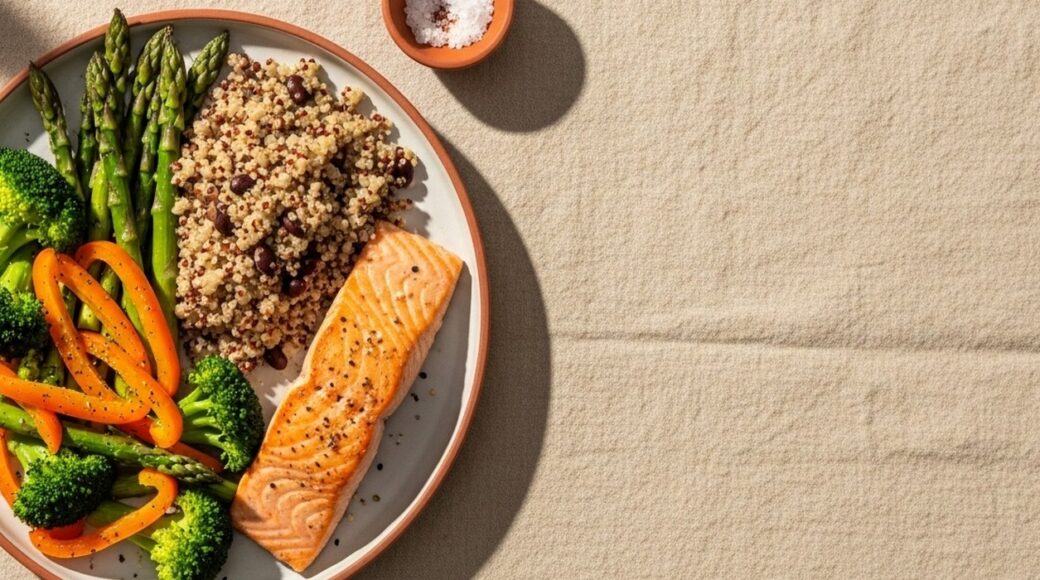
Two plates can carry the exact same number of calories and still leave you feeling worlds apart — one keeps you full for hours, the other has you back in the kitchen within the hour. Here’s calorie density explained in one line: it’s how many calories are packed into every gram of food you eat. A cup of grapes and a single tablespoon of oil can both add up to roughly 100 calories, but only one of them will actually fill your stomach. Understanding this concept lets you eat generous, satisfying portions — not shrink them — while still keeping your energy intake in check. Over the next few minutes, you’ll learn why your body responds to food volume more than to numbers on a label, and how to build meals that use this science instead of fighting it.
Calorie Density Explained: What the Term Actually Means

Calorie density (sometimes called energy density) is the number of calories in a given weight of food, usually expressed as calories per gram. It has nothing to do with portion size on its own — a small handful of almonds and a large bowl of watermelon can land close to the same calorie count, yet one weighs a few grams and the other weighs half a kilogram. That mismatch between weight and energy is calorie density explained in a nutshell — a measure of concentration, not size.
Foods generally fall into four rough bands:
- Very low (under 0.6 cal/g): leafy greens, cucumber, zucchini, celery, broth-based soups
- Low (0.6–1.5 cal/g): most fruits, non-starchy vegetables, non-fat dairy, beans in their cooking liquid
- Medium (1.5–4 cal/g): lean meats, fish, legumes, whole grains, starchy vegetables like potatoes
- High (4–9 cal/g): oils, butter, nuts, cheese, fried foods, most baked goods and crackers
Water is the biggest lever here — it adds weight without adding a single calorie, which is why produce and broths sit at the low end of the scale. Fat sits at the opposite end, since it packs more than twice the calories per gram of protein or carbohydrate. Mixed meals usually land somewhere in the middle, and where they land depends far more on preparation than on the base ingredient. If you’re new to the idea of building a plate around proportions rather than around a running calorie tally, what a portion-control plate actually does is a useful place to start before going further.
A quick side-by-side makes the idea concrete. A creamy chicken alfredo, cheese included, can easily run 3–4 calories per gram once the sauce and pasta are weighed together — a modest 400-gram plate lands well past 1,200 calories. Swap the cream sauce for a tomato-and-vegetable base, add a side salad, and keep the same portion of chicken, and the same weight of food on the same-sized plate can drop to under 700 calories, simply because the water and fiber content of the meal changed while the volume in front of you barely did.
Why Your Body Responds to Volume, Not Just Numbers
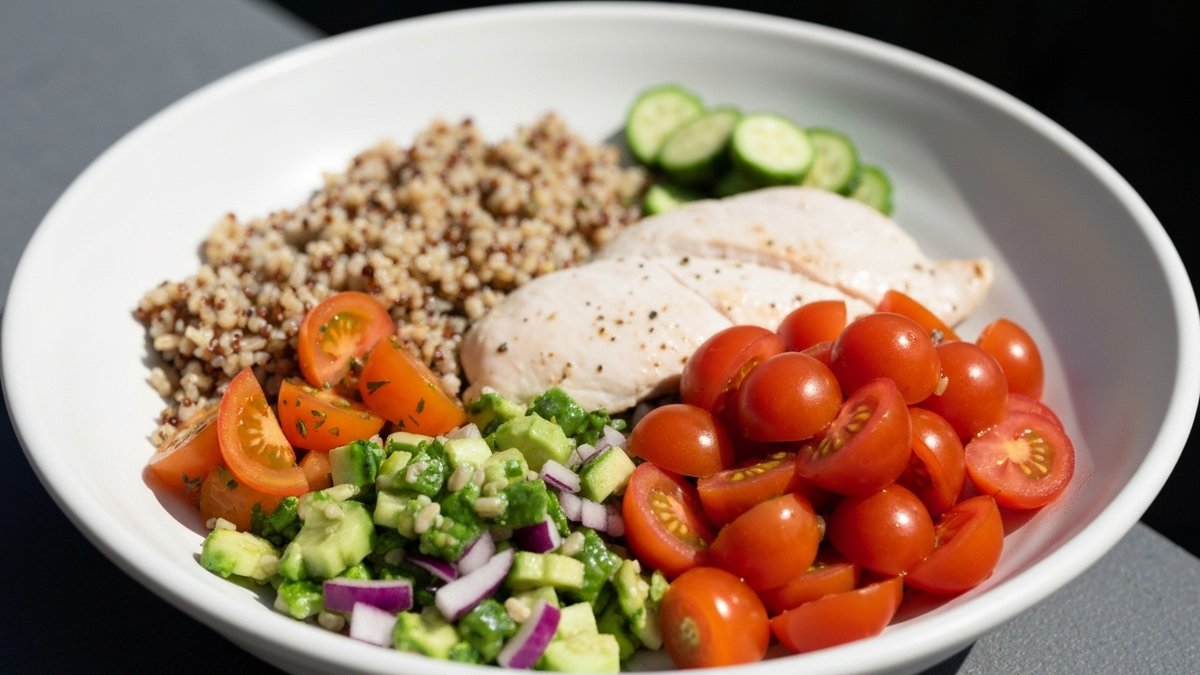
Appetite research consistently shows that people tend to eat a fairly consistent weight of food per day, not a consistent count of calories. Across several controlled studies, participants who were served larger portions of low-density foods — think a big bowl of vegetable soup instead of a small bowl of cream sauce — ate more food by weight but fewer calories overall, and reported feeling just as full.
Your stomach has stretch receptors that signal fullness to your brain largely based on how much space food is taking up, and that signal arrives well before your body has any way of tallying the energy involved. Fill that same space with foods that are mostly water and fiber, and you trigger the same fullness signal on a fraction of the fuel.
This is part of why “eat less” advice so often fails within a week or two — it works against the stomach’s own fullness signals instead of with them. That’s calorie density explained at the level of biology, not willpower: fullness tracks the volume in front of you, not the energy hidden inside it. Meals built around lighter, higher-volume choices let you eat until you’re comfortably full and still land in a reasonable energy range, because volume and satisfaction arrive together rather than being traded off against each other.
A handful of factors do most of the work in pulling a dish toward the lighter end of the scale:
- Water content — soups, fruit, and vegetables are 70–95% water by weight
- Fiber — adds bulk and slows digestion without adding energy
- Air — air-popped popcorn takes up far more space than the same weight of chips
- Fat content — the single biggest driver in the other direction, gram for gram
- Cooking method — grilling, steaming, and roasting add little; frying and heavy sauces add a lot
This is also why a slower, more deliberate approach to eating can matter after a change in medication — anyone rebuilding habits around weight maintenance after GLP-1 often finds that shifting toward lighter, higher-volume meals is what keeps appetite manageable once the medication’s effect fades.
How to Build a Lower-Calorie Plate Without Measuring Anything

You don’t need to overhaul every meal to put this to work. Here’s calorie density explained as a set of kitchen habits rather than a formula — a handful of small, repeatable swaps that move the needle more than any single “diet food” ever could, and none of them require a scale.
- Start with a lighter opener. A broth-based soup or a plain salad before the main course reliably reduces the total amount eaten at that meal.
- Fill half the plate with non-starchy vegetables first. Serve the rest of the meal around that base, not the other way around.
- Swap creamy sauces for tomato-, vinegar-, or citrus-based ones. The flavor payoff is similar; the cost per bite is a fraction of it.
- Bulk grain and pasta dishes with vegetables. Stir in extra peppers, mushrooms, or spinach so the same bowl weighs more without adding much energy.
- Watch liquid intake separately. Juice, sweetened coffee drinks, and alcohol add up quickly, with little of the fiber or water that make solid food filling.
- Finish with water-rich fruit instead of a baked dessert when you want something sweet at the end of a meal.
- Read a recipe before you cook it. A tablespoon or two of oil for sautéing adds up fast across a whole pan.
This is exactly the logic behind the healthy plate method: fill the largest section of the plate with the lightest foods first, and the rest tends to sort itself out on its own.
Where a Portion-Control Plate Fits In
Knowing the theory is one thing; applying it at every meal, on a busy weeknight, is another. This is where a plate with built-in section guides earns its keep — it turns “half vegetables, a quarter protein, a quarter whole grains” from a mental calculation into something you can see at a glance, without pulling out a scale or a nutrition app.
The Portion Plate is built around exactly this proportion, so the lightest, most water-rich foods — vegetables and fruit — are already claiming the most physical space before you’ve served a single bite of anything heavier. Over weeks and months, that default does more for consistency than any short-term rule ever could, because you’re not relying on willpower at every single meal to remember the ratio.
FAQ
What is calorie density in simple terms?
It’s the number of calories packed into a given weight of food, usually measured as calories per gram. Foods high in water and fiber — like vegetables and fruit — sit at the low end, while foods high in fat, like oils and fried snacks, sit at the high end of the same scale.
Which foods have the lowest calorie density?
Leafy greens, cucumber, zucchini, tomatoes, broth-based soups, and most fruits sit at the low end, typically under 1 calorie per gram. Their high water and fiber content adds volume and weight to a plate without adding much energy alongside it.
Is this the same thing as counting calories?
No. Counting calories tracks a running total; this concept describes how concentrated the energy is inside the food itself. You can use it as a strategy — simply choosing lighter, higher-volume foods more often — without ever logging a single number.
Can eating lighter, higher-volume foods really help with weight management?
Research on appetite and food intake shows people tend to eat a fairly consistent weight of food each day regardless of its energy content. Choosing more low-density options lets you eat that same weight — and feel just as full — while taking in noticeably fewer total calories.
Does cooking change how energy-dense a food is?
Yes, substantially. Steaming, grilling, and roasting add little to no extra calories to the base ingredient. Frying, or finishing a dish with butter, cream, or oil-heavy sauces, can multiply the final calorie count of the same starting ingredients several times over.
Key Takeaways
- Calorie density explained simply: it’s calories per gram, not per serving
- Water- and fiber-rich foods fill you up on fewer calories
- Vegetables and fruit should claim the most physical space on your plate
- Cooking method and added fat quietly push a dish toward the heavier end of the scale
- A portion-control plate makes the balance visual, not mathematical
If measuring cups and calorie apps feel like a part-time job, there’s an easier way to build lighter, more satisfying meals without doing any math at all.
The Portion Plate divides your plate into the right proportions for you, so a lower-calorie-density meal becomes the default setting — not a project you have to think about.