 PLATE + FIT
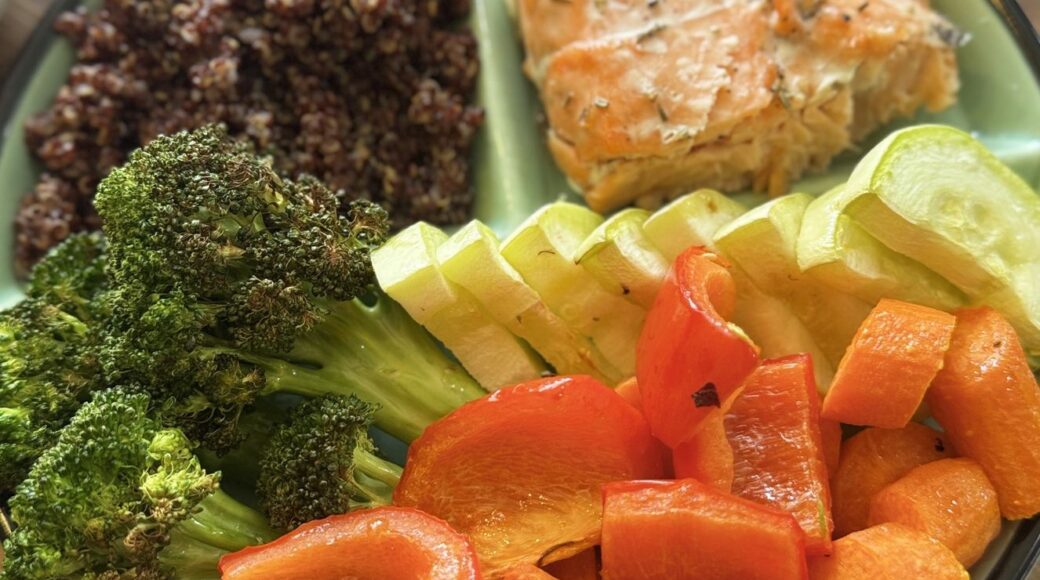
Chronic, low-grade inflammation shows up quietly — stiff joints in the morning, digestion that feels off for no clear reason, energy that dips by mid-afternoon, skin that flares on a schedule you can’t pin down. No single food fixes that, but the choices on your plate every day move the needle more than almost anything else you control. This guide covers anti-inflammatory foods to eat daily: what actually counts as one, why the mechanism works at the cellular level, and nine specific foods with the amounts the research actually points to, not vague serving suggestions. By the end, you’ll know what counts as anti-inflammatory, why it works, and nine foods worth adding to your week starting now.
What Counts as an Anti-Inflammatory Food?
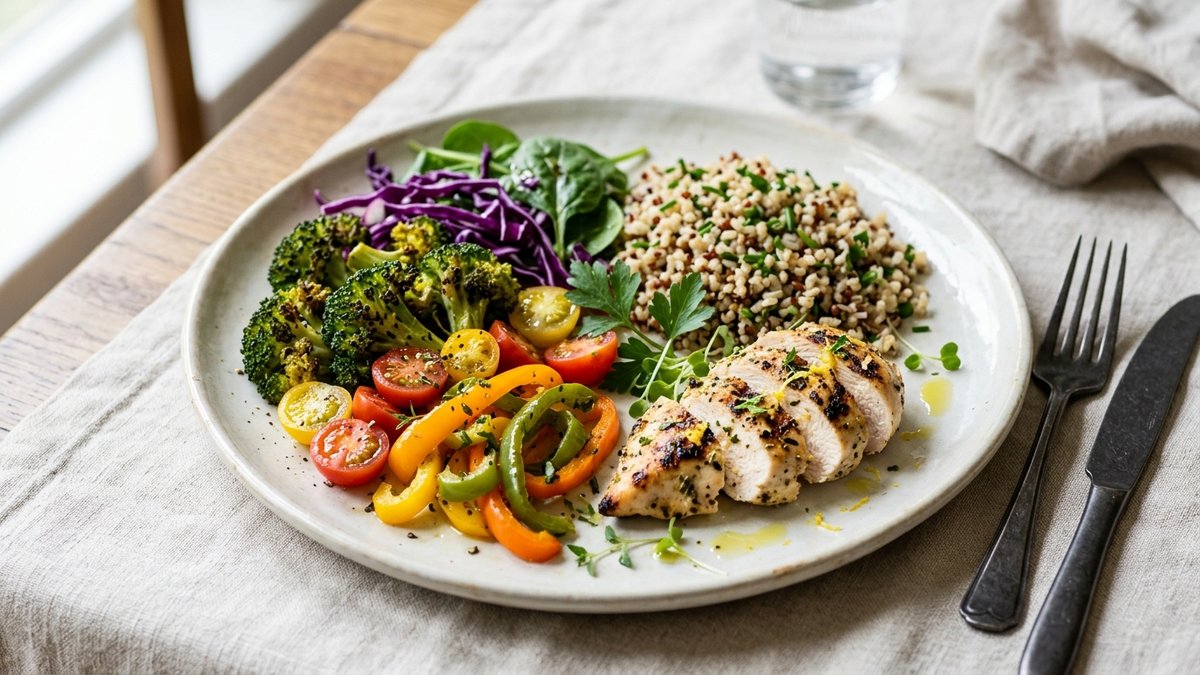
Inflammation itself isn’t the enemy — it’s how your body responds to a cut, an infection, or a hard workout, and it’s supposed to switch off once the job is done. The problem is chronic, low-grade inflammation that never fully switches off, running in the background for months or years. Diet is one of the few daily levers you have real control over.
An anti-inflammatory food is one that either supplies compounds your body uses to resolve inflammation (omega-3 fats, polyphenols, fiber) or simply doesn’t add fuel to the fire the way refined carbohydrates, added sugar, and highly processed fats do. Fatty fish, extra-virgin olive oil, berries, leafy greens, nuts, whole grains, and spices like turmeric and ginger sit on the helpful side. Sugary drinks, refined white flour, processed meat, and fried food sit on the other.
One practical way to see the difference: check a package’s nutrition label for added sugar before you buy it. The American Heart Association recommends capping added sugar at about 25 grams (6 teaspoons) a day for women and 36 grams (9 teaspoons) for men — diets built around foods that blow past that number, day after day, are the same diets linked to chronically elevated inflammatory markers. If you’re not sure where to look on the label, the guide to reading a nutrition label for added sugar walks through it in under a minute. Research also puts ultra-processed foods at close to 58% of the calories in the average U.S. diet — which means roughly 58% of most people’s daily calories come from foods that work against, not with, this list.
Why These Foods Calm Inflammation
Three mechanisms do most of the work, and none of them require a supplement aisle:
- Omega-3 fats compete with omega-6 pathways. Your body builds inflammatory signaling molecules from both fat families; a diet skewed heavily toward omega-6 (common in fried and processed food) tips that balance toward more inflammation, while omega-3s from fish and walnuts tip it back.
- Polyphenols reduce oxidative stress. The pigments that make berries dark and olive oil green are also antioxidant compounds that limit the cellular damage that triggers an inflammatory response in the first place.
- Fiber feeds the bacteria that produce short-chain fatty acids. Those fatty acids, made when gut bacteria ferment fiber, are one of the main signals that keep the gut lining — and the immune activity around it — calm. The average U.S. adult eats only about 15 grams of fiber a day, roughly half the 25-30 gram target, which is one reason gut-driven inflammation is so common.
- Lower glycemic load means fewer blood-sugar spikes. Repeated sharp glucose spikes are themselves a measurable inflammatory trigger, part of why whole grains outperform refined ones here.
None of these four mechanisms works alone — a meal high in omega-3s but built on refined starch still produces the blood-sugar spike described above. That’s the main reason single « superfoods » tend to disappoint: a spoonful of turmeric added to an otherwise inflammatory plate is fighting an uphill battle.
This is also where fat quality does more work than fat quantity. The healthy fats on your plate breakdown covers which fats belong in the anti-inflammatory column and which don’t, food by food rather than as a single good-fat-bad-fat rule.
For a broader overview of the mechanism, the Harvard T.H. Chan School of Public Health’s anti-inflammatory diet page is a solid, non-commercial reference.
9 Anti-Inflammatory Foods to Eat Daily
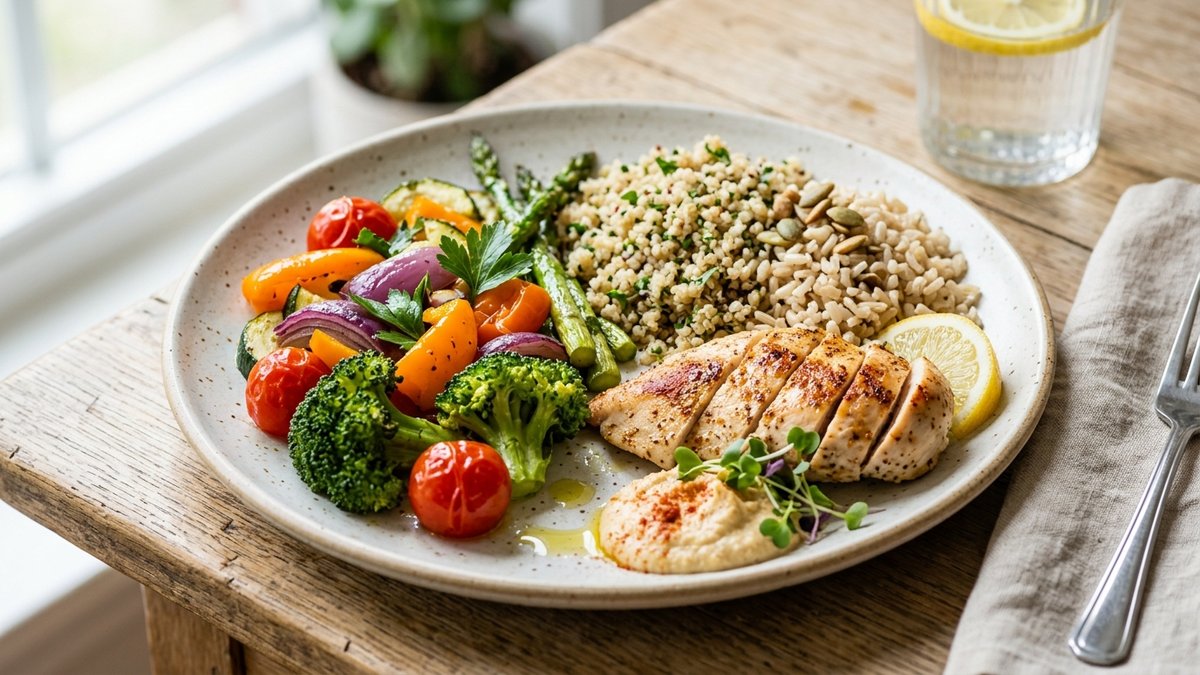
These are ranked by how much evidence sits behind them, not by taste. Amounts are the ones actually used in the research, not rounded-up guesses.
- Fatty fish — salmon, mackerel, sardines. The American Heart Association’s standing guidance is 2 servings a week, about 8 ounces total.
- Walnuts — a 1-ounce serving (about 14 halves) supplies roughly 2.5 grams of plant-based omega-3 (ALA), the highest of any common nut.
- Extra-virgin olive oil — swapped in for butter. The PREDIMED trial had one study arm consume about 4 tablespoons (50 ml) a day over roughly 5 years and recorded a 30% relative reduction in major cardiovascular events versus a low-fat control diet.
- Berries — about half a cup (roughly 75g) most days. The MIND diet, studied for its link to brain health, specifically recommends berries at least twice a week as one of its ten core food groups.
- Leafy greens — spinach, kale, chard. These are the easiest way to fill the vegetable half of your plate without extra planning.
- Turmeric — a half to 1 teaspoon stirred into cooking, ideally with a pinch of black pepper, which food-science research shows measurably improves absorption of its main compound, curcumin.
- Green tea — 2 to 3 cups a day is the amount used in most of the observational research linking its catechins to lower inflammatory markers.
- Whole grains — oats, brown rice, quinoa in place of refined versions. Choosing whole over refined is one of the simplest ways toward the 25-30g daily fiber target most adults fall short of, while also lowering glycemic load.
- A wide variety of plants — not just more vegetables, but more different ones. Large gut-microbiome cohorts, including the American Gut Project, found more diverse gut bacteria in people eating more than 30 different plant foods a week compared with 10 or fewer.
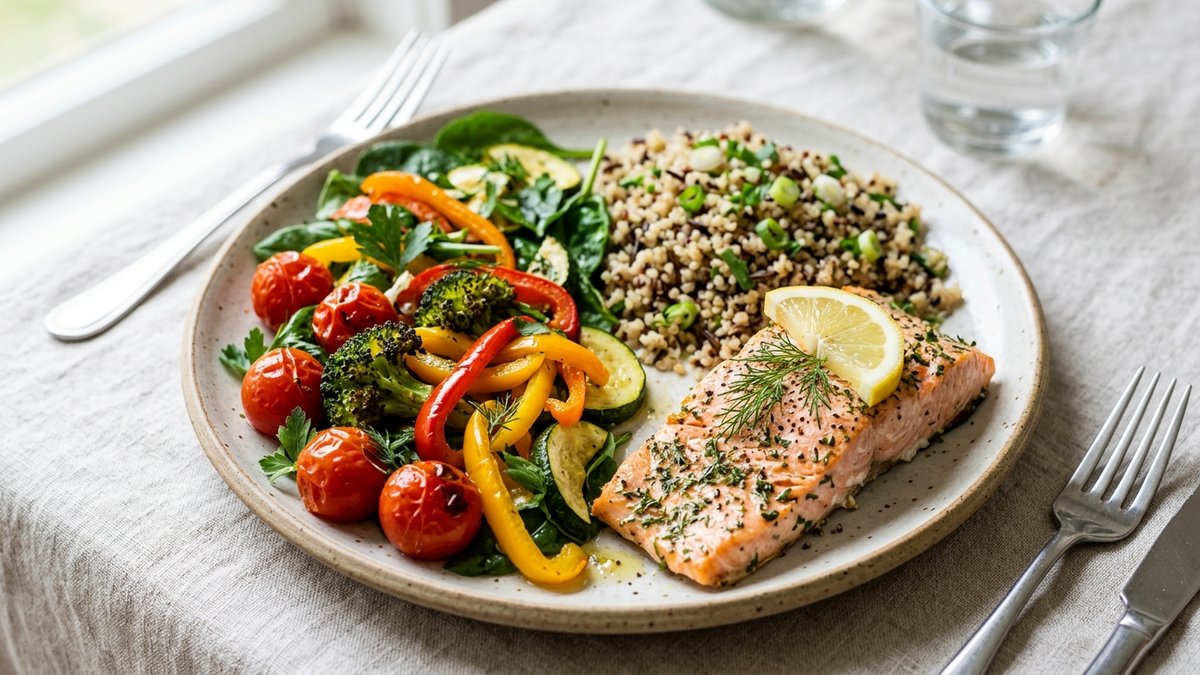
You don’t need all nine on the same plate. Rotating through 4-5 of them across a normal week already covers most of the mechanisms above — for example, salmon (fish) with a side of quinoa (whole grain) and a spinach salad (leafy greens) touches three of the nine in one meal, without adding a single supplement.
Where the Portion Plate Fits
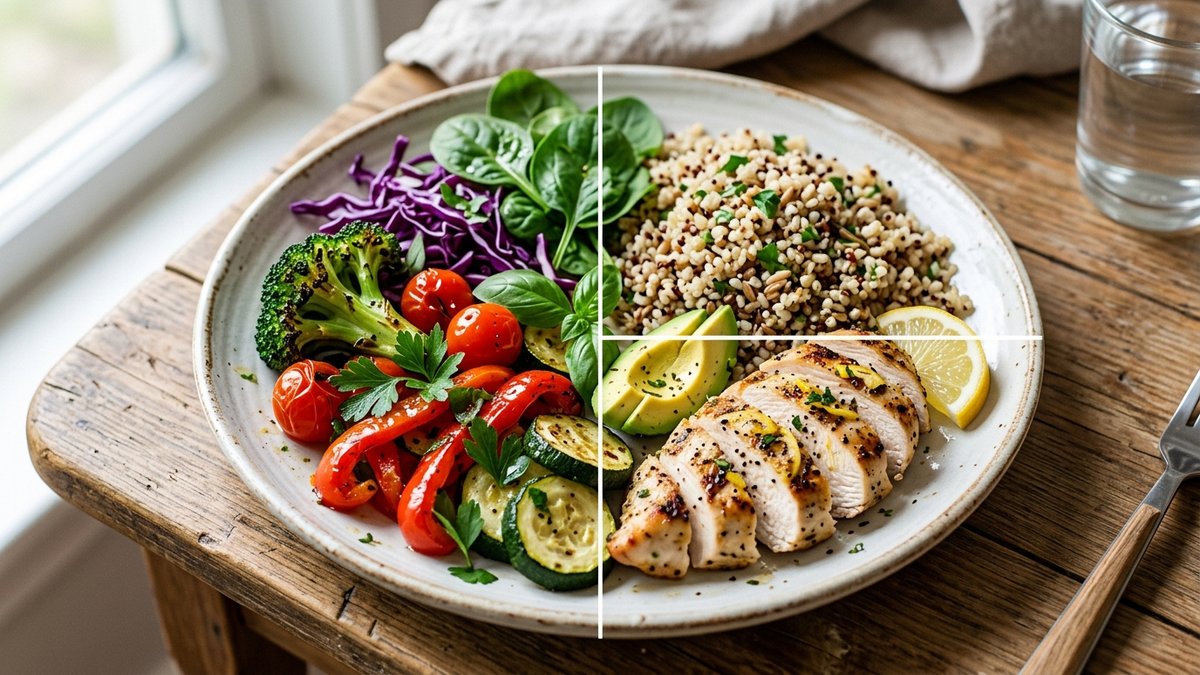
Every food on that list works better in proportion, not in isolation — a fatty-fish dinner still skews inflammatory if it sits next to a mountain of refined starch and no vegetables at all. A portion-control plate keeps that proportion fixed without you having to measure anything: roughly half the plate for vegetables (the easiest place to fit leafy greens and colorful produce), a quarter for protein (fatty fish, legumes, poultry), and a quarter for whole grains or starch.
That structure does two things this list can’t do on its own. First, it caps the refined-carb and processed-fat portion of the meal automatically, since there’s only a quarter of the plate left for it once vegetables and protein are in place. Second, it makes the anti-inflammatory choices the path of least resistance — you’re not deciding whether to add turmeric today, you’re just filling three sections the way you already do at every meal. For general everyday eating guidance alongside it, the NHS Eat Well guide is a useful, non-commercial companion reference.
FAQ
What foods make inflammation worse?
Sugary drinks, refined white bread and pastries, processed and cured meats, and fried food in industrial seed oils are the most consistently linked to higher inflammatory markers. Ultra-processed foods as a category make up close to 58% of calories in the average U.S. diet, which is a large share working against, not with, an anti-inflammatory pattern.
How fast can diet changes lower inflammation?
Some inflammatory blood markers can shift within weeks of a sustained dietary change, but most of the research behind foods like olive oil and fatty fish tracked effects over months to years, not days. Treat this as a long-term pattern, not a short-term fix.
Can turmeric or ginger replace medication for joint pain or arthritis?
No — this article is educational, not medical advice. Spices can be part of a supportive diet, but they are not a substitute for a diagnosis or treatment plan. Talk with a healthcare provider about any ongoing joint pain, arthritis, or inflammatory condition before changing medication or adding supplements.
Is dairy inflammatory?
The evidence is mixed and depends heavily on the individual and the type of dairy. Fermented dairy like plain yogurt and kefir tends to show neutral-to-positive associations in most studies, while the picture for full-fat dairy overall is less consistent than it is for foods like fatty fish or olive oil.
Do you need a fish oil supplement to get enough omega-3?
Not necessarily. Two 4-ounce servings of fatty fish a week (the AHA’s standard guidance) plus a daily ounce of walnuts covers a meaningful amount of omega-3 for most healthy adults through food alone. Supplement decisions are worth discussing with a healthcare provider rather than deciding from an article.
Key Takeaways
- Anti-inflammatory foods supply omega-3s, polyphenols, and fiber
- Added sugar over 25-36g a day works against you
- Fatty fish: 2 servings (8 oz) a week is the standard guidance
- Walnuts, olive oil, berries, and turmeric all have specific, usable amounts
- Eating 30+ different plants a week supports gut diversity
- A fixed-proportion plate makes the pattern automatic, not a daily decision
Knowing which foods help means little if half your plate is still taken up by something else. See the portion-control plate that keeps the proportions fixed while you focus on which foods go in them.