 PLATE + FIT

The complex vs simple carbohydrates question comes down to one thing: how fast the food turns into blood sugar, and how long it keeps you full. A slice of white toast and a bowl of lentils are both «carbs», yet they behave very differently after you eat them. The first is gone from your stomach quickly, while the second is still working 3 hours later.
Carbohydrates should supply roughly 45-65% of your daily calories, according to the Acceptable Macronutrient Distribution Range used in US dietary guidance. That is a wide window, and what you fill it with matters more than the exact percentage. This guide shows you how to tell the two types apart, what each does in your body, five easy swaps, and how big the carb section of your plate should be.
What Is the Difference Between Complex and Simple Carbohydrates?
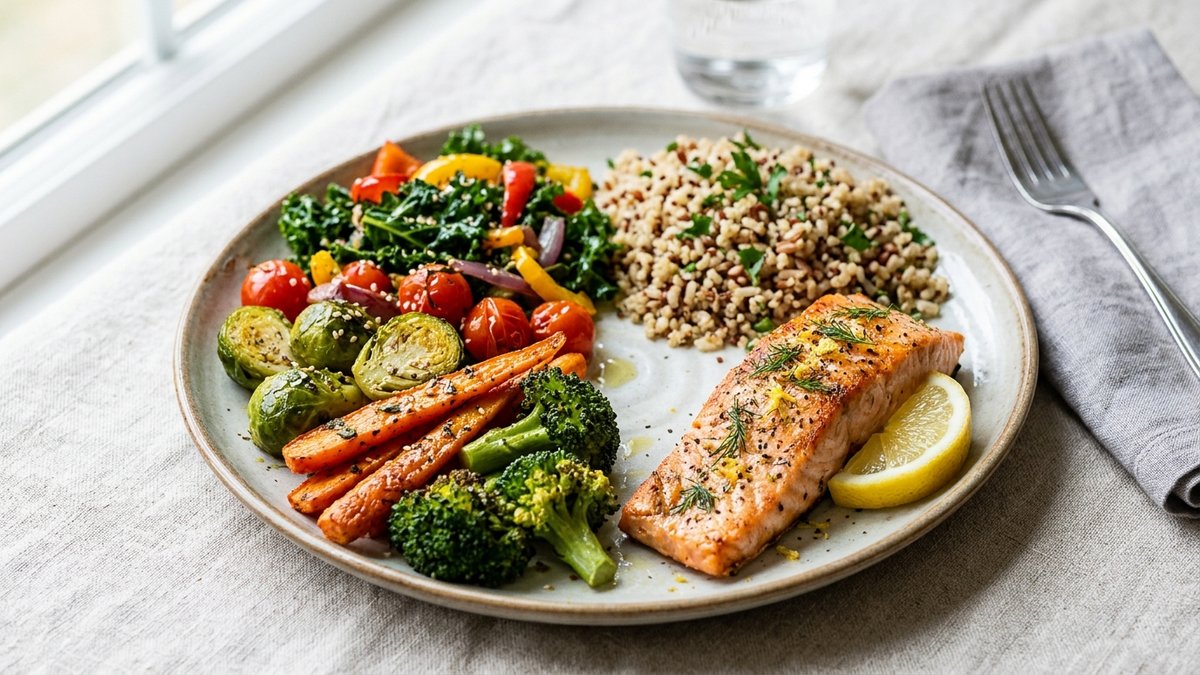
The difference is chemical structure. Simple carbohydrates are one or two sugar molecules: glucose, fructose, sucrose (table sugar), lactose. Complex carbohydrates are chains of many sugar units, often hundreds, mostly starch and fiber. Your body has to break the starch down before it can absorb it.
Sugars and digestible starch both supply about 4 calories per gram, while fiber supplies only about 2. So the real difference is not the label but how refined the food is and what comes packaged with the carbohydrate. Whole foods usually bring fiber, vitamins and minerals along. Refined foods, whether sugary or starchy, usually bring little else.
Here is a quick way to sort common foods:
- Mostly simple: table sugar, honey, fruit juice, fizzy drinks, sweets
- Complex but refined: white bread, white rice, pastries, instant mashed potato
- Complex and whole: oats, lentils, chickpeas, brown rice, quinoa, sweet potato, whole-grain bread
- Simple sugars with fiber or protein: whole fruit, carrots, milk, plain yogurt
The second and last groups are where the simple-versus-complex label gets blurry. White bread is technically complex, yet it behaves much like sugar. An apple contains simple sugars, yet it also has about 4 g of fiber, which slows absorption. Whole fruit and plain dairy are not the problem. Added sugar is.
How Your Body Handles Each Type
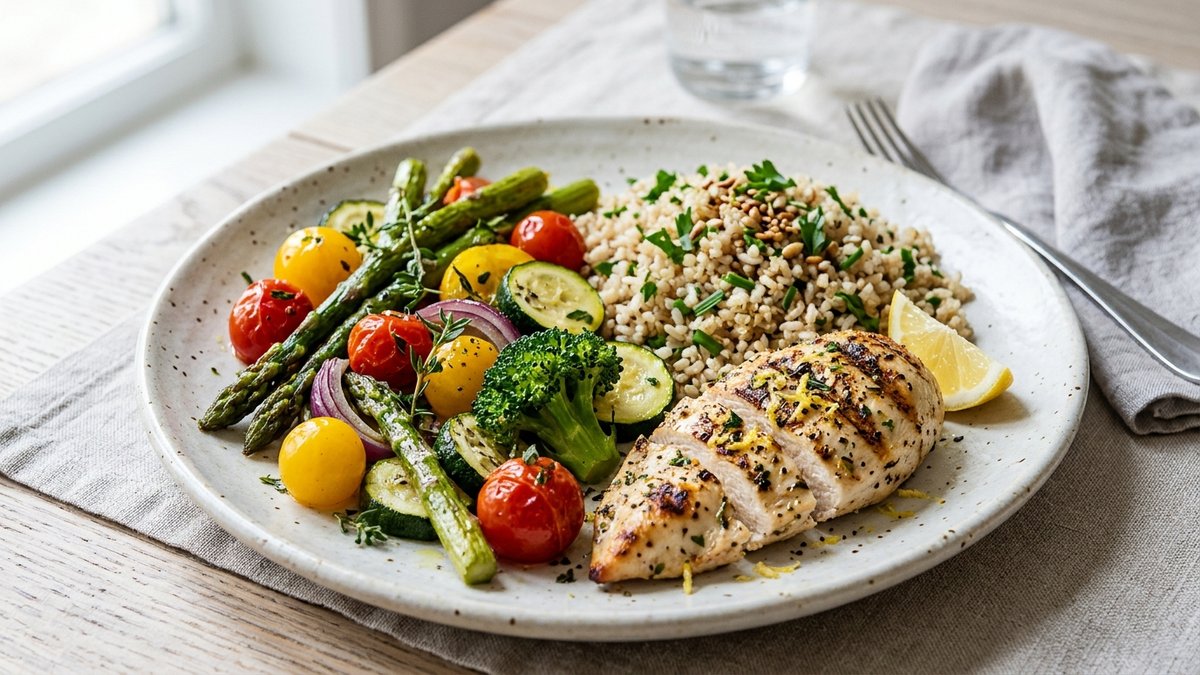
Digestion explains most of the difference. Sugars in drinks and sweets, and refined starches such as white bread, are absorbed quickly, so blood glucose climbs fast and then drops. Whole, fiber-rich carbs are digested more slowly, so glucose rises gently over an hour or two.
The glycemic index (GI) puts a number on this. It scores foods from 0 to 100 against pure glucose: 55 or below is low, 56-69 is medium, and 70 or above is high. Most whole intact grains, beans and lentils land in the low range. White bread and instant mashed potato usually land above 70. GI values vary by brand and cooking time, so treat any single number as a rough guide, not a promise.
Three things shift the effect of a carb in real life:
- Processing. Rolled oats digest more slowly than instant oats, and a whole apple more slowly than apple juice.
- Company on the plate. Protein, fat and vegetables slow down how quickly a meal leaves the stomach.
- Portion size. A large serving of even a low-GI food still raises blood sugar.
This is educational information, not personal medical advice. If you have diabetes or another condition that affects blood sugar, work with your own healthcare team on carbohydrate targets.
Complex vs Simple Carbohydrates: 5 Swaps That Work
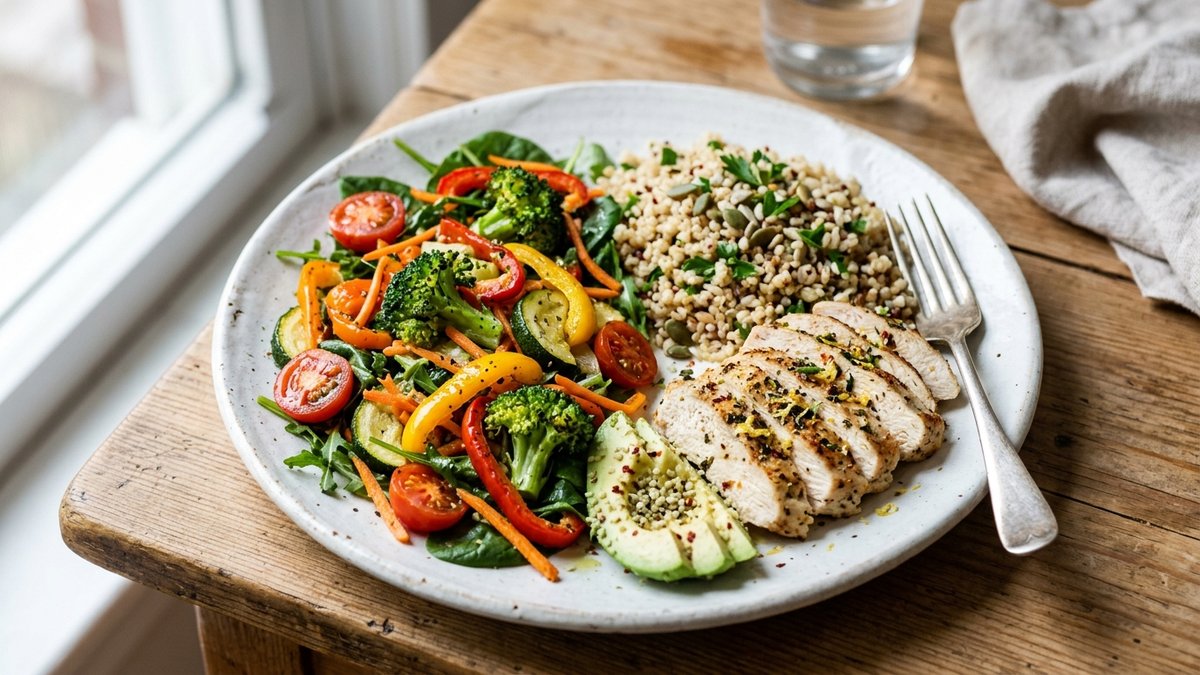
You do not need to give up bread, fruit or rice. Small, repeatable swaps do most of the work, and they fit the way you already eat.
- White rice to brown rice, quinoa or barley. You keep the same warm, filling base with more fiber and slower digestion.
- Sugary cereal to rolled oats. 40 g of dry oats (about half a cup) has around 4 g of fiber. Top with berries and a spoonful of yogurt instead of sugar.
- Fruit juice to whole fruit. A 250 ml glass of juice has the sugar of 2-3 oranges and almost none of the fiber. The whole orange fills you up for longer.
- White bread to dense whole-grain bread. Check the label: whole grain should be the first ingredient, and look for at least 6 g of fiber per 100 g, the EU threshold for a «high fiber» claim.
- Crisps or biscuits to chickpeas or lentils. 100 g (about half a cup) of cooked lentils delivers about 8 g of fiber and 9 g of protein.
Not sure what a label is really telling you? The walkthrough on reading a nutrition label in under a minute shows where to look for fiber and sugar. EU labels list total sugars («of which sugars») rather than added sugars, so check that line and the ingredients list for sugar, syrups and honey. Health bodies such as the WHO suggest keeping free sugars below 10% of daily calories, which is about 50 g on a 2,000-calorie diet, and below 5% for extra benefit.
One more pattern is worth knowing. Pairing matters as much as the label. Eating an apple with a small handful (about 20 g) of almonds blunts the sugar spike more than the apple alone, and the same logic applies to rice with beans or toast with eggs. Knowing the two types is useful, but combining foods well is what makes it practical.
Fiber: The Reason Complex Carbs Keep You Full
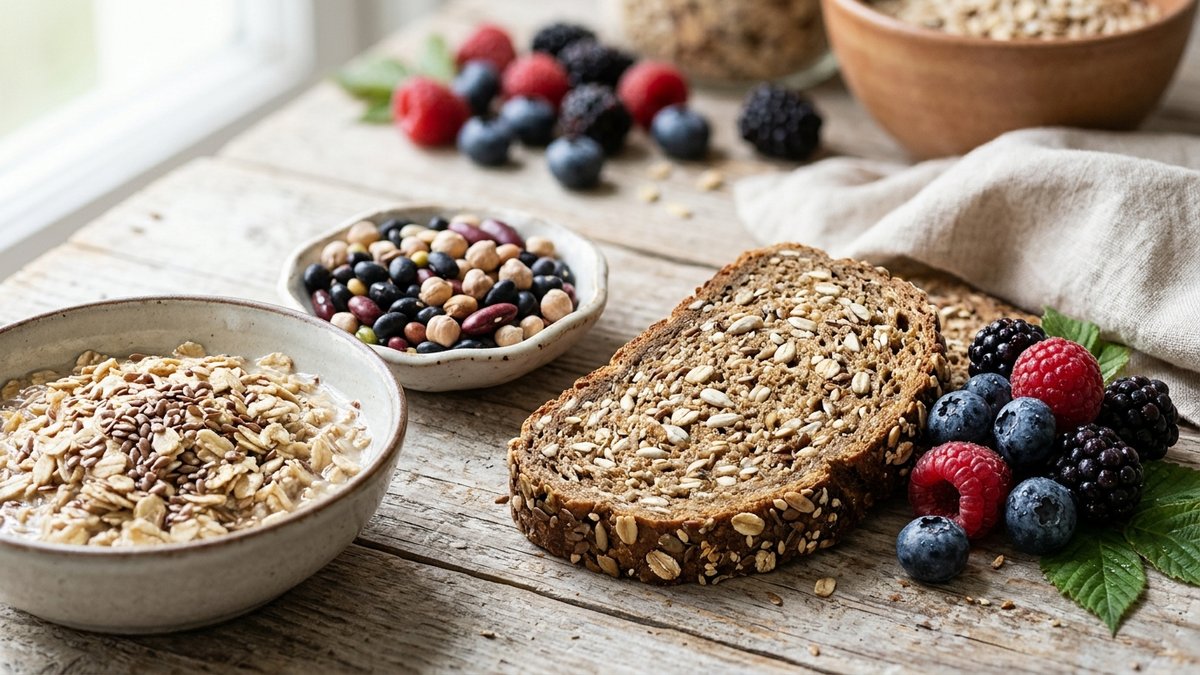
Fiber is the complex carbohydrate you cannot digest, and it is why complex carbs feel so different from simple ones. It adds bulk, slows stomach emptying and feeds the bacteria in your gut. A common target is about 14 g of fiber per 1,000 calories, which works out to 25-30 g per day for most adults.
Most adults eat well under that. A typical intake sits around 15-17 g a day in many Western countries, roughly half of what is recommended. Closing the gap does not take a special diet. Beans at lunch, oats at breakfast and a fruit or vegetable with every meal gets most people there.
For the full picture, see the guide to fiber for fullness and the 25-30 g daily sweet spot. Raise your intake gradually over 2-3 weeks and drink water with it, because a sudden jump in fiber can cause bloating.
How Much Carbohydrate Belongs on Your Plate?
Instead of counting grams, use the plate. With the Healthy Plate method, you fill 50% of the plate with vegetables, 25% with protein and 25% with complex carbohydrates. That quarter is your carb section, and it is where the whole-grain, bean or starchy-vegetable choices go.
In practice, a quarter of a standard 25 cm dinner plate holds around 150 g of cooked grains or beans (roughly 3/4 to 1 cup). Pair it with a palm-sized serving of protein, as covered in how much protein per meal. Together with the vegetables, the meal digests more slowly than the same carbs eaten alone.
Fruit belongs in the vegetable-and-fruit half, and dairy usually sits on the side. If you are very active, you may want a larger carb share around training. If you are managing blood sugar, a smaller one may suit you better, agreed with your healthcare team. Both are reasonable adjustments to the same framework.
3 Common Mistakes With Carbs
Once you know the basics, a few traps are easy to avoid.
- Assuming «whole grain» on the pack means high fiber. Some breads are mostly refined flour with a little bran. Check for 6 g or more of fiber per 100 g.
- Cutting carbs too far. The US recommended dietary allowance of 130 g of carbohydrate a day for adults is set to cover the brain’s typical glucose use. Cutting far below that is best done with professional guidance.
- Drinking sugar. A 330 ml can of regular cola contains about 35 g of sugar, close to 9 teaspoons, and it does not make you feel full.
The fix is not perfection. If 80% of your carbs come from minimally processed sources, the occasional pastry is not a problem. The simple-versus-complex distinction is a tool for choosing, not a rulebook for guilt.
Where the Portion Plate Fits In
Knowing the 50/25/25 split is one thing. Eyeballing it at 19:00 after a long day is another. A portion-control plate with built-in sections turns the carb quarter into something you can see, so a third helping of pasta does not creep in unnoticed.
It is a visual guide to balanced proportions, not a diet. Use it to build meals with room for vegetables, protein and a sensible portion of complex carbs, and adjust portions to your own needs and goals.
Frequently Asked Questions
Are simple carbohydrates always bad?
No. Fruit contains simple sugars but also fiber, water and nutrients, and plain milk brings protein and calcium with its lactose. The ones to limit are added sugars in drinks, sweets and processed snacks, which bring calories without much else.
Is brown rice really better than white rice?
Brown rice keeps the bran and germ, so it has more fiber and minerals and digests a little more slowly. White rice is not harmful in a balanced meal with vegetables and protein. Portion size matters more than the swap.
Do complex carbs make you gain weight?
Not on their own. Weight depends on your overall energy balance over time. Complex carbs tend to be more filling per calorie than refined ones, which can make portions easier to manage.
How many carbs should I eat per meal?
A practical starting point is one quarter of your plate, around 150 g (3/4 to 1 cup) of cooked grains or starchy vegetables. Your ideal amount depends on activity, health conditions and preferences.
Which is better before a workout?
A mix works. A complex carb 2-3 hours before, such as oats, gives steady energy, and a small simple carb like a banana closer to the session is fine. Individual tolerance varies.
Key Takeaways
- Whole, fiber-rich carbs digest slowly; sugars and refined starches digest fast.
- Sugars and starch have about 4 calories per gram, fiber about 2.
- Limit added sugar; whole fruit and plain dairy are fine.
- Aim for 25-30 g of fiber daily.
- Give complex carbs one quarter of your plate.
Want the 50/25/25 split to be effortless at every meal? See the Portion Plate and make balanced proportions visible.