 PLATE + FIT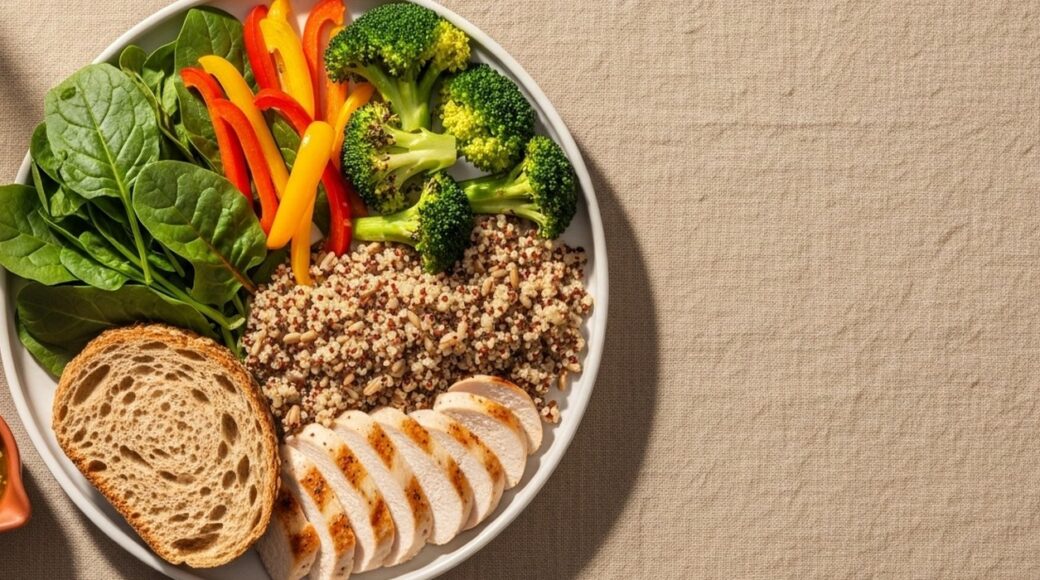
If you’ve tried counting calories and quit within a month, portion control for weight loss might be the approach that actually sticks. Instead of logging every gram or memorizing calorie totals, you resize what’s already on your plate — a shift that removes the friction most people give up on. This isn’t about eating less across the board; it’s about redistributing what’s already there so vegetables, protein, and carbs sit in proportions your body can use well. Studies on self-reported eating consistently find people underestimate how much they eat when relying on memory alone, which is exactly the gap a visual approach closes without any math. In this guide, you’ll learn what this method actually means, why it outlasts calorie counting for most people, and how to set it up on your own plate starting tonight.
What Portion Control for Weight Loss Actually Means
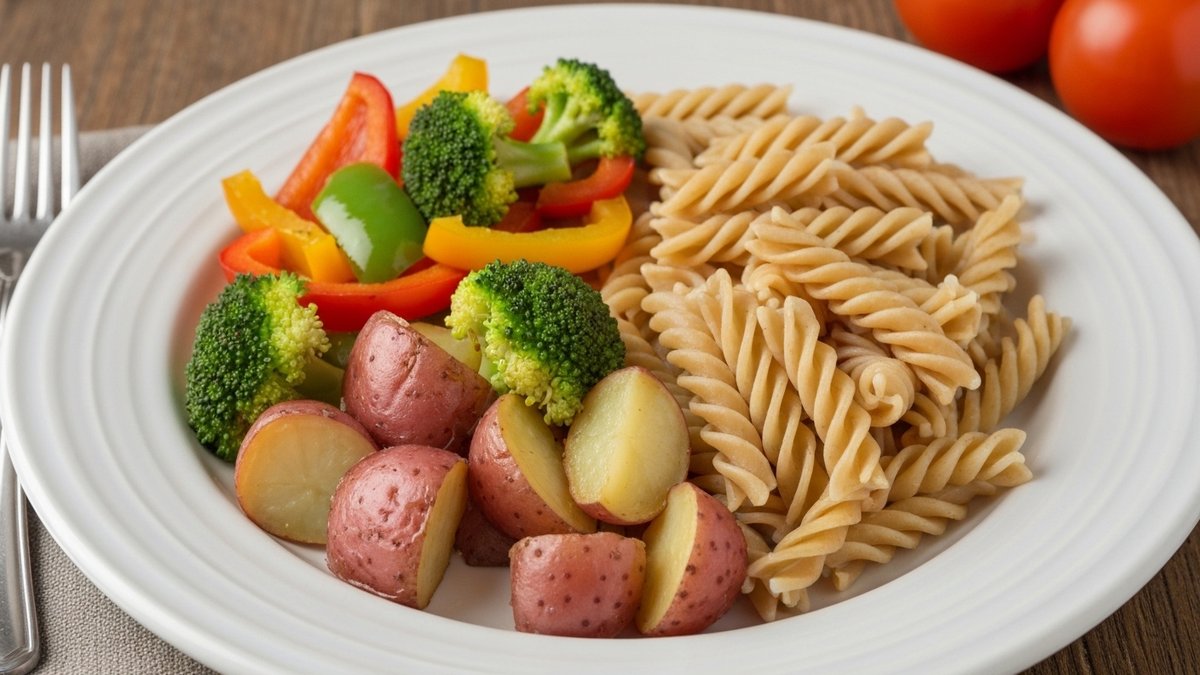
This method is simple in concept: you change the ratio of foods on your plate instead of tracking numbers. Half the plate goes to non-starchy vegetables, a quarter to lean protein, and a quarter to whole grains or starchy carbs, with a small amount of healthy fat worked in. No scale, no app, no daily log — just a plate you fill the same way at every meal.
This is different from calorie counting, which asks you to estimate the energy value of everything you eat and stay under a target every single day. Counting works for some people short-term, but it’s mentally expensive — tracking apps have some of the steepest drop-off rates of any health habit, and most people who start one stop logging within a couple of months. A plate-ratio approach skips the estimation step entirely. You’re not guessing at calories in a handful of almonds; you’re looking at proportions you can see and repeat at every meal.
The proportions themselves aren’t arbitrary. They’re modeled on the Healthy Eating Plate framework from Harvard’s School of Public Health, which balances fiber, protein, and slower-digesting carbohydrates to keep you fuller for longer without cutting any food group out completely. It’s also flexible: the same ratio works whether dinner is stir-fry, a grain bowl, or a plate of roast chicken and vegetables, which is part of why it holds up better over months than a rigid meal plan does.
Why Portion Sizes Matter More Than Willpower
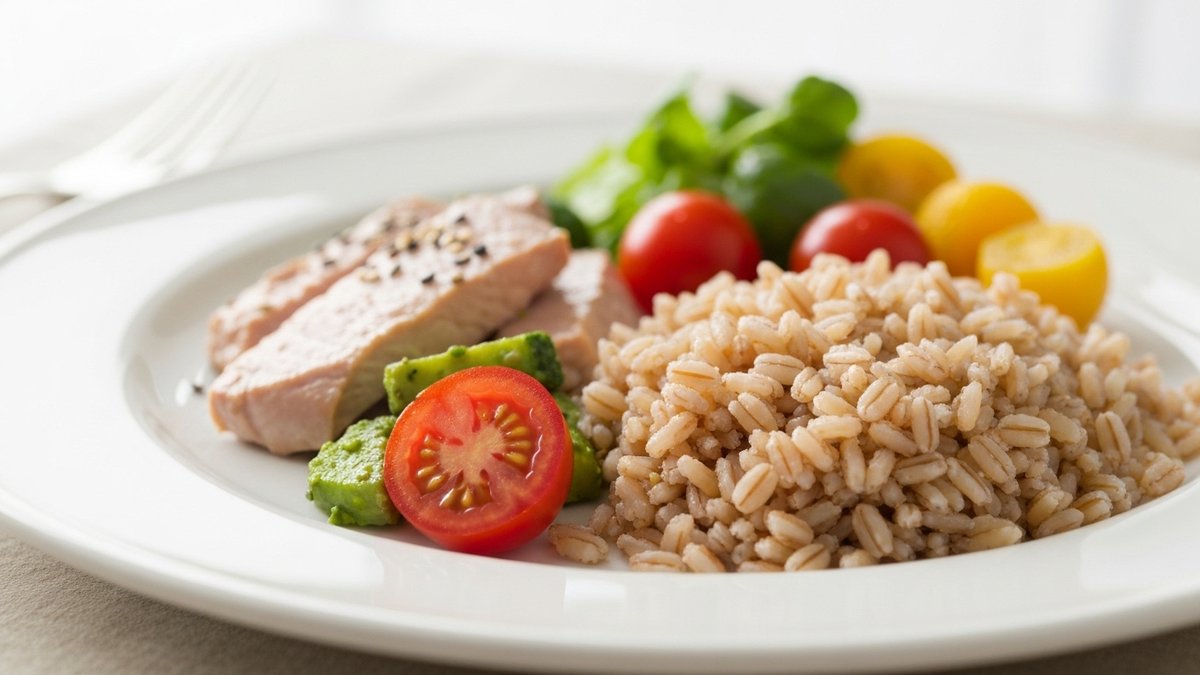
Weight loss usually fails at the willpower stage, not the knowledge stage — most people already know vegetables are a good idea. What trips people up is portion distortion: restaurant plates, packaged serving sizes, and even home dinnerware have grown substantially over the past few decades, and your internal sense of «normal» tends to grow right along with them.
A plate-based method works around this by giving you a fixed visual reference instead of an internal sense that’s already been recalibrated upward. When half your plate is reliably vegetables, you’re eating more fiber and volume per calorie without having to think about it — you feel full on less energy because you’re eating more food by weight, not less.
There’s also a hunger-management piece. Protein and fiber are two of the most filling nutrients per calorie, and a plate built around this ratio front-loads both at every meal. That’s a structural way to reduce the between-meal hunger that usually derails a diet, rather than relying on discipline to override it. Public health guidance points the same direction — the NHS Eatwell Guide recommends building meals around roughly a third vegetables and fruit, with protein and starchy foods filling out the rest, for exactly this reason.
- Non-starchy vegetables: highest volume, lowest calorie density
- Lean protein: strongest effect on fullness per calorie
- Whole grains and starchy carbs: steadier energy than refined versions
- A small amount of fat: slows digestion, improves flavor and satisfaction
None of this requires knowing the exact grams involved. The ratio does the work that a food scale or tracking app would otherwise do, which is why it tends to survive weeks when a stricter plan doesn’t — there’s simply less to remember and less to get wrong at the end of a long day.
How to Start Using Portion Control Today
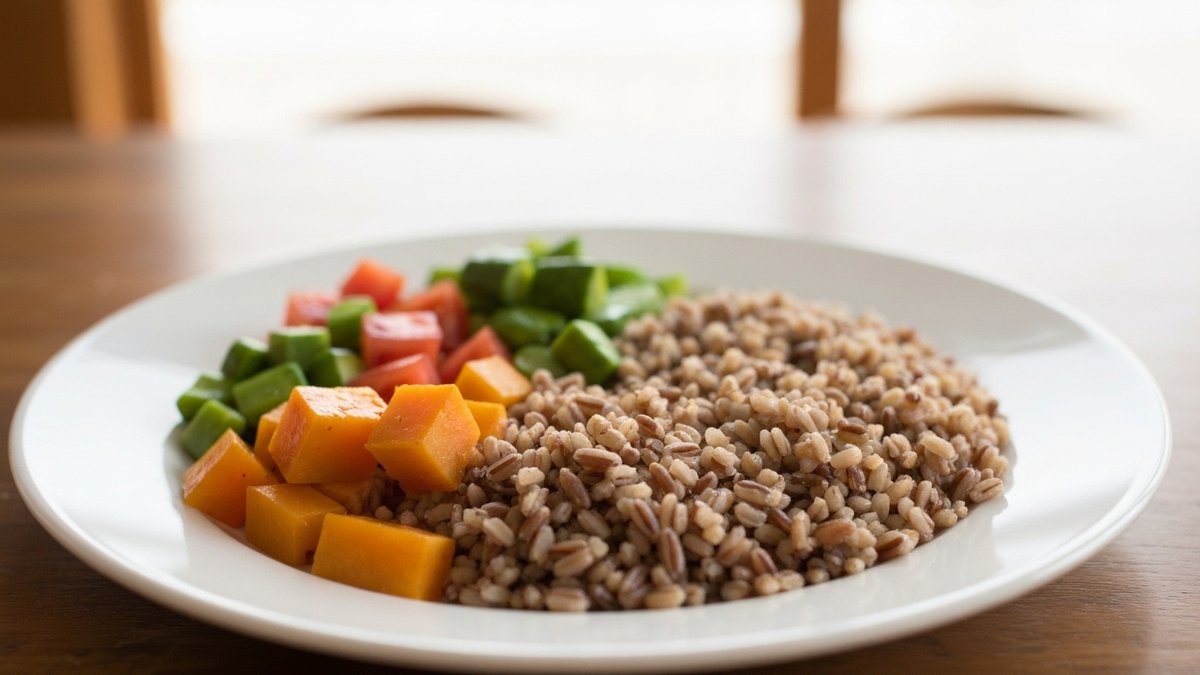
You don’t need special equipment to start, though a plate with the proportions marked out removes the guesswork on busy nights. Here’s a straightforward way to build your first few meals:
- Fill half your plate with vegetables first. Do this before adding anything else, so the ratio is set before you’re tempted to overload the carb side.
- Add a palm-sized portion of protein. Chicken, fish, tofu, eggs, or legumes all work — aim for roughly a quarter of the plate.
- Add a cupped-hand portion of whole grains or starchy carbs. Brown rice, quinoa, sweet potato, or whole-grain pasta fill the last quarter.
- Add a thumb-sized amount of fat. A drizzle of olive oil, a few slices of avocado, or a small handful of nuts.
- Eat slowly and stop at satisfied, not full. The ratio sets the input; pacing helps you notice fullness signals before you’ve cleared the plate.
Keep the ratio consistent for two weeks before judging results — one balanced plate won’t move the scale, but the habit compounds over a month or two. Most people notice looser clothing or a small shift on the scale within three to four weeks of keeping the ratio steady at most meals, since the change is coming from a repeatable habit rather than a short-term deficit that stalls once willpower runs out. Batch-cooking a base of grains and roasted vegetables on Sunday makes weeknight portioning close to automatic: you’re assembling from pre-measured components rather than deciding proportions from scratch at 7pm on a Tuesday.
If you’re rebuilding these habits after finishing a course of weight-loss medication, the routines in this guide to habits after stopping GLP-1 treatment pair well with a portion-based plate, since both rely on structure rather than appetite suppression to keep portions reasonable once your regular hunger cues return.
Make Portion Control Effortless With a Visual Plate
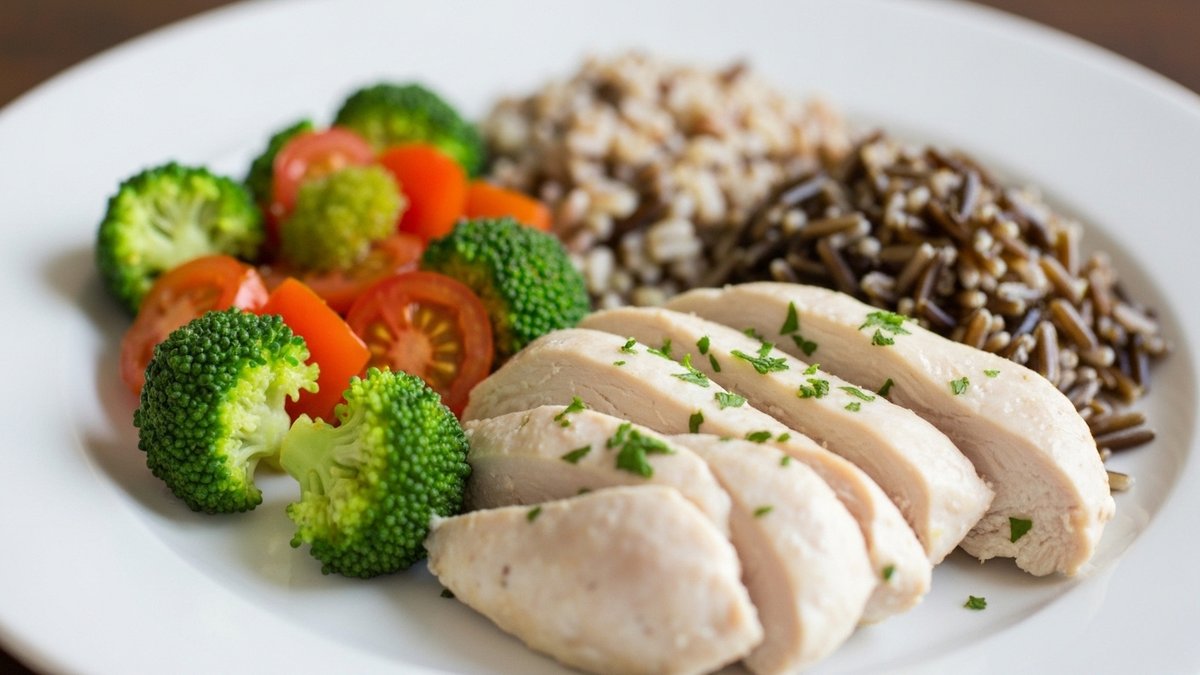
Reading about a 50/25/25 ratio is one thing; eyeballing it correctly on a plain dinner plate, meal after meal, is where most people drift back toward old habits. A plate with the sections built in removes that daily estimation, which is the whole point of portion control for weight loss — it’s supposed to lower mental effort, not add a new task to your evening.
This is exactly the gap a portion-control plate is designed to close. The proportions are marked directly on the plate, so you can serve a balanced meal on autopilot even on nights when you’re tired, cooking for a family, or eating on a tight schedule. It’s not a diet plan or a supplement — it’s a visual tool that makes the ratio automatic instead of something you have to calculate at every meal.
Used consistently, a marked plate turns portion awareness from a concept you have to remember into a habit your hands just do — you glance down, you fill the sections, you’re done thinking about it until the next meal.
Frequently Asked Questions
Does portion control work for weight loss without counting calories?
Yes. This method works by changing food proportions rather than tracking numbers. Because vegetables fill half the plate, you naturally eat fewer calories per meal through added volume and fiber, without logging anything. Most people find it easier to sustain than counting because there’s no daily math involved, and no app to remember to open.
How big should my portions be for weight loss?
A simple starting ratio is half the plate in non-starchy vegetables, a quarter in lean protein, and a quarter in whole grains or starchy carbs, with a small amount of added fat. Hand-based measures work well if you’re eating out: a palm for protein, a cupped hand for carbs, a thumb for fat.
What’s the difference between portion control and calorie counting?
Calorie counting requires estimating the energy value of every food and tracking a daily total, meal by meal. A plate-ratio approach skips that step and uses visual proportions instead. Both can support weight loss, but portion control tends to require far less daily effort to keep up over months rather than weeks.
Can this approach help with long-term weight maintenance?
Yes — because it’s a plate-building habit rather than a temporary restriction, this approach tends to hold up well after the initial weight-loss phase ends. It works especially well for maintenance, when the goal shifts from a calorie deficit to simply eating in a way you can repeat indefinitely without renegotiating it every week.
Do I need a special plate for portion control?
No, you can eyeball the 50/25/25 ratio on any plate you already own. A plate with the sections marked out just removes the daily guesswork, which makes the habit easier to keep up on busy, tired, or low-motivation days when precision would otherwise slip.
Key Takeaways
- Portion control for weight loss uses proportions, not calorie math
- Half plate vegetables, a quarter protein, a quarter carbs, some fat
- Fiber and protein drive fullness more than restriction does
- Hand measures work well if you don’t have a marked plate
- Consistency over two weeks matters more than one perfect meal
- A visual plate removes the daily estimation step entirely
Still eyeballing portions and second-guessing every plate? A portion-control plate marks the ratio for you, so balanced meals happen without extra thought.