 PLATE + FIT
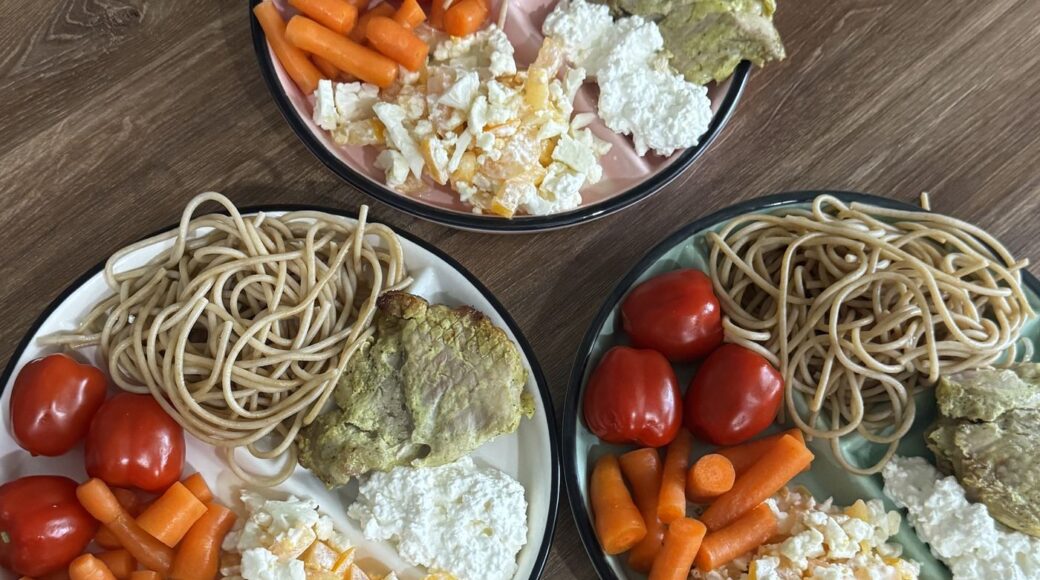
When your day is back-to-back meetings, a commute, and an inbox that never empties, figuring out how to eat healthy on a busy schedule can feel like one more task you don’t have time for. The good news is that it isn’t about finding an extra hour in your day — it’s about building a small number of repeatable habits that hold up on your worst days, not just your calm ones. This guide walks through five of them: batching one 45-60 minute prep session into 4-5 ready meals, using your hand as a portion guide when you have zero minutes to spare, building grab-and-go combinations that still land close to a 50/25/25 balance, keeping 2-3 backup meals in the freezer for the days nothing goes to plan, and leaning on a visual plate method instead of counting anything. None of it needs a Sunday marathon or special equipment — just a system that runs on autopilot when you’re rushed.
Why „No Time“ Usually Means „No System“
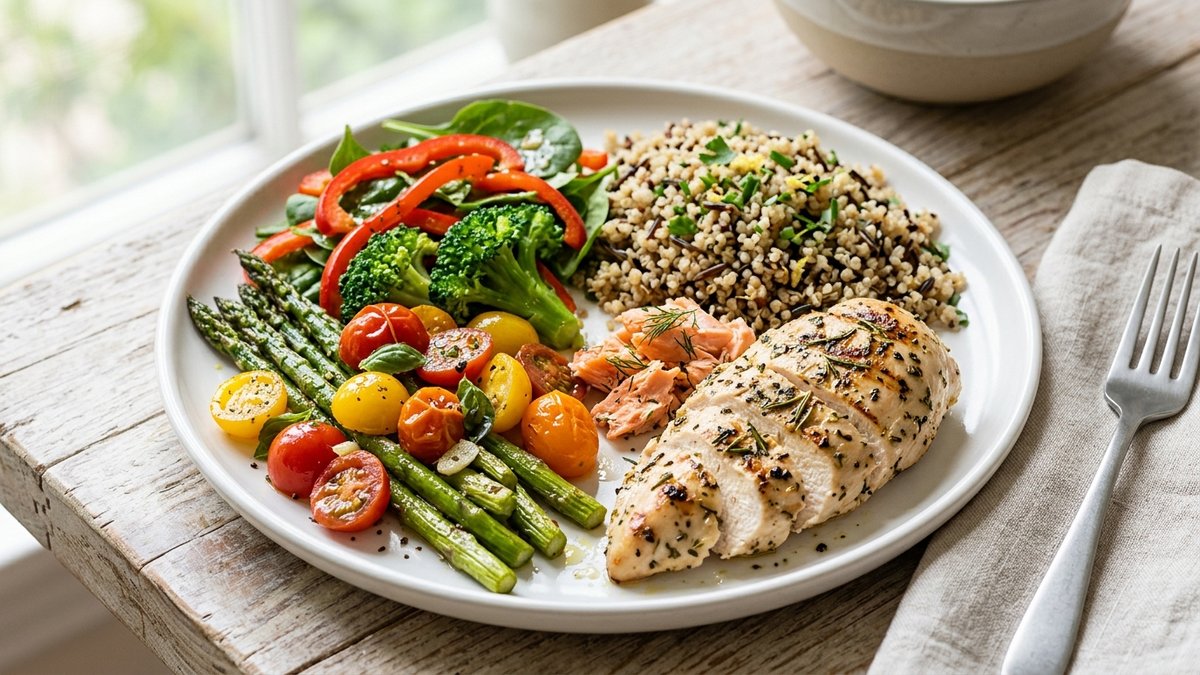
Most people don’t eat badly on busy days because they don’t know what a balanced meal looks like. They eat badly because the default option — a vending machine, a drive-through, or nothing until 8 p.m. — is faster than any better option they can picture in the moment. That gap between „I know what’s healthy“ and „I have it ready in under 5 minutes“ is the whole problem on a packed calendar, and it’s a logistics problem, not a willpower problem.
The Harvard T.H. Chan School of Public Health’s Healthy Eating Plate model gives a simple target to build around: roughly half the plate in vegetables and fruit, a quarter in whole grains, and a quarter in protein. You don’t need a kitchen scale to hit that ratio — you need it pre-built into whatever you’re grabbing, which is exactly what the habits below do. For the full breakdown of the ratio itself, see the healthy plate method explained.
Two numbers matter more than most others here. First, 20-30 grams of protein per meal keeps hunger manageable for roughly 3-4 hours, so a meal short on protein tends to leave you scavenging by 3 p.m. Second, a meal with almost no vegetables or fiber tends to leave you hungry again within 60-90 minutes, whole grains or not. Once a meal clears both marks, the exact dish barely matters — a bowl, a wrap, and a sandwich can all hit the same ratio.
Think of a typical rushed week: 5 workdays, 2-3 of them genuinely unpredictable, and maybe 20-30 minutes of usable kitchen time on any given evening. The habits that survive that week are the ones decided once in advance, not the ones re-decided from scratch every single day. That’s really the whole answer to how to eat healthy on a busy schedule: fewer decisions, made earlier, not more discipline, applied later.
Picture a Tuesday with three back-to-back calls, a 20-minute lunch window, and a commute both ways. On a day like that, a healthy meal has to already exist somewhere — a fridge, a bag, a freezer — because there is no realistic 30-minute cooking window left to invent one. Every habit below is built around that constraint, not around an idealized, unhurried version of the day.
Batch Once, Eat Well for the Whole Week
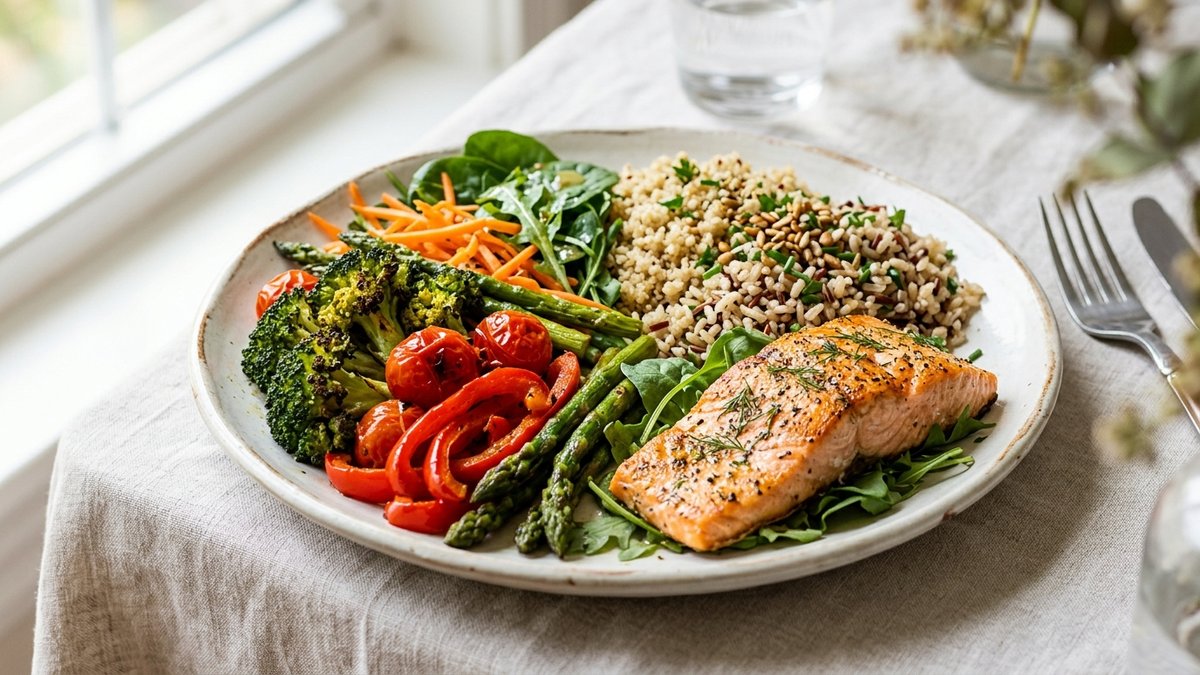
A single 45-60 minute session, done once, removes the need to make 5 separate decisions about lunch during the week. The goal isn’t a complicated meal-prep spread with 10 different dishes — it’s 3-4 base components you can recombine daily so the food doesn’t get boring by Wednesday.
- 1 sheet pan of roasted vegetables (400-500 g), enough for 3-4 meals
- 1 batch of a whole grain — rice, farro, or quinoa (roughly 3 cups cooked, about 550 g)
- 1 protein cooked in bulk — beans, chicken, or tofu (500-600 g)
- 1 sauce or dressing made once, used all week (roughly 1 cup total)
Portioned into containers using the same 50/25/25 split, that single session covers 4-5 lunches. Roasted vegetables and cooked grains hold for 4-5 days refrigerated; dressed salads hold only 2-3 days before they turn soggy, so add the dressing right before eating instead of during the batch session.
If cooking on a set evening isn’t realistic every week, a 20-minute version still works: pick one component — usually the protein, since it takes the longest — and buy the other two pre-made (a bagged salad kit, a microwave rice pouch). That cuts a 60-minute session down to roughly a third of the time while keeping the same ratio intact. Either version freezes well: portioned into 4-6 containers, cooked grains and proteins keep for up to 3 months in the freezer, which is worth doing on weeks when you know a busier stretch is coming.
A rotating base of 3 proteins (chicken, beans, tofu), 2 grains (rice, quinoa), and 3 vegetable roasts (broccoli, peppers, sweet potato) gives you roughly 18 possible combinations from a single 45-60 minute session — more variety than it sounds like on paper, and enough to avoid the „same lunch every day“ fatigue that makes people abandon batching after 2 weeks.
Grab-and-Go Combinations That Still Hit the Ratio
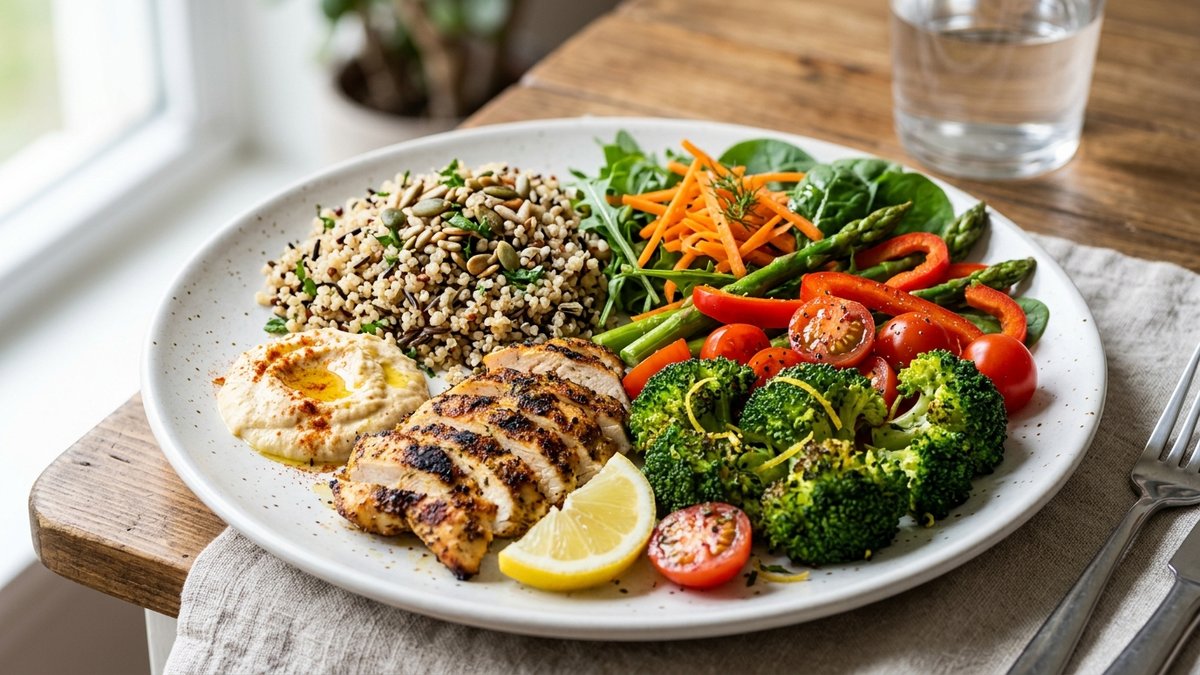
When even 20 minutes of prep isn’t happening this week, grab-and-go still works if the combination is pre-decided instead of assembled from whatever’s around at 7 a.m. Three combinations that consistently land close to the ratio without a scale:
- Yogurt + oats + fruit: 1 cup plain yogurt, 1/3 cup oats, 1 cup chopped fruit — ready in under 2 minutes, no cooking, roughly 20 g of protein from the yogurt alone.
- Rotisserie chicken + pre-washed salad kit + microwave rice pouch: a palm-sized portion of chicken (about 120-150 g), a full bag of greens, half a rice pouch — roughly 4 minutes total, including reheating.
- Hummus + whole-grain wrap + baby carrots: 3-4 tablespoons hummus, 1 wrap, a handful of carrots — no reheating needed at all, ready in under 90 seconds.
When there’s genuinely no scale or measuring cup available, your own hand is close enough: a palm-sized portion of protein is roughly 20-30 g, a closed fist is roughly a cup of vegetables or fruit, and a cupped handful is roughly 1/2 cup of a starchy carbohydrate like rice or pasta. The hand portion method covers this in more detail if you want the full reference for other food groups too.
Most grab-and-go meals reheat in under 2 minutes in a microwave, which is often the actual bottleneck at lunch, not the food itself — 2 minutes waiting by a break-room microwave feels longer than 2 minutes cooking at home, so combinations that need zero reheating (like the wrap or the yogurt bowl) tend to survive the busiest weeks better than the ones that need a microwave queue.
Grocery-wise, this habit works best with 5-7 pantry and fridge staples kept stocked at all times — plain yogurt, a grain pouch, a protein source, a bagged salad, and 2-3 fruits — so a grab-and-go meal never depends on a specific grocery trip having happened that exact week. These four combinations are really the practical core of how to eat healthy on a busy schedule without cooking a single hot meal on the hardest days.
Skip the Guesswork: Plate It in Seconds
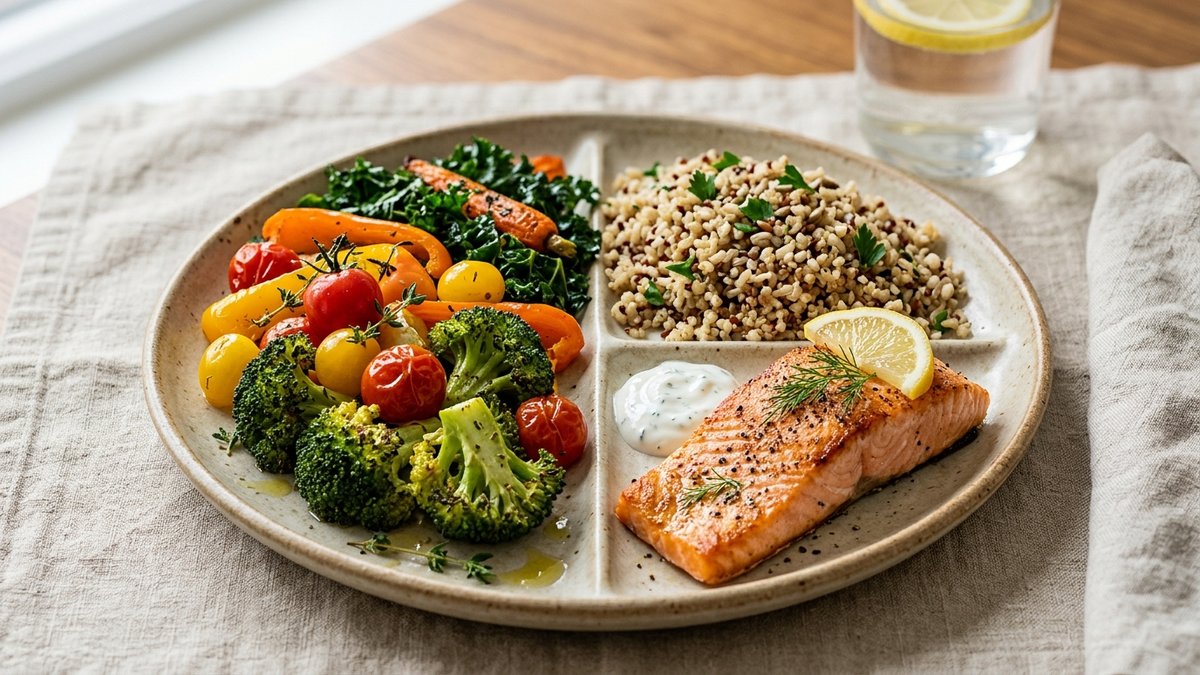
Batching and grab-and-go combos solve the „what do I eat“ problem. The remaining question — is this actually balanced, or did I just guess — is where a visual portion-control method earns its place on a busy day. Instead of weighing anything or checking a chart, you plate directly onto sections sized for the 50/25/25 ratio, so the proportions are already decided before the food even touches the plate.
That’s the whole idea behind the Portion Plate: a portion-control plate with the vegetable, protein, and carb sections built in, so a rushed breakfast at 7 a.m. or a reheated lunch at your desk lands close to balanced without a second thought. It’s a physical shortcut for the same ratio described in Harvard’s model and in the site’s own guide to what the healthy eating plate actually is — useful on the 3-4 days a week when you genuinely don’t have time to think about proportions at all.
On a calm Sunday, most people can eyeball 50/25/25 reasonably well. On a day with back-to-back calls and 10 minutes for lunch, that same estimate tends to drift — a plate that „sits ready“ already sectioned removes that drift entirely, which is the specific problem a busy schedule creates that a recipe or a grocery list alone doesn’t solve.
Frequently Asked Questions
How do I eat healthy when I have almost no time to cook?
Focus on one weekly decision instead of daily ones: batch 3-4 base components once, for 45-60 minutes, then recombine them into 4-5 meals across the week. Pair that with 2-3 grab-and-go combinations that need zero cooking, like yogurt with oats and fruit, for the days batching didn’t happen.
What should I batch-prep for a busy week?
One sheet pan of roasted vegetables (400-500 g), about 3 cups of a cooked whole grain, and 500-600 g of a bulk protein cover most of the week. Keep sauces and dressings separate and add them fresh, since dressed vegetables hold well for only 2-3 days versus 4-5 for plain ones.
How can I portion meals without a scale?
Use your hand: a palm-sized portion is roughly 20-30 g of protein, a closed fist is roughly a cup of vegetables or fruit, and a cupped handful is roughly 1/2 cup of rice or pasta. It’s not lab-precise, but it’s accurate enough for daily eating and takes zero extra minutes.
How long does batch-prepped food actually last in the fridge?
Roasted vegetables and cooked grains typically hold for 4-5 days refrigerated, and up to 3 months in the freezer if portioned into containers. Salads or vegetables already tossed in dressing hold up for only 2-3 days before texture suffers, so store dressing separately and combine right before eating.
What’s a quick balanced breakfast when I’m rushing out the door?
Plain yogurt (1 cup) with oats (1/3 cup) and chopped fruit (1 cup) takes under 2 minutes to assemble, needs no cooking, and delivers roughly 20 g of protein alongside fiber and carbohydrate — close to a balanced ratio without any prep the night before.
Key Takeaways
- Batch one 45-60 minute session instead of five daily decisions
- Keep the 50/25/25 ratio — no scale needed
- A palm-sized portion is roughly 20-30 g of protein
- Grab-and-go works when the combination is pre-decided
- Freeze 2-3 backup meals for the days nothing goes to plan
- A visual plate beats counting on your busiest days
Guessing at portions gets harder, not easier, on a rushed day. The Portion Plate keeps the 50/25/25 ratio built into the plate itself, so even your fastest meal stays balanced.