 PLATE + FIT
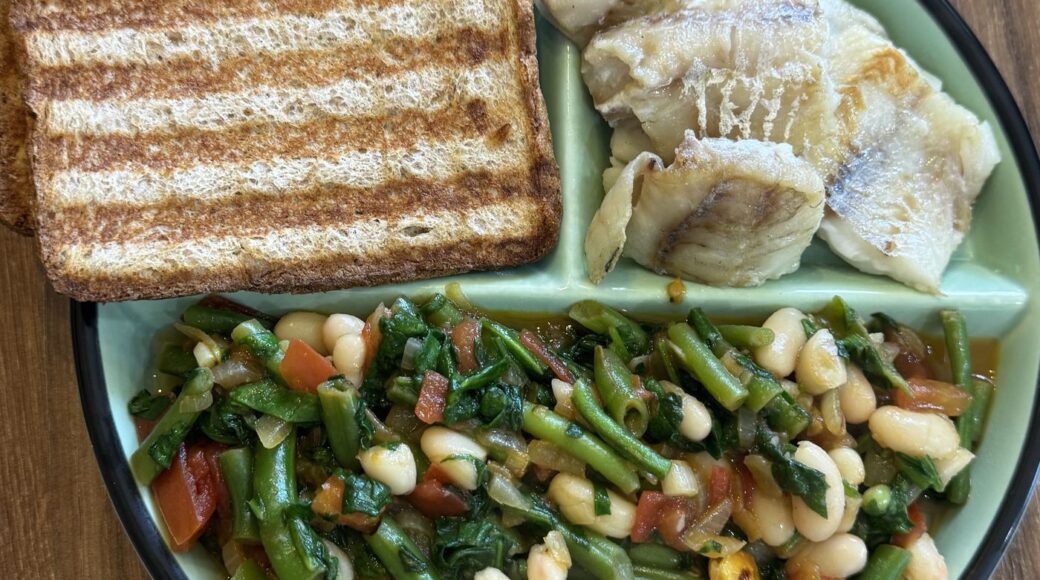
You spoon rice onto your plate, eyeball the chicken breast next to it, and call it a serving. Eyeballing food portions accuracy feels like common sense, but how close is that guess to what a scale would say? Not very, according to the research on portion-size estimation. Even people trained to measure food for a living routinely miss the mark, and the size of the miss depends heavily on what’s on the plate — liquids and mixed dishes are far harder to judge by eye than a solid piece of meat or fish. This matters because portion size, more than almost any other single factor, decides whether a meal supports steady energy and a healthy weight, or quietly works against it. Below is what controlled studies have actually measured about eyeballing food portions accuracy — where the errors come from, how big they typically run, and what closes the gap between what you see and what’s really on your plate.
What Counts as « Eyeballing » a Portion?
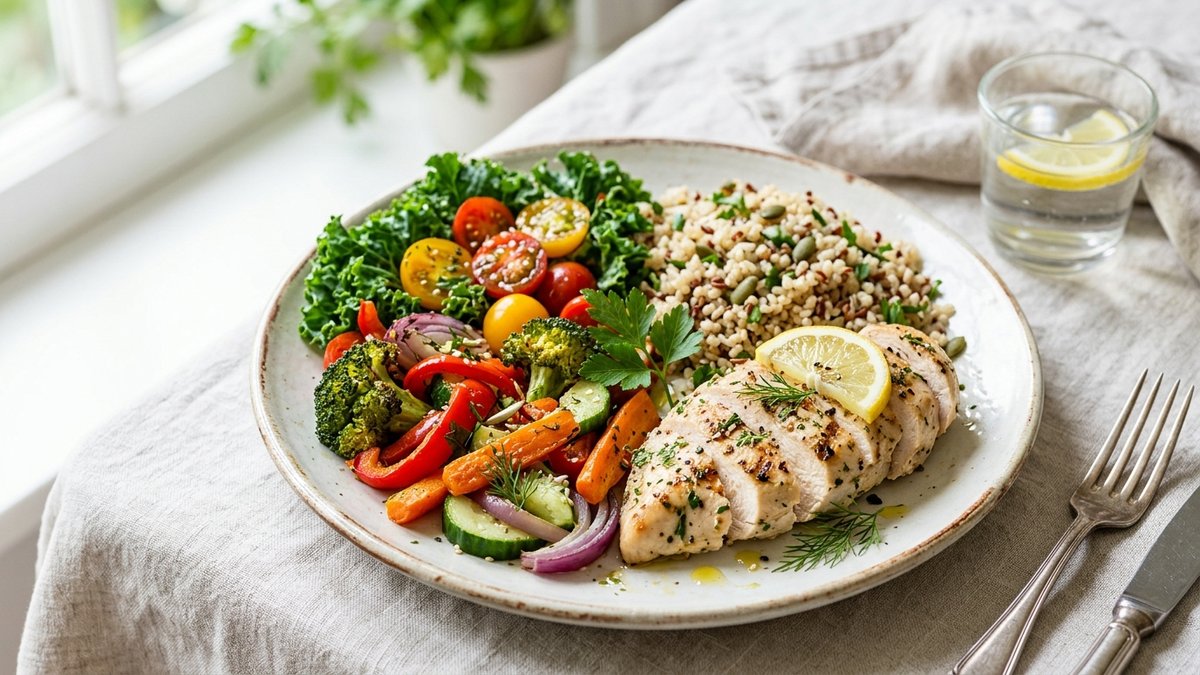
Eyeballing a portion means judging how much food is on your plate by sight alone — no kitchen scale, no measuring cup, no printed guide. It’s how most people eat most meals: a scoop of pasta that looks « about right, » a splash of oil that seems « enough, » a handful of almonds that feels « small. » Researchers test how accurate this everyday habit really is by pre-weighing a set of foods, asking someone to guess the amount without seeing the true weight, then comparing the guess to the scale.
The research on guessing portion sizes usually compares several reference points against each other rather than testing eyeballing in isolation: completely unassisted estimation, estimation helped by a food photo or « atlas » for comparison, hand-based methods (a palm-sized portion of protein, a cupped handful of a starchy side), and household tools like measuring cups and spoons. One 2016 study that compared hand-based and household-measure methods head-to-head recruited 67 participants and had each of them judge the size of 42 pre-weighed foods and liquids.
The point of testing it this way isn’t to catch anyone out — it’s to find which reference points actually shrink the error, because « just look more carefully » turns out not to be reliable advice on its own. If a printed reference proportion sounds easier than any of this, that’s close to what a portion-control plate is built to do — more on that below. First, the numbers on how big the gap really is.
How Big Is the Gap? What the Numbers Show
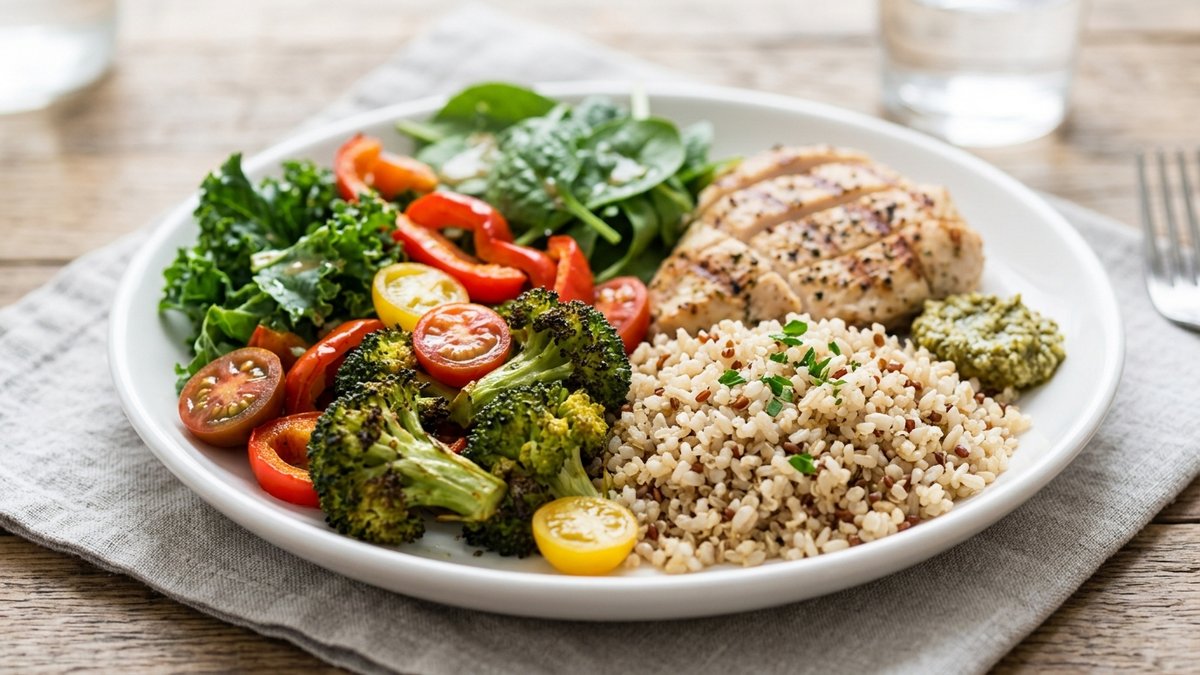
Across controlled studies, eyeballing food portions accuracy comes out consistently worse than any reference-assisted method. In one 2026 study of 128 participants in Astana, Kazakhstan, who estimated the size of 51 foods and 8 beverages, unassisted guessing produced a mean absolute percentage error of 79.4% — meaning the average guess was off by roughly four-fifths of the true weight. Giving the same participants a reference photo atlas to compare against cut that error to 44.76%. Still large, but close to half.
Even trained professionals don’t do much better without a reference. A study of 38 nutritionists, dietitians, and nutrition researchers tested their ability to estimate portion sizes from digital food images: only 23.7% estimated a plated meal within 10% of its actual weight, and 32.3% did so for a meal served in a bowl. Food identification — recognizing what a dish was made of — was consistently good. Judging how much of it there was, was not.
Not every food is equally hard to judge. A separate study that tracked real meals through a chest-worn camera found a mean overall estimation error of 4.8% under those conditions, but the average masked a wide spread by food type: about 8.3% error for solid foods like a chicken breast or a baked potato, roughly 10% underestimation for amorphous foods like stew or mashed vegetables that don’t hold a clean shape, and 19% error for liquids such as oil, dressing, or a poured drink. The rounder and less structured a food is, the harder it is to size up by eye.
Why Your Eyes Get Fooled by Certain Foods
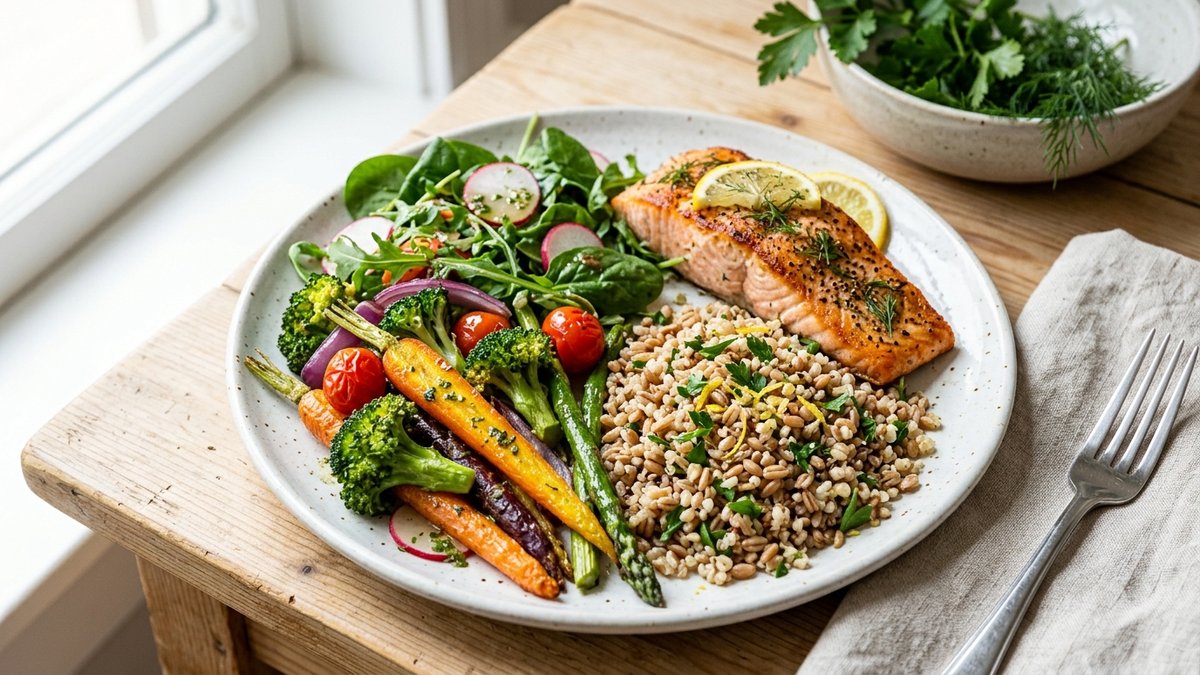
The pattern above isn’t random. Foods with a defined edge — a fillet, a slice, a single potato — give your eyes a shape to measure against, so the guess tracks the true weight reasonably well. Liquids and loose, mixed foods don’t offer that shape: a pour of olive oil spreads thin and looks like « not much, » a heap of rice compresses when it’s weighed, and a bowl of soup hides its volume behind the sides of the bowl. That’s consistent with the roughly 19% liquid error and 10% amorphous-food underestimation noted above — it isn’t that people are careless with liquids, it’s that liquids don’t give the eye anything reliable to anchor to.
Plate and bowl shape compound the problem. The nutrition-professional study above found accuracy dropped for food in a bowl compared with food on a flat plate — 32.3% within 10% versus 23.7% — even though bowls are the format many people assume is « easier » to judge because the food is contained. A tall, narrow bowl visually reads as holding less than a wide, shallow one carrying the identical weight, and a plate with a raised rim or a busy pattern changes how full it looks compared with a plain one. None of this is about a lack of attention or nutrition knowledge; it’s a property of how portions are seen, not measured.
This is also why « just eyeball it more carefully » doesn’t hold up as advice. The 79.4% average error from unassisted guessing in the Kazakhstan study wasn’t produced by inattentive participants — they were actively trying to estimate correctly. What changed the number wasn’t more effort; it was giving people an external reference point to compare against.
What Actually Closes the Gap
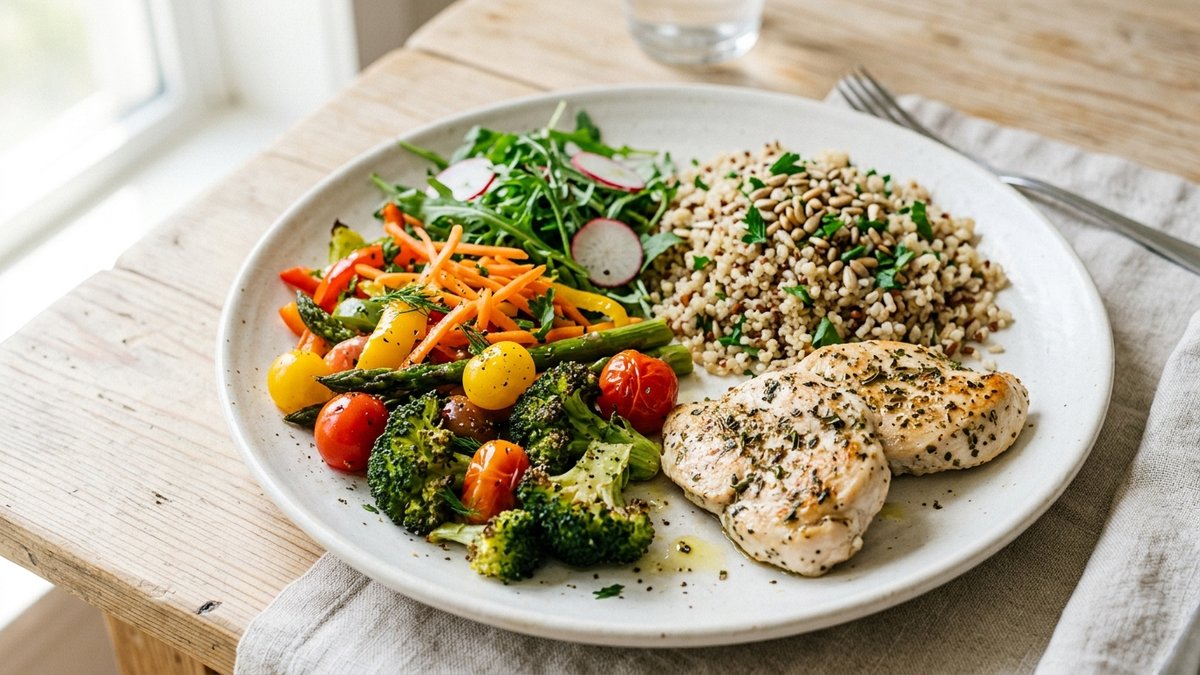
Across the research, a few approaches consistently improve eyeballing food portions accuracy, and none of them require weighing every meal for life.
Reference training. A study of 90 dietetics students in Spain tested estimation accuracy across 57 commonly eaten foods (125 different shapes) before and after a 3-hour training session using reference photos and models. Estimation errors dropped for most food categories after training, with amorphous foods remaining the hardest to judge even afterward — confirming that the shape problem doesn’t fully disappear with practice, but it does shrink.
Digital or augmented-reality aids. A 2022 study testing three portion-estimation tools with nutrition students found an average improvement of 12.2% for an augmented-reality tool and 11.6% for a simple online estimation tool, compared with unassisted guessing — while a static infographic tool actually made estimates slightly worse, a 1.7% decrease. The lesson isn’t « use AR specifically, » it’s that an interactive reference beats a passive one.
A hand-based estimation method sits in between: it’s not as precise as a scale, but it gives you a fixed, always-available reference — your own palm, fist, and cupped hand don’t change size from one kitchen to the next the way a « handful » or « a splash » does. In the 2016 study cited earlier, the finger-width method got 80% of estimates within ±25% of true weight, a meaningful jump from unassisted guessing.
The common thread across every method that worked — atlas photos, AR, hand units — is a consistent external reference the eye can compare against instead of relying on memory or vague drift, like assuming a portion « looks about like last time. » A plate that’s pre-divided into fixed sections works on the same principle, just built into the tableware itself instead of held in your head.
The Portion Plate Bridge
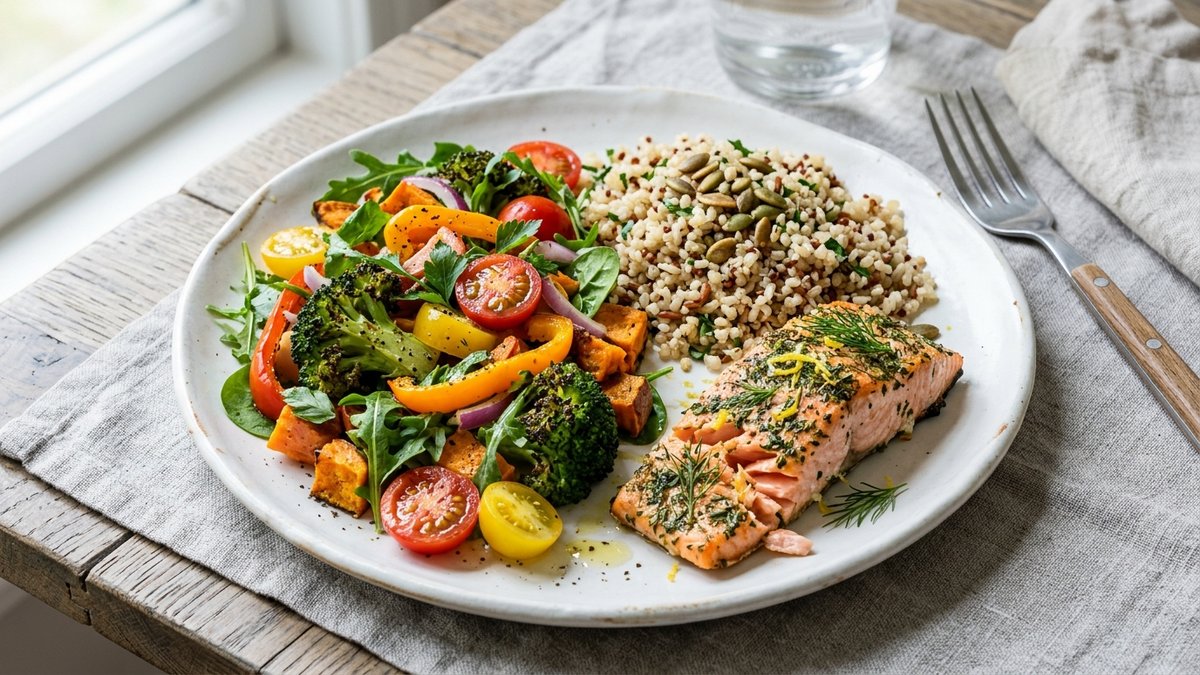
Every method above that improved accuracy did it the same way: by giving the eye a fixed reference instead of asking it to remember one. A structured plate method — half the plate for vegetables, a quarter for protein, a quarter for carbohydrates — builds that reference directly into the object you’re already using, so there’s no atlas to look up and no app to open mid-meal.
That’s the idea behind the Portion Plate: the sections are printed on the plate itself, in the same 50/25/25 proportions the research above shows people struggle to hold in their heads without help. You don’t need to remember what « a quarter of the plate » looks like from one meal to the next, because the plate shows you — every time, at a glance, with no guessing involved.
Frequently Asked Questions
How accurate is estimating portions without any tools?
Poorly, on average. Controlled studies put unassisted visual estimation at a mean error of around 79% of true weight, though accuracy varies a lot by food type — solid foods like a chicken breast are judged far more accurately than liquids or mixed dishes like stew.
Are trained professionals better at guessing portion sizes?
Somewhat, but less than you might expect. One study found that even nutritionists and dietitians estimated a plated meal within 10% of its true weight only 23.7% of the time, and a bowled meal 32.3% of the time. Food-identification skill didn’t translate directly into portion-judging accuracy.
Why are liquids and sauces so much harder to eyeball than solid food?
Solid foods have a visible edge or shape your eye can measure against — a fillet, a slice, a whole potato. Liquids spread, pour, and pool without holding a shape, so there’s nothing fixed to compare to. Research measuring this found roughly 19% error for liquids versus about 8% for solid foods.
Does practice alone fix portion-estimation accuracy?
Partly. A short, structured training session measurably reduced errors in one study of 90 dietetics students across 57 foods, but even after training, foods without a defined shape remained the hardest to judge accurately. Practice helps; a fixed visual reference helps more.
What’s the simplest way to guess portions more accurately at home?
Use a consistent external reference instead of memory. That can be your own hand as a rough unit, a reference photo you check occasionally, or a plate with the proportions built into its design — all three improve eyeballing food portions accuracy compared with unassisted guessing.
Key Takeaways
- Unassisted portion guesses average around 79% error in studies
- Trained professionals hit 10% accuracy only 24-32% of the time
- Liquids and amorphous foods are hardest to eyeball (up to 19%)
- A photo reference roughly halves unassisted error, to about 45%
- Short training and interactive tools each improved estimates 11-12%
- A fixed visual reference beats memory or guessing more carefully
You can’t fix what you can’t see accurately, and the research above shows most people can’t see portion size accurately without help.
The Portion Plate builds the reference in, so every meal starts with the proportions already measured for you.