 PLATE + FIT
Healthy eating for beginners comes down to a handful of repeatable moves, not a perfect diet. You do not need to count every calorie, memorize food lists or overhaul your kitchen in a weekend. You need a simple picture of what a balanced meal looks like, a few small habits, and enough patience to repeat them for a month. This guide gives you exactly that: a clear definition of what «healthy» means in practice, a 50/25/25 plate to build meals around, five steps to start this week, and honest answers to the questions beginners ask most. Everything here is general education, not personal medical advice, so if you have a health condition, check the details with your own doctor or a registered dietitian.
What Healthy Eating for Beginners Actually Means
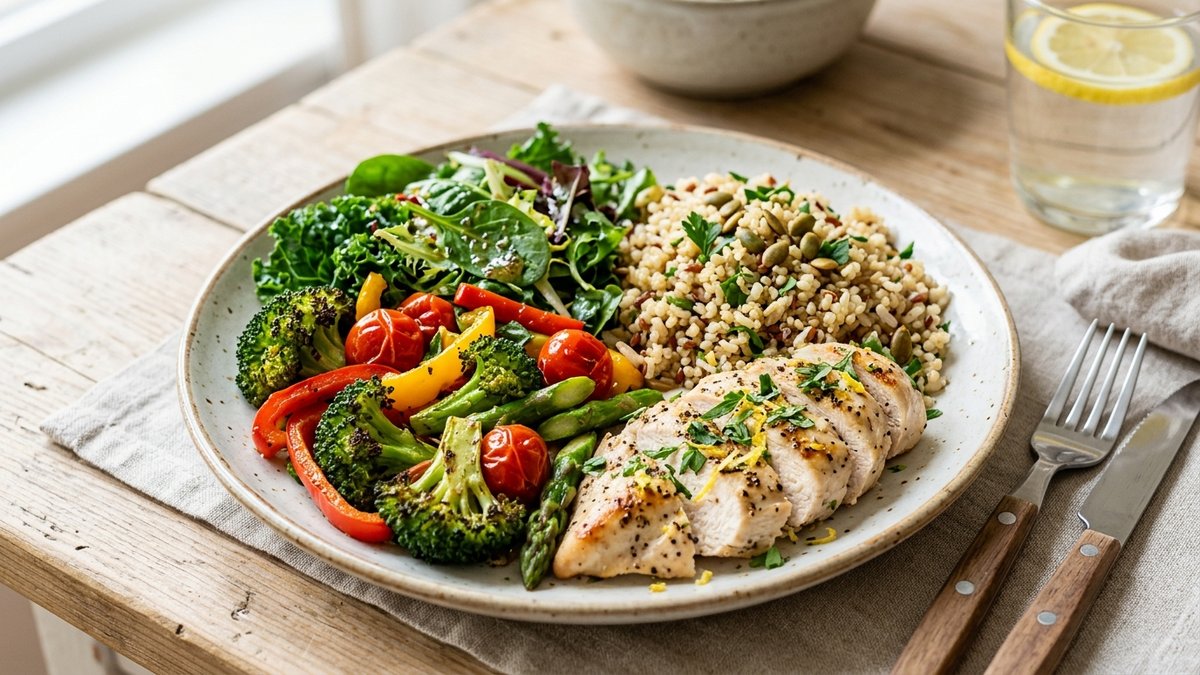
Strip away the trends and healthy eating is a pattern, not a single food. The pattern is mostly plants, enough protein, whole-food carbohydrates, modest amounts of added sugar and salt, and portions that fit your appetite. That is why healthy eating for beginners works best when you focus on proportions instead of rules about «good» and «bad» foods.
The World Health Organization’s healthy diet guidance gives a few numbers worth knowing. Aim for at least 400 g of fruit and vegetables a day, which is about 5 portions. Keep free sugars below 10% of your total energy intake, and below 5% (roughly 25 g, or 6 teaspoons) for extra benefit. Keep salt under 5 g a day, about one teaspoon. Those four figures cover a large share of what separates an average day of eating from a solid one.
Notice what is missing: no forbidden foods, no starvation targets, no supplements. A pizza night does not cancel a week of decent meals. What matters is the average of roughly 21 meals a week, not any single one. If 15 or more of those meals follow the same simple structure, you are doing well.
Portion size is the part beginners most often overlook. Portions have crept up over the decades, which makes «a normal serving» harder to judge by eye. If you are curious how far that drift went, the breakdown in how portion sizes have grown since 1980 compares seven everyday foods.
A quick reality check on expectations helps too. Healthy eating for beginners is not about speed. A realistic first month means one new habit each week, about 28 days of practice, and a handful of imperfect meals along the way. Those imperfect meals are not failures. They are data about which situations, such as late meetings, travel or family dinners, need a plan.
Build Your Plate: The 50/25/25 Starting Point
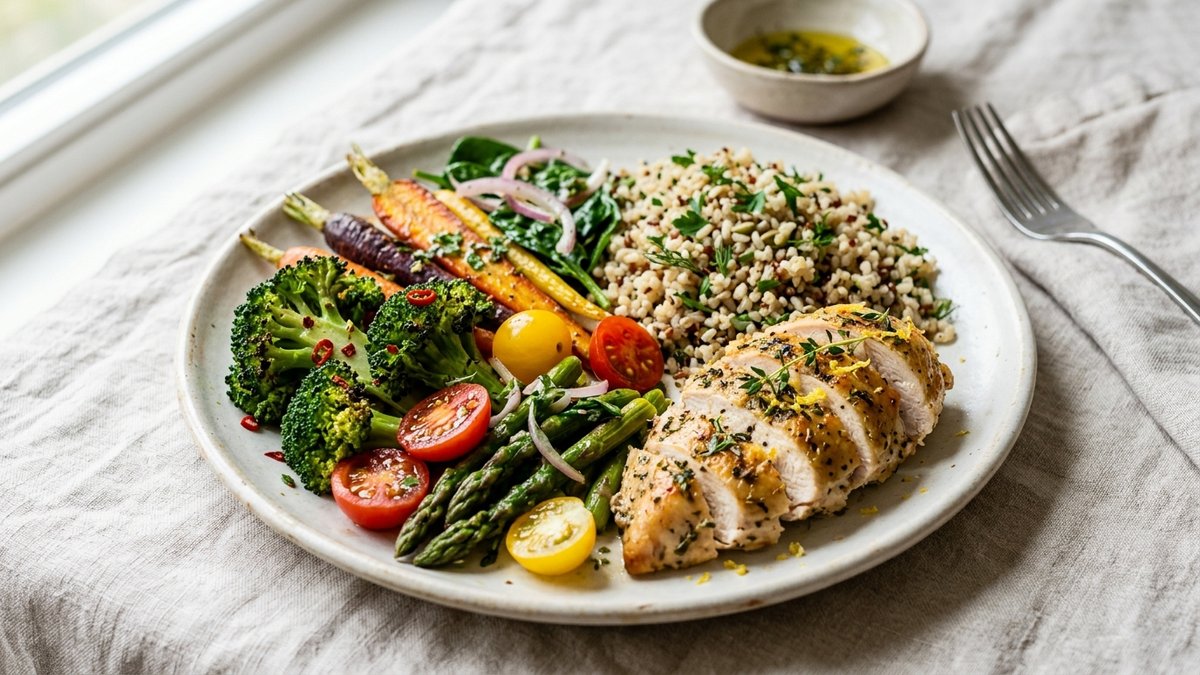
If you remember one thing, remember the plate. Harvard’s Healthy Eating Plate and many national guides point to a similar shape, and it is easy to sketch on any dinner plate:
- 50% vegetables and fruit: fill half the plate, with vegetables leading and fruit as a supporting act.
- 25% protein: fish, poultry, eggs, beans, lentils, tofu or yogurt. A palm-sized portion is about 85-100 g cooked, and most adults land around 20-30 g of protein per meal.
- 25% complex carbohydrates: brown rice, quinoa, oats, whole-grain bread, potatoes with the skin on.
- A thumb of healthy fat: about 1 tablespoon of olive oil, a small handful of nuts or a quarter of an avocado.
The arithmetic helps you hit the 400 g fruit and vegetable target without trying. If each plate carries roughly 150-200 g of vegetables, two plates plus a piece of fruit get you there, and a third plate puts you comfortably over.
The plate also does quiet work on fullness. Vegetables bring volume and fiber, protein keeps you full for longer, and carbohydrates give you steady energy. The common fiber guideline is 25-30 g a day, and a plate that is half vegetables with a whole-grain quarter makes that realistic. For a deeper walk-through of the idea, see the healthy plate method explained.
You do not need to hit 50/25/25 at every meal. Soups, wraps, bowls and stir-fries all fit if you keep roughly the same proportions inside them. Think «about half vegetables» and you will be close enough.
Five Simple Steps to Start This Week
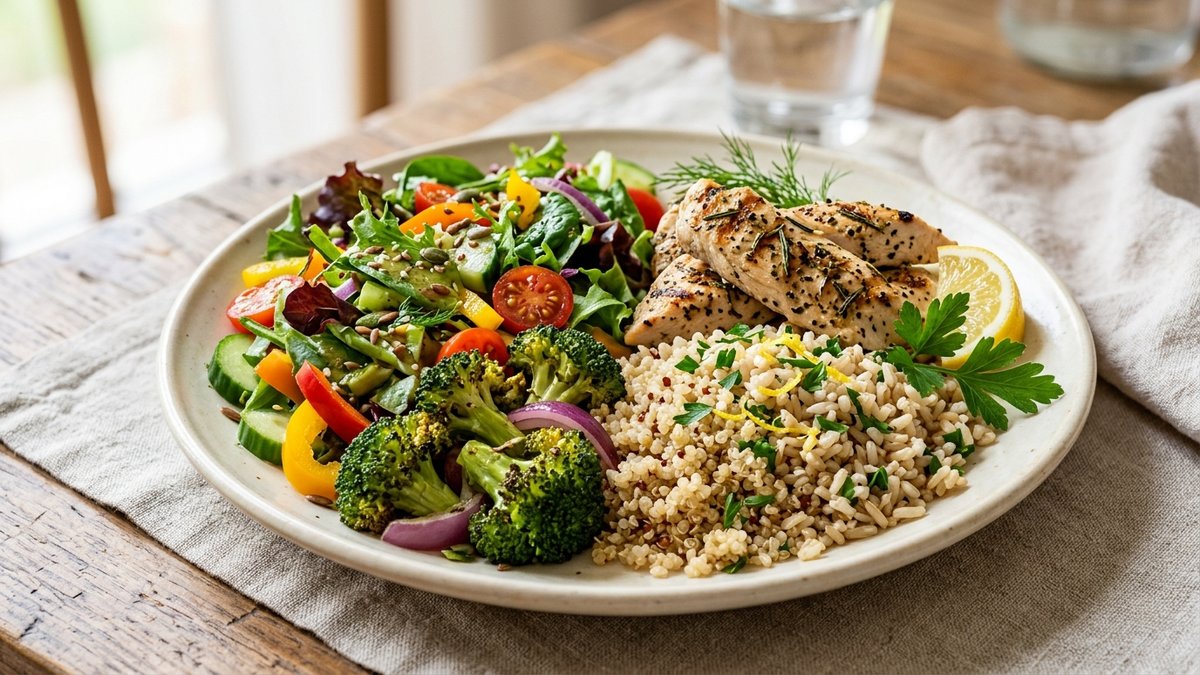
Most beginners fail by changing ten things at once. Change one thing per week instead. Over 5 weeks that is 5 habits, and you will have rebuilt most of your routine without a single dramatic week.
- Add a vegetable to one meal a day. Start with the meal you already cook most often. One extra handful, roughly 80 g, is enough in week one.
- Swap one refined carb for a whole one. White rice becomes brown rice, white bread becomes whole-grain. One swap, one meal, no drama.
- Put protein on every plate. Aim for about 20-30 g at each of your 3 main meals. Eggs, yogurt, beans and fish all count.
- Cut one sugary drink. A standard 330 ml can of cola holds around 35 g of sugar, which is already more than the 25 g ideal ceiling for a whole day. Swap it for water or unsweetened tea.
- Plan two dinners ahead. Decide on Sunday what two weeknight dinners will be. A plan removes the 18:00 «what’s in the fridge» scramble that leads to a takeaway.
Pair the steps with a loose rhythm: 3 meals a day with roughly 3-4 hours between them keeps most people out of the «starving, then overeating» cycle. If you prefer 2 meals and a snack, that is fine too. Consistency matters more than the clock.
Not sure how much to serve yourself without a scale? Your hand is a surprisingly reliable measuring tool, and this no-scale guide to hand portions shows how to use it. If you want the full framework behind the plate, our Healthy Eating Plate guide covers it in 4 steps.
Finally, track one thing, not everything. A tick on the calendar each day you hit your single weekly habit is enough. After 4 weeks you will have 28 days of data about what you can actually sustain.
One more tip for the first month: shop for the plate, not for the week. Walk round the shop with 3 questions in mind. Which vegetable will fill half of my next 3 dinners? Which protein is the quarter? Which whole grain is the other quarter? A basket built around those 3 answers is usually shorter, cheaper and easier to cook than one built from a vague wish to «eat better». Healthy eating for beginners gets much easier once the fridge already contains the building blocks.
Where a Portion Plate Fits In
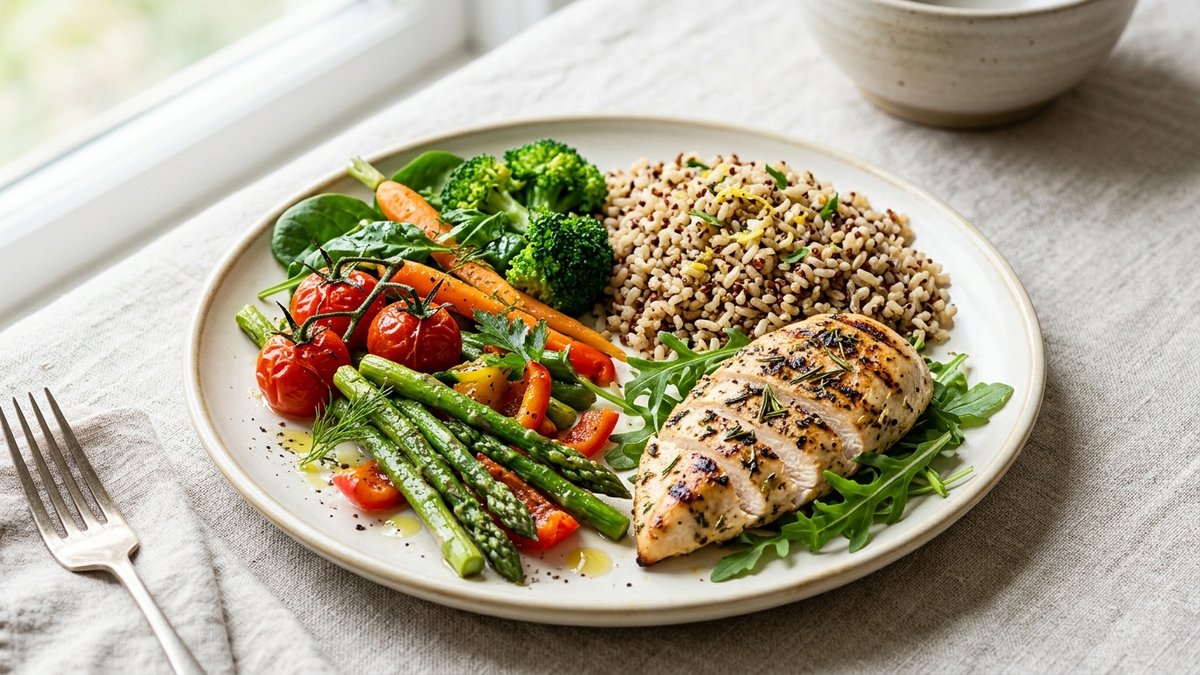
Knowing the 50/25/25 rule and applying it at 19:00 on a tired Tuesday are two different skills. A visual aid closes that gap. The portion-control plate has the proportions marked right on the porcelain, so you can see where vegetables, protein and complex carbohydrates go without measuring, weighing or logging anything.
For beginners that matters for a simple reason: your eyes calibrate to whatever you serve yourself every day. For a beginner, a plate that shows a half and two quarters retrains that sense over a few weeks, and you carry the picture with you even when you eat out. It is a tool for balanced proportions, and it fits goals as different as steadier energy, better digestion or sustainable weight management. It does not promise a particular result, and it works alongside the five steps above rather than replacing them.
Frequently Asked Questions
What is the easiest way to start eating healthy?
Pick one habit and repeat it for a week. Adding a vegetable to one meal a day is the lowest-effort starting point. Once it feels automatic, add a second habit such as a protein source at breakfast. Stacking small changes over 4 to 6 weeks beats a strict plan you abandon after 3 days.
Do I need to count calories as a beginner?
Not necessarily. Counting can be useful for some people, but it is not required to eat well. A plate that is about 50% vegetables, 25% protein and 25% complex carbohydrates gives you a built-in portion guide. If you want numbers, start with the WHO targets of 400 g of fruit and vegetables and under 5 g of salt a day.
How much protein should I eat per meal?
Many adults do well with roughly 20-30 g per main meal, which is about a palm-sized serving of cooked fish or chicken. Three eggs give about 18 g, and tofu needs a larger portion, around 150-200 g. Needs vary with age, activity and health, so treat that as a general starting range rather than a prescription. Anyone with a medical condition should confirm amounts with a professional.
Is healthy eating expensive?
It does not have to be. Frozen vegetables, dried beans, lentils, oats, eggs and seasonal produce are among the cheapest foods in most shops, and they fit the plate perfectly. Cooking 2 dinners in bulk each week also cuts waste and takeaway spending. Exact savings depend on where you live, so compare your own receipts after a month.
How long until healthy eating feels normal?
There is no universal timeline. In one well-known study, a new daily habit took about 66 days on average to feel automatic, with wide variation from person to person. Treat 4 weeks as a reasonable first checkpoint, then decide which habit to add next.
Key Takeaways
- Healthy eating is a pattern across about 21 weekly meals, not one perfect meal.
- Use the 50/25/25 plate: vegetables, protein, complex carbohydrates.
- Reach 400 g of fruit and vegetables a day.
- Change one habit per week, not ten at once.
- Keep free sugars under 10% of energy and salt under 5 g.
- A visual portion tool makes proportions easier to repeat.
Judging portions by eye is the hardest part of starting out. See how the Portion Plate shows the 50/25/25 split on every meal.