 PLATE + FIT

Macronutrients are the three nutrients your body needs in large amounts, and they supply nearly all of your calories. Protein, carbohydrate and fat each do a different job, and each one shows up on your plate in a different amount. Most of the confusion comes from treating them as good or bad, when the real question is how much of each you eat at a meal and what form it comes in. This guide gives you macronutrients explained simply: what each one does, the calorie math behind it, the typical ranges health authorities use, and a way to see all of it on one plate without tracking a single gram.
Macronutrients Explained Simply: What Are They?
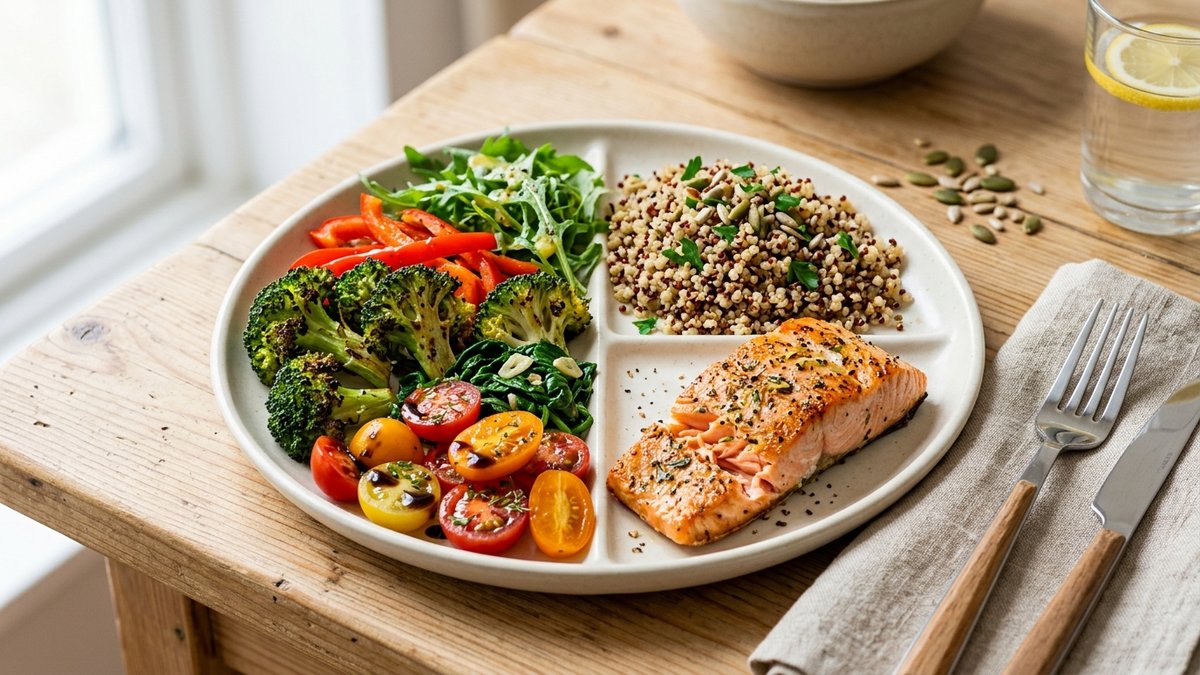
“Macro” means large. Macronutrients are the nutrients you need in grams rather than milligrams: protein, carbohydrate and fat. Water and alcohol are sometimes grouped in too, but the classic list has 3 items. Micronutrients, meaning vitamins and minerals, are needed in tiny amounts and provide no calories at all.
The calorie link is the simplest part to remember. Protein provides about 4 calories per gram, carbohydrate provides about 4 calories per gram, and fat provides about 9 calories per gram. Alcohol, for comparison, provides about 7. That is why a spoonful of oil is so much denser in energy than a spoonful of cooked rice, even though both are “food”.
It also explains why no macronutrient is the villain. Fat is the most calorie-dense at 9 calories per gram, yet it carries vitamins A, D, E and K and is part of every cell membrane. Carbohydrate is the main fuel for the brain and for hard exercise. Protein builds and repairs tissue. You need all 3 every day, just in sensible proportions.
If you want to see how these numbers appear on packaging, the guide to reading a nutrition label in under a minute shows where each macronutrient is listed and what the serving size really means.
Protein: The Building Block
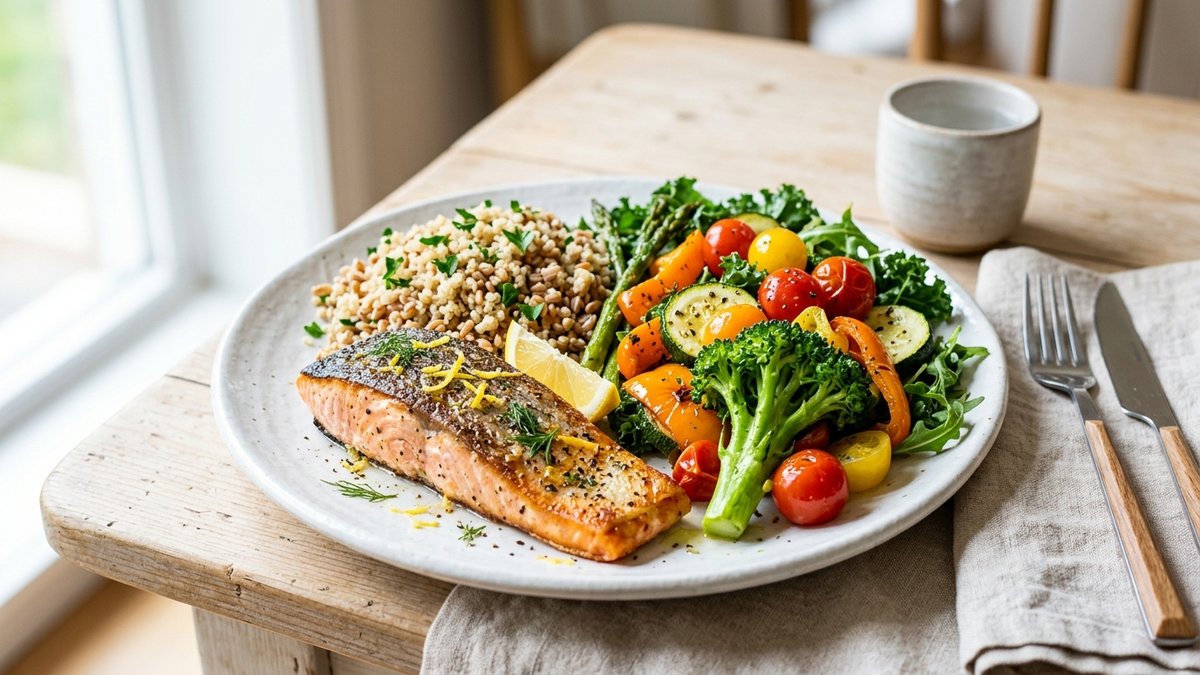
Protein is made of amino acids, 20 in total, and 9 of them are called essential because your body cannot make them. You have to eat them. Protein repairs muscle, supports the immune system, and makes enzymes and hormones. It is also the most filling of the 3 macronutrients, which is why a meal built around it keeps hunger quiet for longer.
The general adult reference intake is about 0.8 grams of protein per kilogram of body weight per day (the US RDA is 0.8 g, the European EFSA reference 0.83 g). For a 70 kg adult that is roughly 56 to 58 grams. Some people eat more, for example if they are older or train hard, but that is a conversation for a qualified professional who knows your situation, not a number to copy from the internet.
Common sources and rough amounts:
- 100 g of cooked chicken breast: about 31 g of protein
- 1 large egg: about 6 g
- 200 g (about 1 cup) of cooked lentils: about 18 g
- 200 g of plain Greek yogurt: roughly 20 g
- 100 g of firm tofu: roughly 8 to 15 g, depending on the brand
Spread it out rather than saving it for dinner. The breakdown in how much protein per meal explains why a quarter of the plate is a practical target at each sitting.
Carbohydrates and Fat: The Fuel and the Reserve

Carbohydrate is where most of the daily energy comes from in a typical diet. It ranges from sugar and white flour to oats, beans, fruit and vegetables. The type matters more than the label “carbs”. Whole grains, legumes, fruit and vegetables arrive with fiber, which slows digestion and feeds gut bacteria. Adults are commonly advised to aim for roughly 25 to 30 grams of fiber a day, and many people fall well short. Fiber for fullness covers where to find it.
Quick examples of carbohydrate in real food: 160 g (about 1 cup) of cooked white rice has about 45 g, 1 medium banana about 27 g, and 1 slice of bread roughly 12 to 20 g, depending on the loaf. Cooked lentils bring about 40 g per 200 g, but also around 15 g of fiber, which is a very different package from the same carbohydrate in a sugary drink.
Fat gets the opposite reputation, and it is just as misunderstood. It is the densest energy source at 9 calories per gram, so portions matter, but it is not optional. Fat helps your body absorb vitamins A, D, E and K, supports cell membranes and makes food taste satisfying. A tablespoon of olive oil has about 14 g of fat and around 120 calories, which is why a drizzle goes a long way. Most fat should come from sources such as olive oil, nuts, seeds, avocado and oily fish, and you will find a practical list in healthy fats on your plate.
How Much of Each Macronutrient Do You Need?
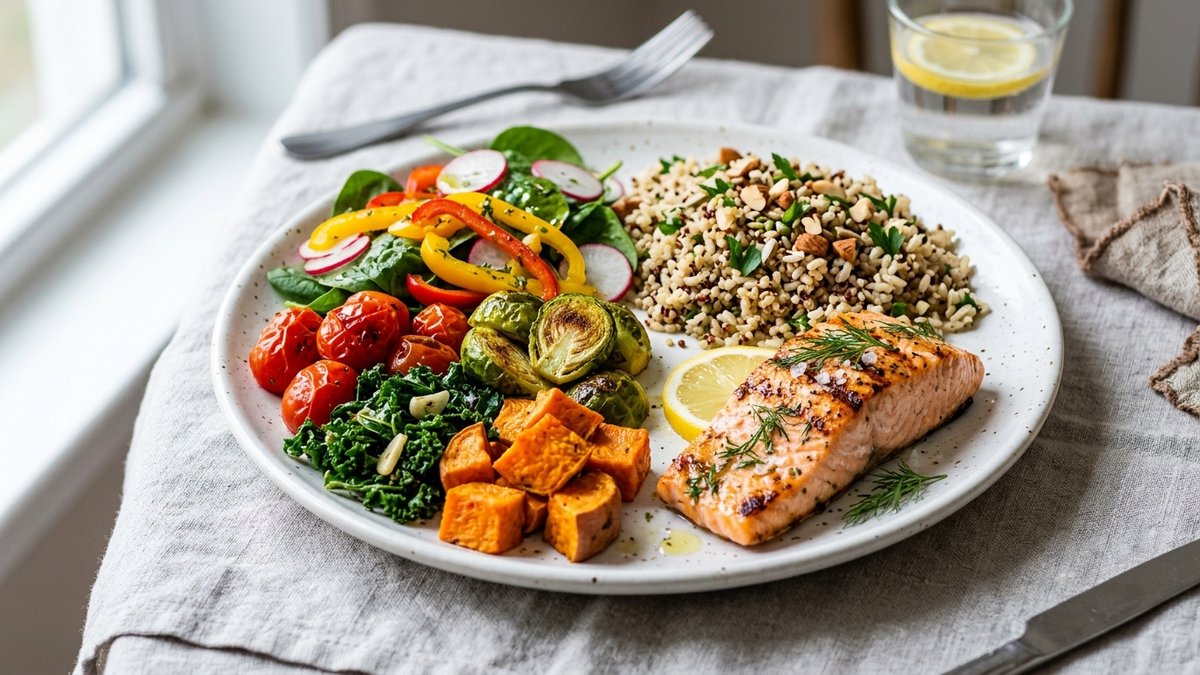
Health authorities express the healthy ranges as shares of daily calories. For adults, the commonly cited US ranges, called acceptable macronutrient distribution ranges (AMDR), are 45 to 65 percent of calories from carbohydrate, 20 to 35 percent from fat, and 10 to 35 percent from protein. The European Food Safety Authority (EFSA) uses similar ranges, with 45 to 60 percent for carbohydrate. The ranges are wide on purpose, because healthy eating patterns differ across cultures, preferences and activity levels.
Here is what one example looks like on a 2,000-calorie day. It is an illustration of the math, not a prescription:
- 50 percent from carbohydrate is 1,000 calories, divided by 4 calories per gram, so 250 g.
- 30 percent from fat is 600 calories, divided by 9 calories per gram, so about 67 g.
- 20 percent from protein is 400 calories, divided by 4 calories per gram, so 100 g.
The 3 shares add up to 100 percent and about 2,000 calories. Your own numbers will be different, since calorie needs vary with age, size, sex and activity, and nobody can give you a personal target without knowing you. If you have a medical condition, are pregnant, or take medication that interacts with food, talk with your doctor or a registered dietitian first.
The good news is that you do not have to do this math at every meal. The percentages describe a day, not a plate, and a plate is a much easier tool to use.
A worked example makes it concrete. Picture dinner with 120 g of cooked salmon, 140 g (3/4 cup) of cooked quinoa, a large pile of roasted broccoli and peppers, and a teaspoon of olive oil. The salmon brings roughly 25 to 30 g of protein plus fat from the fish itself. The quinoa adds around 30 g of carbohydrate and some protein. The vegetables add fiber and volume. You did not weigh anything to know that all 3 macronutrients are present.
Three common mistakes are worth avoiding. First, cutting a whole macronutrient out, which usually leaves you short of fiber, vitamins or satisfaction. Second, judging a food by one number: a handful of almonds is high in fat, yet it also carries protein, fiber and minerals. Third, eating most of your protein at 1 meal, typically dinner, and very little at breakfast. A steadier spread of roughly 20 to 30 g at each of 3 meals helps keep appetite more even through the day.
Context matters too. Someone training for an endurance event will sit in a different part of the range than someone with a desk job, and age, pregnancy and health conditions change the picture again. The ranges are a starting frame for ordinary healthy adults, and a professional can adjust them for you.
Turn Macronutrients Into a Plate: The Portion Plate Bridge
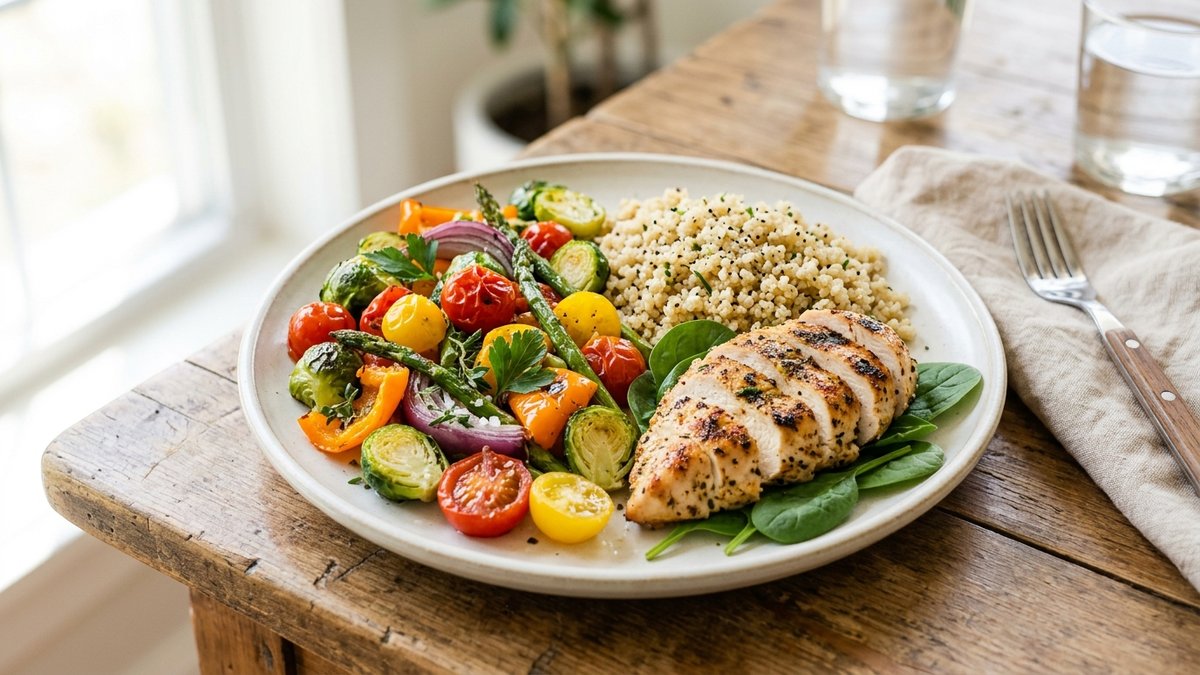
Counting grams works for some people and exhausts most. A visual method gets you to a similar place with no app. The Healthy Eating Plate approach from Harvard’s nutrition team fills about half the plate with vegetables and fruit, a quarter with whole grains and a quarter with healthy protein, with a little healthy oil on top. You can read the original on the Harvard Nutrition Source.
Translate that into macronutrients and the picture is neat. The 25 percent protein section covers your protein, the 25 percent grain or starchy section covers most of the carbohydrate, and the vegetable half brings fiber, vitamins and volume for few calories. A teaspoon or two of oil, a few nuts or half an avocado adds the fat. The proportions repeat at every meal, so you build the pattern by habit rather than by arithmetic.
The Portion Plate has those 50, 25 and 25 percent sections built in, so the proportions are visible while you serve. It is a portion guide, not a diet: it works for energy, digestion and steady meals, whatever your goal.
Frequently Asked Questions
Which macronutrient is the most important?
None of them wins. Protein, carbohydrate and fat each do a job the others cannot, so the question is balance. Your body needs all 3 every day, plus fiber, vitamins and minerals from a varied diet.
Do I need to count macros to eat well?
No. Counting can help in specific situations, for example under guidance from a professional, but many people get close to a balanced pattern by using a plate with about 50 percent vegetables, 25 percent protein and 25 percent grains or starch.
Is fat worse than carbohydrate because it has more calories?
Fat has 9 calories per gram versus 4 for carbohydrate, so portions of fat should be smaller. That does not make it worse. Fat carries vitamins A, D, E and K and is needed in every cell. Focus on the source, such as olive oil, nuts and fish.
What is the difference between macronutrients and micronutrients?
Macronutrients are needed in grams and provide calories. Micronutrients, which means vitamins and minerals, are needed in milligrams or micrograms and provide no calories, though your body cannot work without them.
Key Takeaways
- There are 3 macronutrients: protein, carbohydrate and fat.
- Calories per gram: 4 for protein, 4 for carbohydrate, 9 for fat.
- Typical adult ranges: 45 to 65 percent carbohydrate, 20 to 35 percent fat, 10 to 35 percent protein.
- Reference protein intake for adults is about 0.8 g per kg of body weight.
- A plate of 50 percent vegetables, 25 percent protein and 25 percent grains covers all 3 without counting.
Want to see balanced proportions at every meal without counting grams? Meet the Portion Plate.