 PLATE + FIT
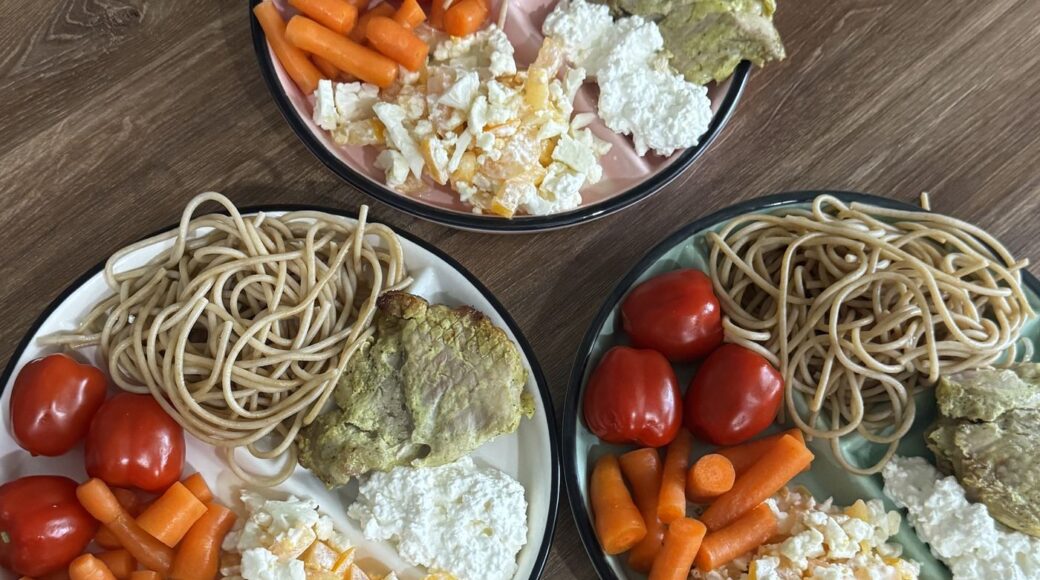
You scoop pasta onto your five-year-old’s plate, they eat half, and you’re left wondering: was that too much, too little, or about right? Most parents never get a straight answer, because „eat until you’re full“ is good advice with no starting point attached. Getting portion sizes for children right isn’t about enforcing fixed rules — it’s about having a reasonable starting point you adjust as your child eats. This guide gives you that starting point: what a portion actually looks like at each age, why an adult-sized plate quietly pushes kids to overeat, and two no-scale methods you can use at tonight’s dinner without a single measuring cup.
What Counts as a Portion for a Child, by Age
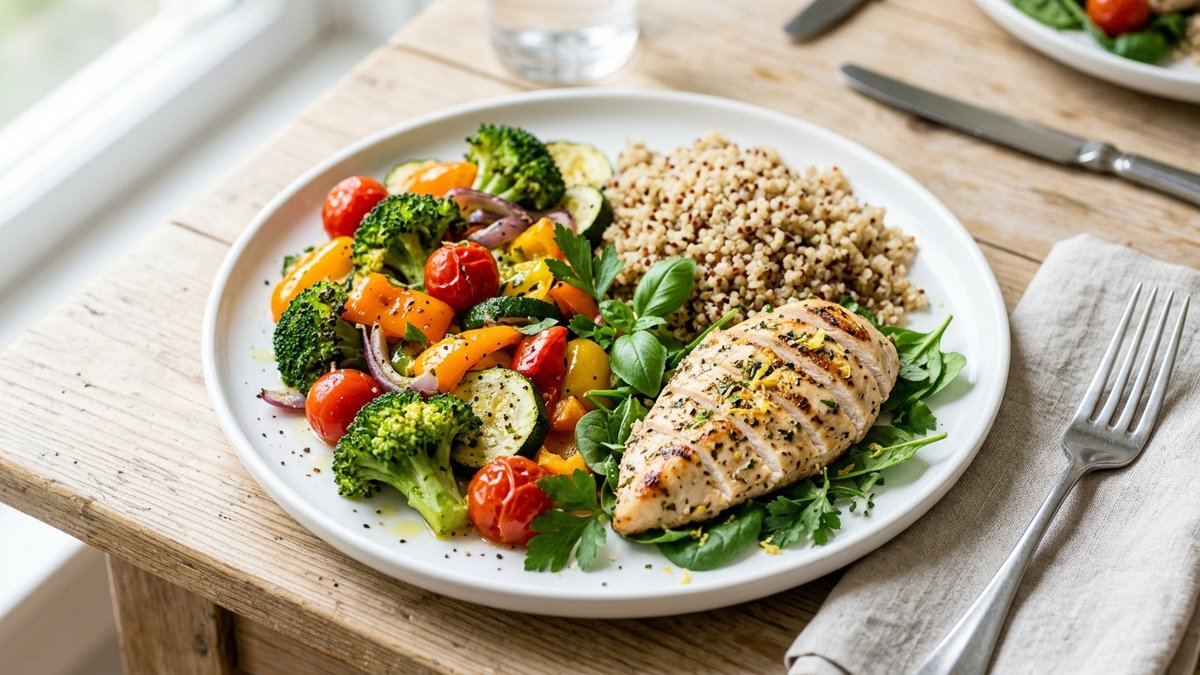
Recommended portion sizes for children are usually expressed as a daily total, not a per-meal number, because kids eat in unpredictable bursts — a big breakfast, a skipped lunch, a huge afternoon snack that makes up for both. The U.S. Department of Agriculture’s MyPlate guidelines break daily amounts down by age band and food group, and the ranges are wider than most parents expect.
For fruit, children aged 2 to 4 need about 1 to 1.5 cups a day; ages 5 to 8 move up to 1 to 2 cups. Vegetables follow a similar curve: 1 to 2 cups a day for the younger band, 1.5 to 2.5 cups for the older one. Grains are measured in ounces rather than cups — 3 to 5 ounces a day for 2- to 4-year-olds, 4 to 6 ounces for 5- to 8-year-olds, with at least half of that coming from whole grains rather than refined ones.
Protein and dairy have their own bands, and they roughly double over the same age range. Two- and three-year-olds need about 2 ounces of protein foods a day, plus 2 cups of dairy; by ages 4 to 8, that rises to 4 ounces of protein and 2.5 cups of dairy. None of these are per-meal targets — they’re the sum across breakfast, lunch, dinner, and snacks, so a single meal will always look small next to the daily figure, and that’s normal, not a sign your child ate too little.
The pattern across every food group is the same: portion sizes for children scale up gradually with age, not in one jump at a birthday. A 2-year-old and an 8-year-old are both „a child“ on a nutrition label, but their actual daily plate total is roughly double, spread across four to six eating occasions rather than three big meals.
Why Adult-Sized Portions Backfire for Kids
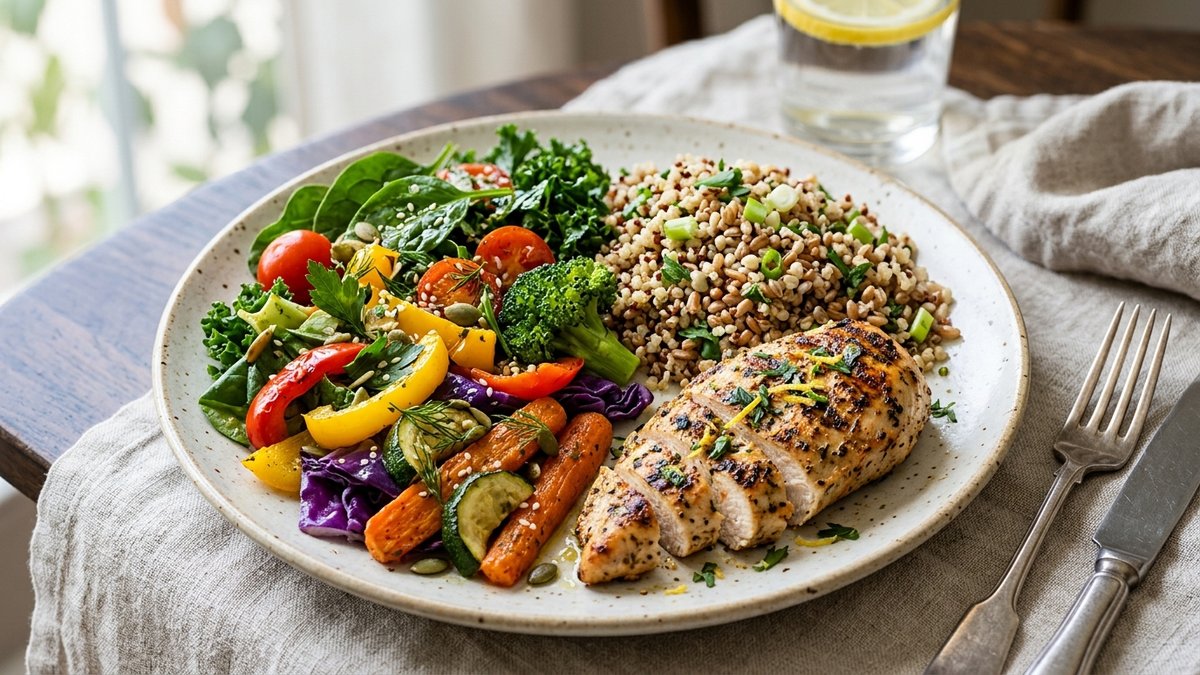
Here’s the part that trips parents up: a child’s stomach is roughly the size of their own fist, not a scaled-down version of yours. Serve them a portion sized for your plate and you’re not offering a reasonable amount they might not finish — you’re offering two or three days‘ worth of „extra,“ dressed up as one meal.
Kids are also unusually responsive to what’s put in front of them. Put more food on the plate and, within reason, a young child will eat more of it — not because they’re hungrier, but because a full plate reads as „this is the expected amount.“ That response fades somewhat with age as kids pick up more conscious eating habits, but for toddlers and preschoolers especially, the plate size is doing a lot of the talking before a single bite is taken.
This cuts both ways. Under-serving isn’t a fix either — a child who’s genuinely still hungry after a too-small plate will fill the gap with whatever’s easiest to reach, usually a packaged snack instead of the vegetables that were on the plate five minutes earlier. Getting portion sizes for children roughly right, in both directions, keeps the food on the plate doing the job instead of the pantry.
The goal isn’t a smaller plate for its own sake, and it isn’t strict control either — it’s a plate sized to the age band above, with room for a second helping if they ask. A child who learns to stop at „comfortably full“ rather than „plate empty“ is building a self-regulation habit that’s far more useful long-term than any single correct portion.
Two No-Scale Ways to Size a Child’s Plate
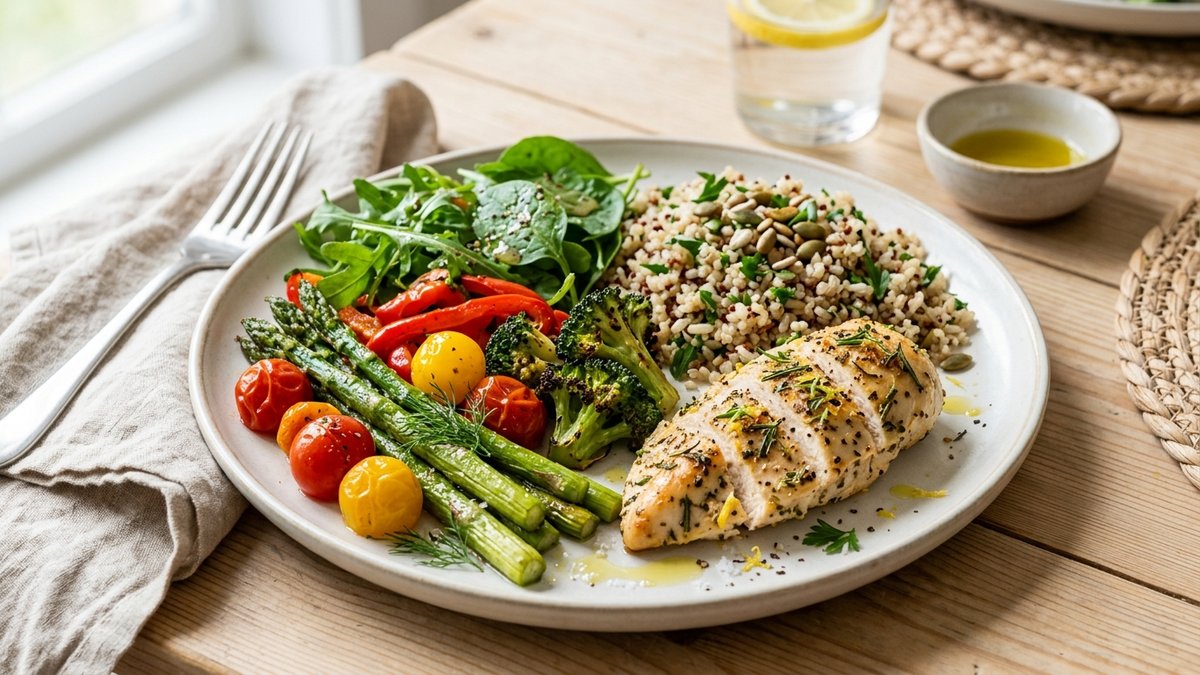
Nobody is measuring grains in ounces at 6pm on a weeknight, and you don’t need to. Two low-effort methods get portion sizes for children close enough without a kitchen scale, and both come from the same clinical nutrition world as the cup-and-ounce figures above.
The first is the UK’s National Health Service hand-based guide, built specifically so it scales automatically as a child grows: a child’s own clenched fist is one portion of starchy carbohydrate (rice, pasta, potatoes); their palm, without the fingers, is one portion of meat or fish; and two clenched fists is a reasonable fruit-and-vegetable portion at a meal. For very young children, the NHS suggests aiming for about 5 fist-sized portions of fruit and vegetables across the whole day, not all in one sitting.
The second is the „tablespoon per year of age“ rule, commonly used by dietitians for toddlers and preschoolers: a 2-year-old gets roughly 2 tablespoons of a given food per serving, a 4-year-old about 4 tablespoons — a quarter cup. It sounds tiny next to an adult portion, and that’s the point; a plate with four or five of these small servings adds up to a full, balanced meal without anyone eyeballing an adult-sized scoop onto a 3-year-old’s plate.
Both methods share the same underlying logic as the daily figures above: as the age band that fist and palm belong to gets bigger, so does the „1 portion“ they represent. You’re never re-learning the system as your child grows — you’re just re-measuring against a bigger hand. For fussier eaters, pairing a small measured portion with a food you know they’ll finish also helps keep mealtimes about eating, not negotiating; the fiber content of what’s on the plate plays a role here too, since fiber-rich foods tend to extend fullness between the small, frequent portions young kids need.
The Portion Plate Bridge: Sizing the Whole Family’s Meal
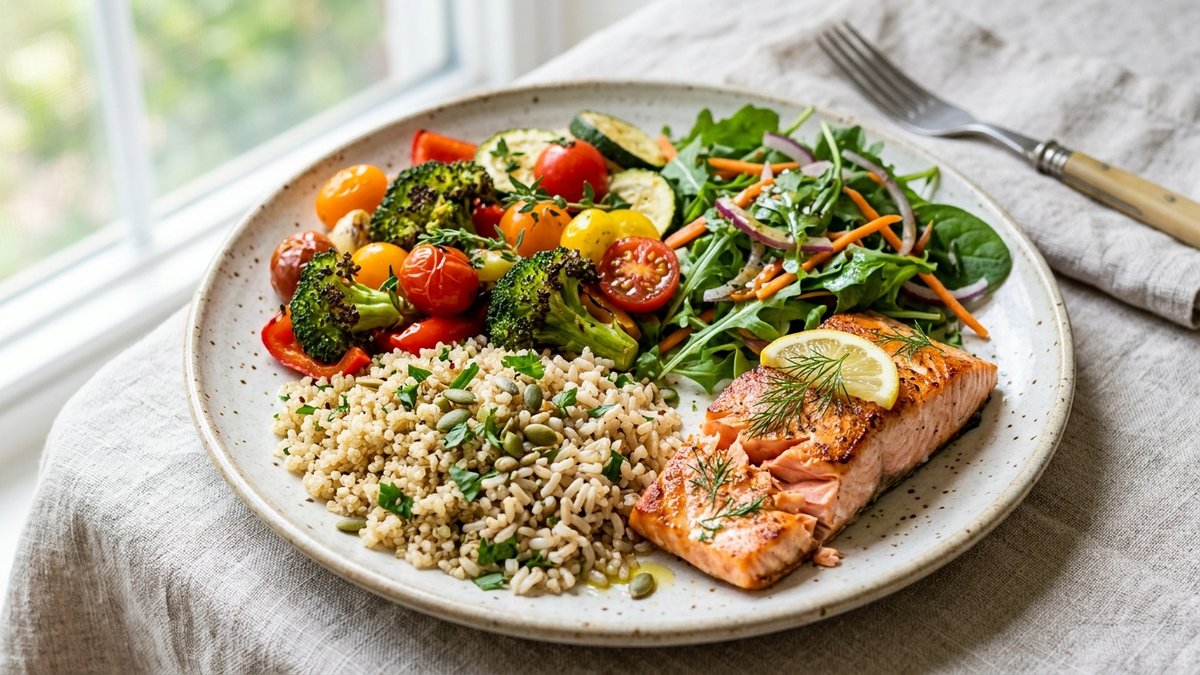
Once you’re sizing a child’s plate by age, the natural next question is what the rest of the plate — vegetables, protein, grains — should look like in relation to each other, for every age at the table. That’s exactly what the healthy plate method answers for adults: roughly half vegetables, a quarter protein, a quarter whole grains, without counting a single calorie.
The Portion Plate puts that same proportional thinking on the table as a physical, pre-divided plate — useful for the adults in the house, and a visual anchor kids pick up simply by watching, the same way they absorb table manners: not from a lecture, but from what they see modeled meal after meal. You’ll still use the age-based cups, ounces, and fist-sized figures above for your child’s own plate; the divided plate is there for the grown-up modeling the habit right next to them, so the whole table is working from the same proportional idea, just scaled differently by age.
Frequently Asked Questions
How much should a 2-year-old eat at a meal?
Use the tablespoon-per-year rule as a starting point: roughly 2 tablespoons of each food per serving, offered several times across the day rather than as one large plate. Let your child ask for more rather than serving an adult-sized portion upfront.
Is it normal for a child to leave food on their plate?
Yes. Children’s appetites vary meal to meal and day to day far more than adults‘, partly because growth happens in spurts, not steadily. Pushing a clean plate overrides the exact self-regulation signal you want them to keep listening to.
Do portion sizes for children still apply to picky eaters?
Yes, but flexibly. Offer age-appropriate portions of what’s available, including foods they already accept, alongside one new or less-preferred item, without pressure to finish it. The amounts don’t change; the expectation to eat everything does.
When can a child eat the same portions as an adult?
There’s no single cutoff birthday. MyPlate’s ranges stop scaling up noticeably around ages 9 to 13, when calorie needs start approaching adult levels depending on activity level and growth stage — a gradual shift, not a switch that flips at a specific age.
How do I know if my child is eating enough without weighing food?
Track the pattern, not one meal: steady growth per your pediatrician’s charts, consistent energy levels, and a child who eats a reasonable range of foods across a week. One small dinner after a big lunch is not, on its own, a sign of a problem.
Key Takeaways
- Portions scale with age in cups and ounces, not one adult-sized jump
- A bigger plate quietly pulls kids toward eating more, not less
- A child’s own fist and palm size portions automatically as they grow
- The tablespoon-per-year rule works well for toddlers and preschoolers
- Daily totals matter more than any single meal looking „too small“
Guessing at portions meal after meal gets tiring fast, for you and for whoever’s plate you’re also filling. The Portion Plate takes the guesswork out of your own portions, so the one plate at the table you’re not tracking by hand is your own.
Sources: USDA MyPlate food group amounts for children ages 2–8; NHS portion size guidance for the hand-based method; the Academy of Nutrition and Dietetics‘ tablespoon-per-year-of-age guideline; Harvard T.H. Chan School of Public Health’s Kid’s Healthy Eating Plate for the proportional plate model. This is general nutrition guidance, not individual medical advice — talk to your child’s pediatrician about their specific growth and needs.