 PLATE + FIT
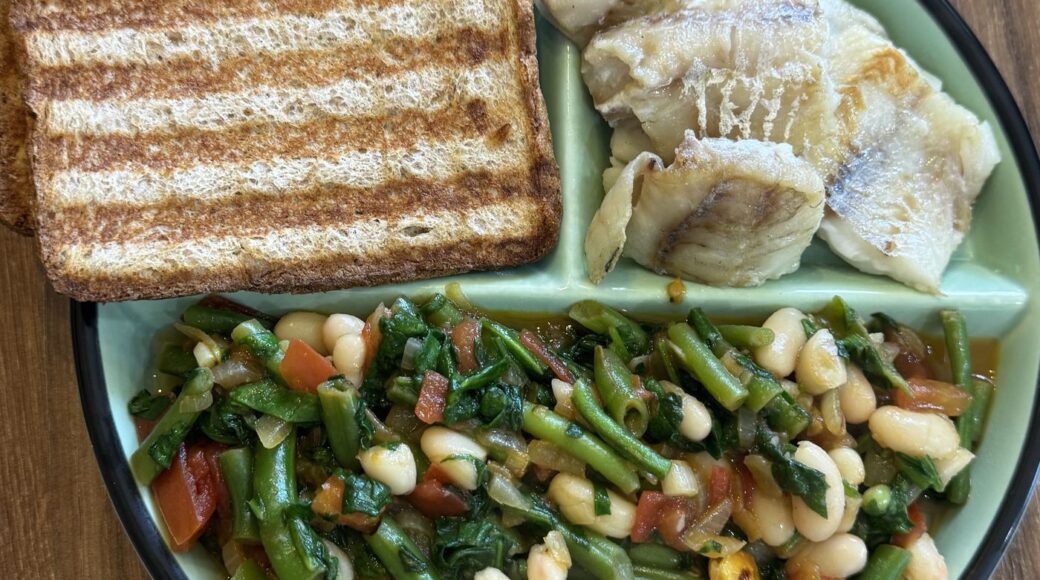
Serving size vs portion size sounds like a vocabulary quiz, but mixing the two up is one of the most common reasons a label and a plate disagree. A serving size is a fixed reference amount printed on a package. A portion size is the amount you actually put on your plate and eat. The first is set by regulators and manufacturers; the second is set by you, your mood, your bowl and your hunger. Below, you’ll see how each one is defined, why they rarely match, and a simple way to compare them using real numbers from a label you already own. You’ll also get a three-step habit for reading a label without turning dinner into arithmetic.
Serving Size vs Portion Size: The Core Difference
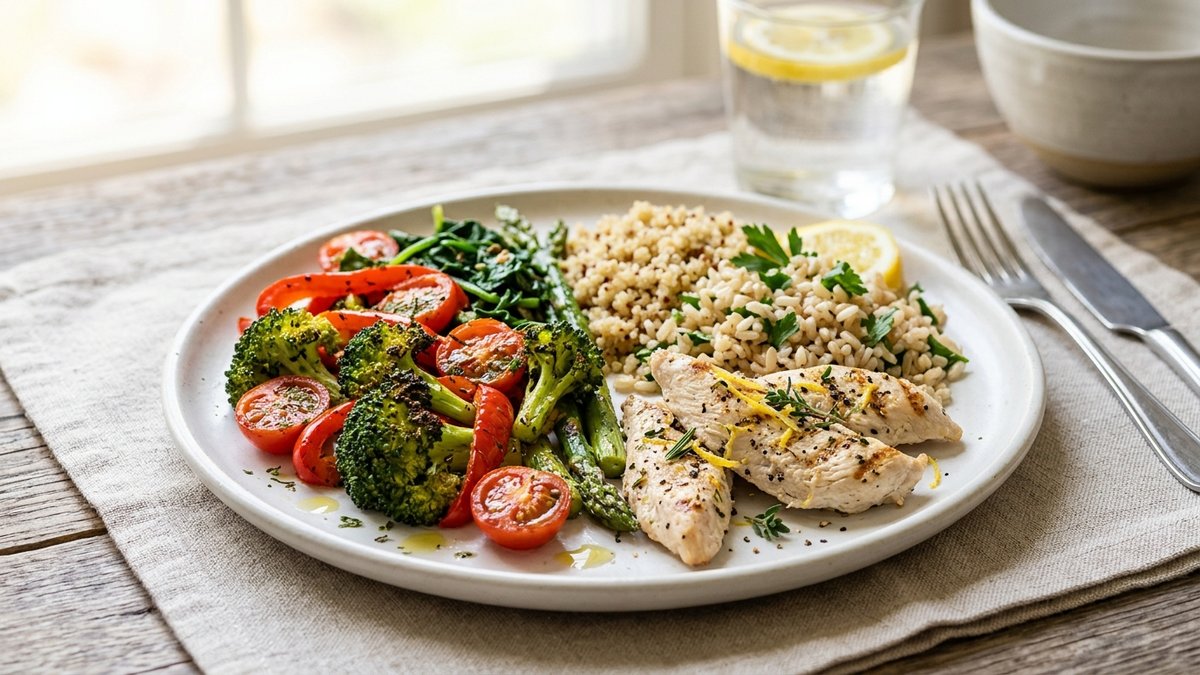
A serving size is a standardized, measured amount of a food. It exists so that products can be compared fairly. In the EU and UK, labels must show values per 100 g or 100 ml, which gives you a common yardstick across brands, and a per-portion column chosen by the manufacturer is optional. In the United States, the FDA bases the serving on reference amounts that reflect what people customarily eat, and every number on the Nutrition Facts panel is calculated for that one serving.
A portion size is simply what ends up in front of you. Nobody regulates it. A portion can be smaller than a serving, equal to it, or several times larger. Think of the serving as the recipe’s measuring cup and the portion as the ladle you actually grab.
Here is the quick contrast:
- Who decides: a serving is set by regulators and the manufacturer; a portion is set by you.
- Purpose: a serving makes products comparable; a portion reflects your appetite and plans.
- Where you see it: servings are printed on packs; portions are on your plate.
- Does it change? A serving stays fixed for a product; a portion changes at every meal.
Neither one is a verdict on what you should eat. A serving is not a recommendation, and a bigger portion is not automatically a mistake. The problem starts only when you assume the two are the same number.
Why a Serving and Your Portion Rarely Match
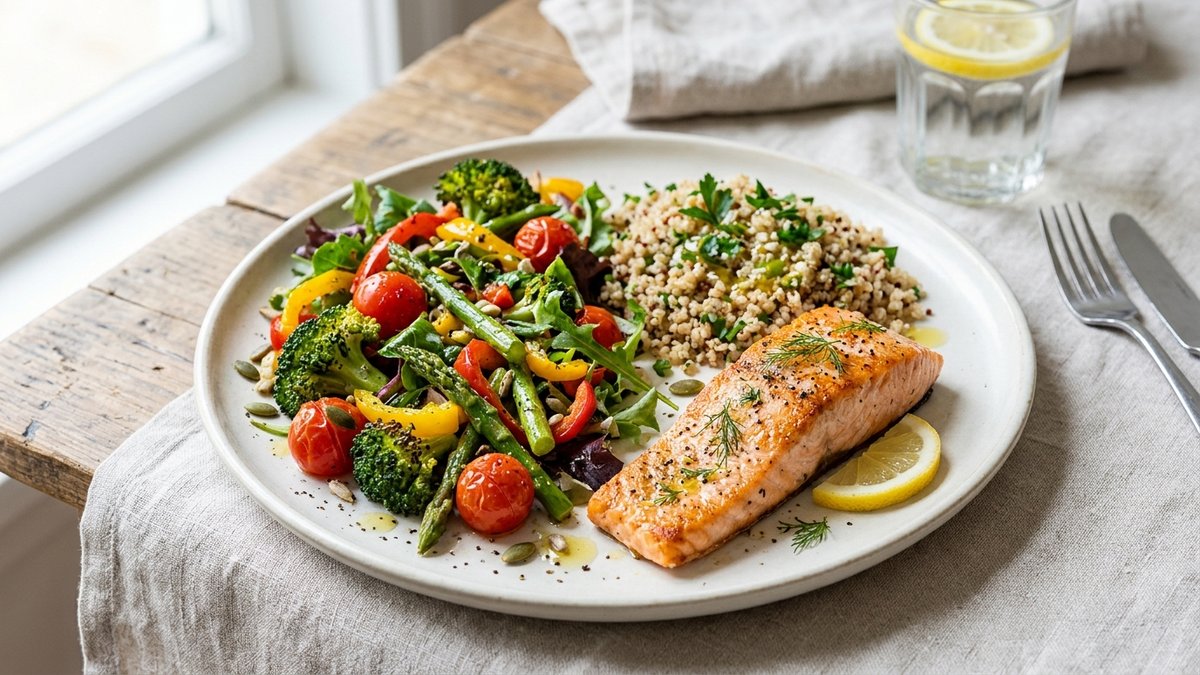
Serving sizes are built from averages and rounded to household measures, such as a cup or a slice. Your portion is built from a bowl, a hungry afternoon and whatever is left in the pot. Several things pull them apart.
First, containers decide for you. Pour cereal into a wide bowl and a 40 g portion of a typical flaked cereal (a little over a cup) looks lost at the bottom, so you pour 100 g or more. Say the label lists 150 calories per 40 g portion. A 100 g bowl is then roughly 375 calories, and the label still looks perfectly honest. You simply ate 2.5 servings.
Second, labels have been catching up with reality. In the US, when the FDA updated the Nutrition Facts rules, the reference serving for ice cream moved from 1/2 cup to 2/3 cup, partly because people were eating more than the old number assumed. The same update says a package under 200% of the reference amount is labeled as a single serving, so a 590 ml (20 oz) bottle of soft drink now counts as one serving instead of 2.5. Packages between 200% and 300% of the reference amount that could be eaten in one sitting get a dual-column label with values per serving and per package. EU labels work differently: the per-100 g values are mandatory and portions are optional, so the pack weight is often the most useful number to check.
Third, the label is anchored to a general reference diet of 2,000 calories (8,400 kJ) a day, the reference intake used on both EU and US labels. That is a labeling convention, not a personal target. Your own needs can sit well above or below it, which is one more reason a printed serving can’t tell you what your portion should be. If you want more background on how far portions drift from reference amounts over time, how portion sizes have grown since 1980 shows the same gap across seven everyday foods.
Reference Servings Worth Knowing by Heart
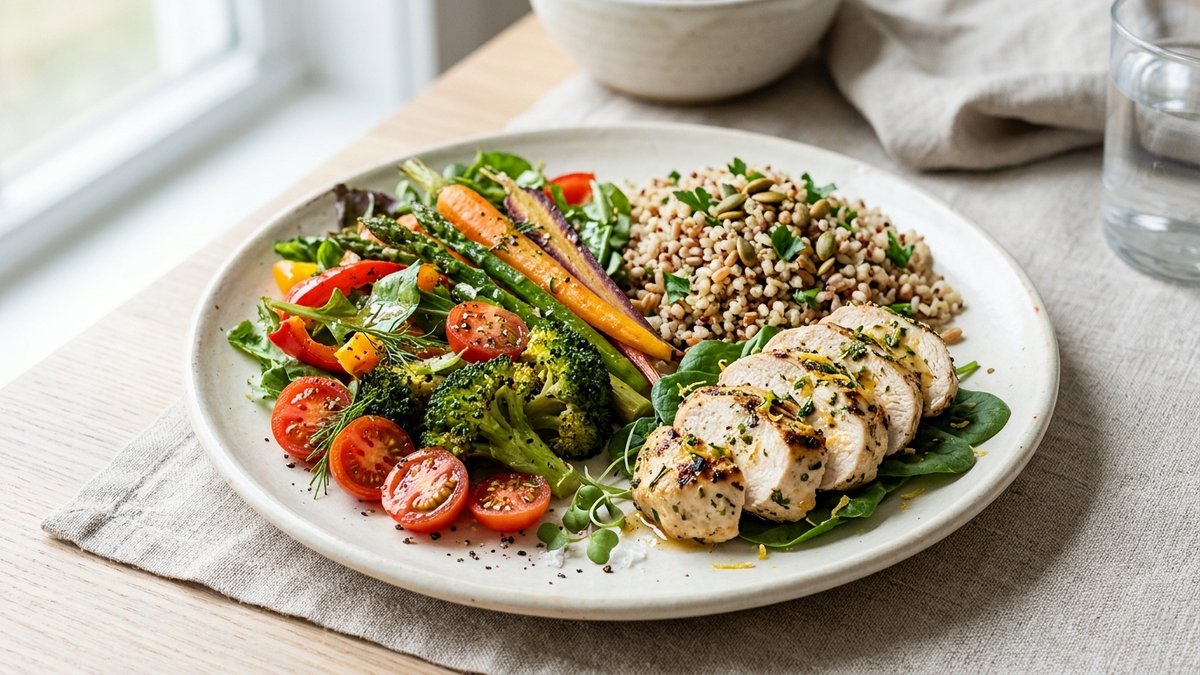
You don’t need to memorize a table, but a handful of anchor amounts make the serving size vs portion size gap easy to spot at a glance. These are commonly used reference amounts from UK, WHO and US guidance, given in grams:
- Fruit or vegetables: 80 g counts as one portion in UK and WHO guidance, so the 400 g daily target is about 5 portions.
- Cooked meat, poultry or fish: about 85 g (3 oz), roughly the size of a deck of cards or the palm of your hand.
- Cheese: about 30 g (1 oz), roughly the size of your thumb.
- Cooked rice or pasta: about 75-80 g (1/2 cup) counts as one grain equivalent in USDA MyPlate guidance, so a heaped dinner bowl can easily hold 2 to 3 of them.
- Dry pasta: about 56 g (2 oz), which cooks up to roughly 140 g (1 cup).
Now compare those anchors with a typical restaurant plate. A single chicken breast often weighs well over 85 g, and a restaurant pasta main can hold 400 g or more cooked. That is not a failing on your part. It just shows that the portion in front of you was never calibrated to the serving on the label.
If you’d rather not carry a scale, your hand works as a rough ruler. The hand portion guide walks through palm, fist, cupped hand and thumb, so you can estimate a serving anywhere.
How to Compare a Label Serving to Your Real Portion
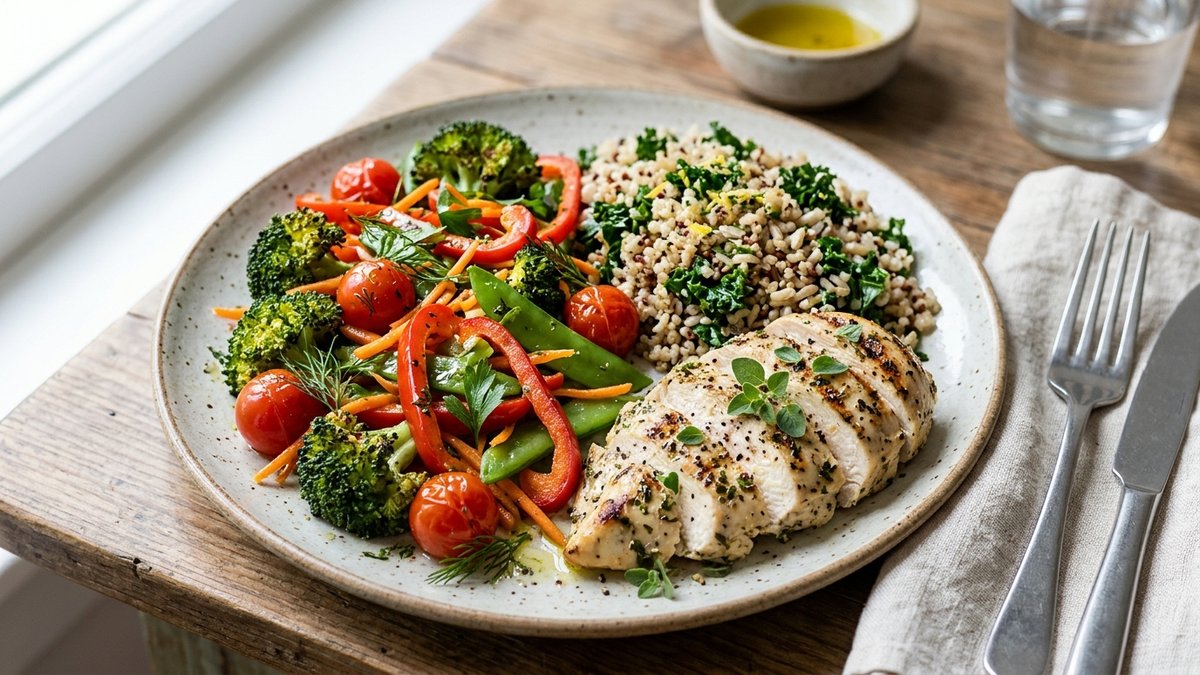
You can close the gap in under a minute. These three steps work for any packaged food, in any country.
- Find the pack weight and the per-100 g column first. Before you look at calories, check how much the whole pack weighs and, if a per-portion column is shown, how big that portion is. A 300 g pack listing 180 calories per 100 g is 540 calories if you eat it all.
- Measure once, then remember it. Weigh your usual bowl of cereal, rice or crisps one time. Pour what you normally pour onto a kitchen scale, and note the grams. After that you can estimate by eye.
- Multiply, don’t judge. If your usual portion is 60 g, multiply the per-100 g values by 0.6; if it equals 2 labeled portions, double them. Do it for calories, sugar and salt. The point isn’t to feel guilty, only to know what you’re actually choosing.
People are surprisingly bad at estimating by eye, which is exactly why the one-time measurement helps. If you’re curious how far off the average guess is, eyeballing food portions accuracy covers what the research found.
The same logic helps at a restaurant, where no label exists at all. There, the standard is whatever the kitchen served, so a simple rule is to decide how much of the plate you’ll eat before the first bite, then take the rest home.
Where a Portion Plate Fits In
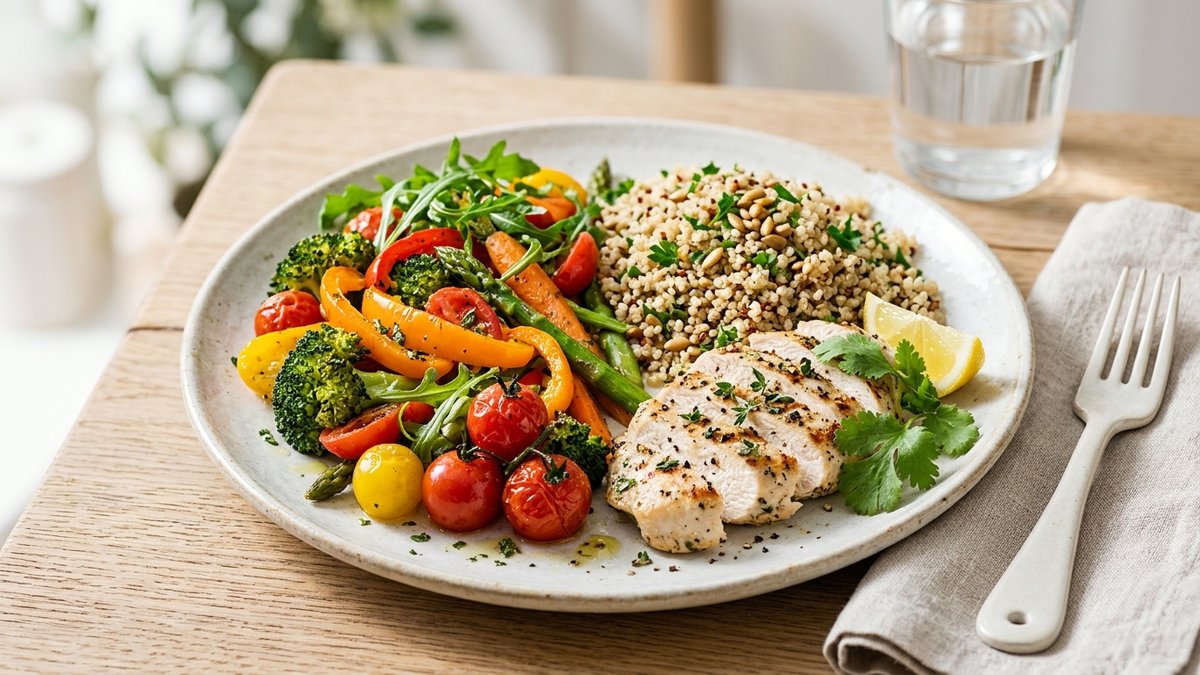
A label can tell you what a serving is, but it can’t tell you how much of your meal that serving should be. A plate can. The healthy plate method fills half the plate with vegetables (50%), a quarter with protein (25%) and a quarter with complex carbs (25%), so the proportions stay steady even when the food changes. It works the same whether the food has a label or not, and it doesn’t ask you to count anything.
That is the idea behind the Portion Plate: the sections are drawn in, so your portion size is guided by shape rather than by willpower or arithmetic. Pair it with the label habit above and you cover both ends, the number on the pack and the food on the table. If you want the full method, the healthy plate method explained breaks down 50/25/25 for real meals.
A plate is a guide for balance and proportion, not a prescription. If you follow a specific eating plan for medical reasons, check the details with your healthcare professional.
Frequently Asked Questions
Is a serving size the same as a recommended portion?
No. A serving is a standardized reference amount used to compare products and calculate the label numbers. It is not advice on how much to eat. Your ideal portion depends on your appetite, activity, the rest of the meal and your goals, so it can be smaller or larger than the serving.
Why are serving sizes on labels sometimes so small?
They’re based on reference amounts that people customarily eat, rounded to household measures, and they differ by food type. They can also lag behind real habits. The US update that moved ice cream from 1/2 cup to 2/3 cup is one example of labels being adjusted to match what people actually serve themselves.
How many servings are in a package that looks like one portion?
It depends on the pack and the country. In the EU, per-portion values are optional, so compare the pack weight with the per-100 g column. Under current US rules, a package under 200% of the reference amount is labeled as one serving, and bigger packs list 2 or more servings on the servings-per-container line. Check before you add up calories.
Do I need to weigh my food to manage portions?
Not necessarily. Weighing a few staples once, such as cereal, rice and pasta, is usually enough to calibrate your eye. After that, hand measures and a plate with fixed proportions do most of the work without daily tracking.
What is the quickest way to tell serving size from portion size?
Ask who set the amount. If a manufacturer or regulator set it and printed it on a pack, it’s a serving. If you set it by pouring, scooping or ordering, it’s a portion.
Key Takeaways
- A serving is a fixed reference amount; a portion is what you eat
- Labels assume a 2,000-calorie reference diet, not your own needs
- Check the pack weight and portion line before reading calories
- Measure your usual bowl once, then multiply the label
- A 50/25/25 plate sets proportions without any counting
Labels show the serving; your plate shows the portion. Meet the Portion Plate and let the shape of the plate keep your proportions in balance.