 PLATE + FIT

Budget-friendly balanced meals come down to one habit: filling the plate in proportions instead of shopping for “superfoods”. Aim for 50% vegetables, 25% protein and 25% complex carbs at each meal, then pick the cheapest version of each group. Dried lentils, eggs, oats, frozen vegetables and canned fish do most of the work, and none of them needs a specialist shop.
This guide shows you how to build balanced plates on a small grocery bill without a calculator or a spreadsheet. You will get a simple cost lens for comparing foods, a ranked list of low-cost staples with real protein and fiber numbers, a 5-step weekly routine, and answers to the questions that come up most. It is general nutrition education, not personal medical advice.
What Makes Budget-Friendly Balanced Meals Different From “Cheap” Meals?
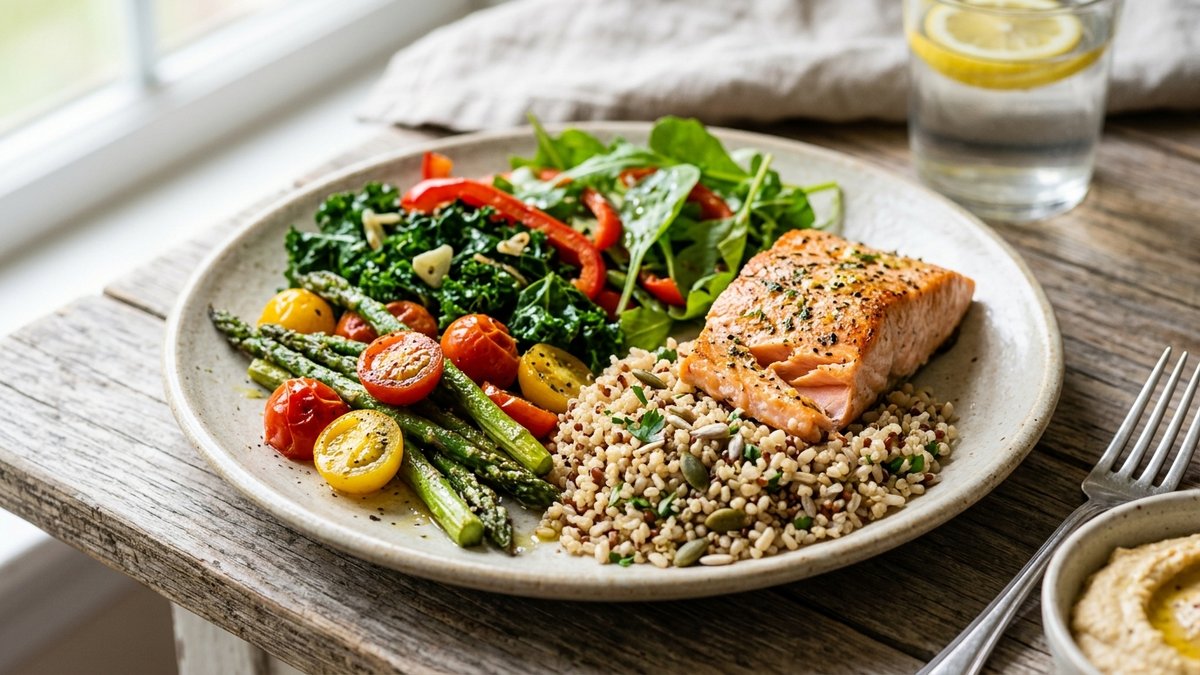
A cheap meal fills you up for a few hours. A balanced meal does the same job and also covers the basics: fiber, protein, and some healthy fat. Good-value balanced plates sit where the two overlap, and the plate model is the easiest way to see that overlap.
The model is simple. Half of the plate (50%) is vegetables and fruit, a quarter (25%) is protein, and a quarter (25%) is whole grains or other complex carbs. The Harvard T.H. Chan School of Public Health uses the same proportions in its Healthy Eating Plate guidance. Because it is built on proportions rather than specific foods, you can swap any ingredient for a cheaper cousin without breaking the pattern.
That is the whole trick: the structure stays fixed, and the ingredients flex with the price tag. Chicken breast and canned chickpeas both land in the 25% protein slot. Fresh broccoli and frozen broccoli both land in the 50% vegetable slot. You are buying a role on the plate, not a brand.
Two numbers are worth keeping in mind as targets. Most adults do well with roughly 20-30 g of protein per meal, and a daily fiber intake around 25-30 g is a common guideline. Both targets are reachable on a tight grocery bill, and the next sections show how.
Where the Money Actually Goes (and Where It Doesn’t Need To)
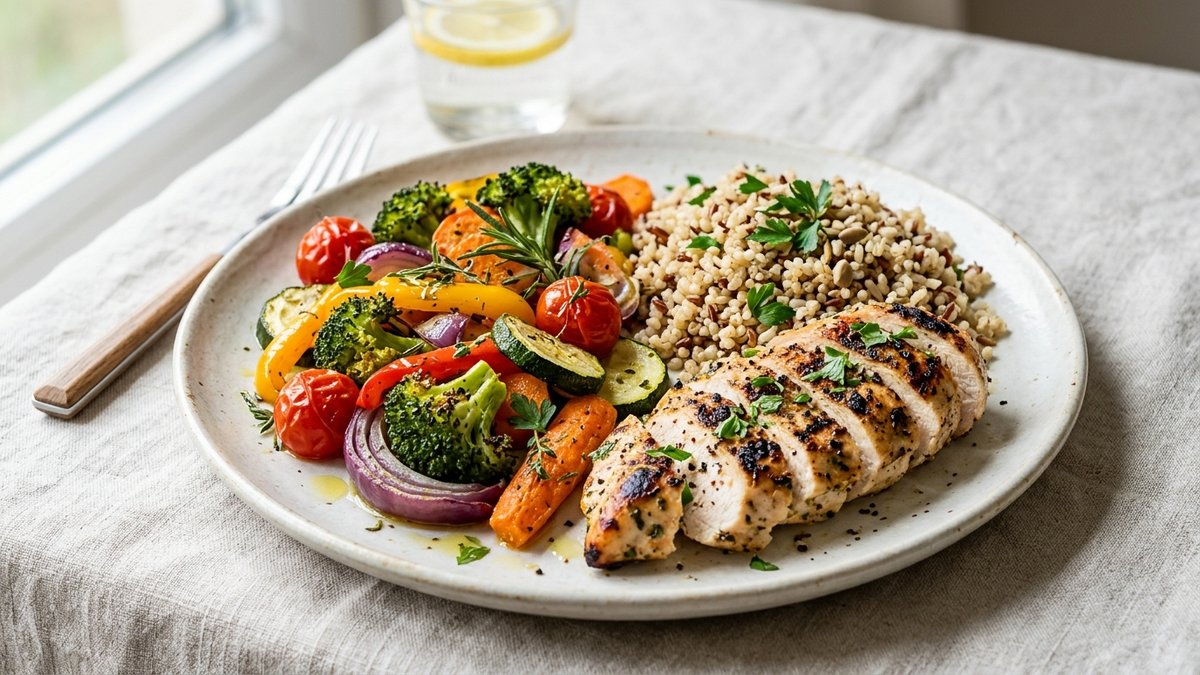
Grocery spending usually leaks in three places: pre-cut and pre-cooked convenience items, single-serve packaging, and food that gets thrown out. Fixing those three leaks saves more than hunting for the cheapest brand of everything.
Use one number to compare foods: cost per serving, not cost per package. Divide the package price by the number of servings it really delivers. A 500 g bag of dry lentils holds about 10 servings of 50 g dry weight, and each of those gives you around 12 g of protein and a good dose of fiber. A ready-to-heat lentil pouch gives you one serving. The ingredient is the same; the math is not.
The same lens works for protein generally. Compare what you pay per 20 g of protein rather than per kilogram of food, because water, bones and packaging all change the weight. You do not need exact prices from this article, since they differ by country and by week. Check your own receipt and run the division once for your 5-6 regular protein foods. The ranking usually surprises people.
Waste is the quiet third leak. If you regularly bin the last third of a bag of salad, that bag effectively cost 50% more than the sticker price. Frozen vegetables, which are typically frozen within hours of harvest, let you use exactly the handful you need and keep the rest for 8-12 months in the freezer. For low-cost plates, the freezer aisle is often the most reliable vegetable section in the shop.
The 8 Low-Cost Staples Behind Budget-Friendly Balanced Meals
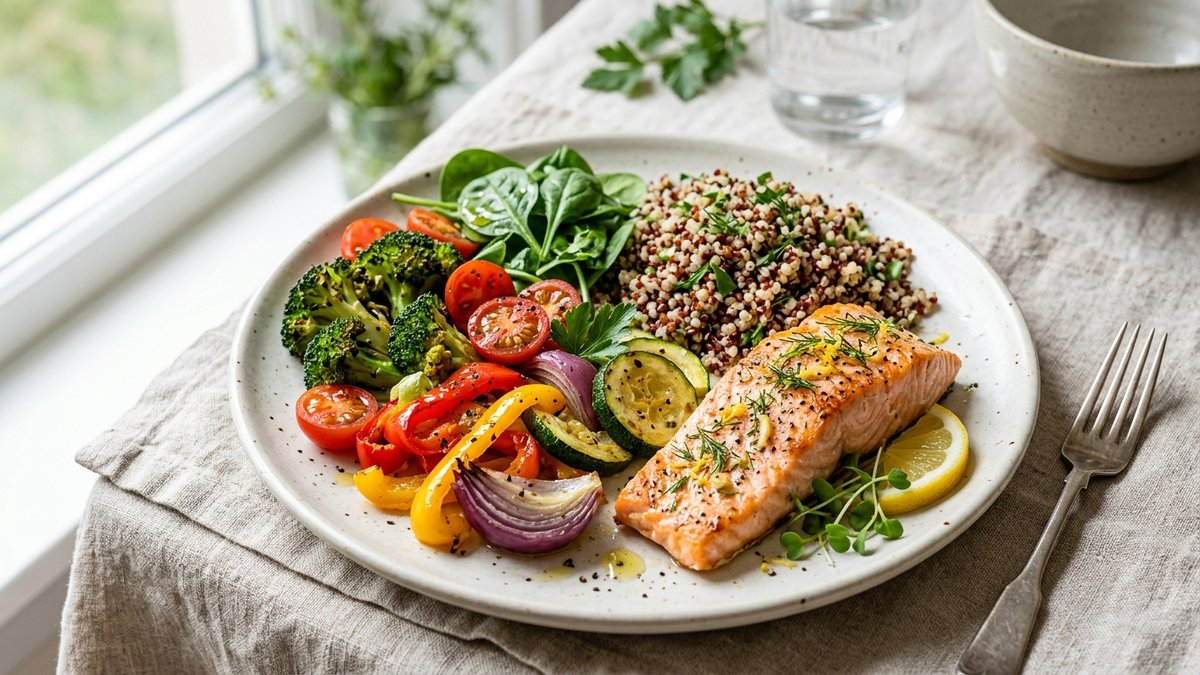
You do not need a long shopping list. Eight staples cover all three plate sections, and they keep for weeks. Here is how each one earns its place, with approximate values per typical serving:
- Dry lentils (50 g dry): about 12 g protein and around 5 g fiber, and no soaking is needed for red lentils, which cook in roughly 15 minutes.
- Canned chickpeas or beans (about 120 g drained, roughly 2/3 cup): around 7 g protein and 5-6 g fiber, ready straight from the can.
- Eggs (2 large): about 12 g protein, and a 12-pack stretches across 6 breakfasts or 3-4 dinners.
- Rolled oats (40 g dry): roughly 4-5 g protein and 4 g fiber, and a large bag lasts a month.
- Frozen vegetables (150 g): fill the 50% section with no prep and almost no waste.
- Canned fish such as sardines or tuna (about 100 g): 20 g or more of protein in a single tin, plus omega-3 fats in oily fish such as sardines.
- Cabbage and carrots: among the cheapest fresh vegetables per kilogram, and both last 2-3 weeks in the fridge.
- Brown rice, barley or potatoes: the 25% complex-carb slot, cooked in bulk in one pot.
Notice what is missing: no powders, no branded “health” snacks, no special flours. These plates rely on boring, reliable foods cooked in an interesting way. Spice mixes, lemon, garlic and a splash of vinegar cost very little and do the flavor work.
Plant proteins deserve a note. Beans and lentils are cheap and high in fiber, but they are lower in some amino acids than eggs, fish or meat. Mixing them with grains across the day, for example lentils with rice, closes most of that gap. If you eat no animal products at all, read up on vitamin B12 from a trusted source, because plants do not supply it reliably.
A Simple 5-Step Routine for a Week of Budget-Friendly Balanced Meals
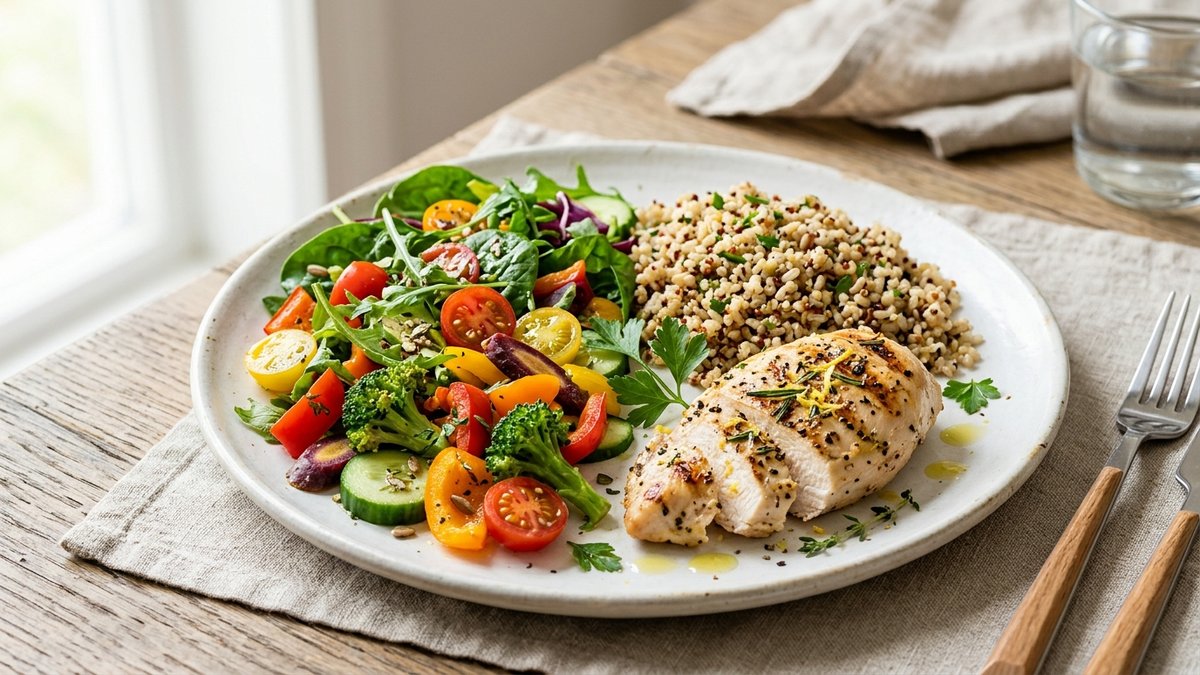
Planning does not have to be a Sunday project that eats 3 hours. A 30-minute routine is enough if you follow the same five steps each week:
- Pick 2 proteins, 2 carbs, and 3 vegetables. Seven ingredients can produce 12 or more different plates once you vary spices and sauces.
- Check what you already own. Start from the freezer and pantry, and let those items decide the first 3 meals of the week.
- Cook one big pot of a base. A batch of 400 g dry lentils or rice, once cooked, gives you 8-10 portions. Cool it quickly and refrigerate it within an hour. Cooked lentils keep 3-4 days in the fridge, but cooked rice is best eaten within 1 day and reheated only once. Both freeze well for up to 3 months.
- Assemble, don’t recipe-hunt. Each night, fill the plate 50/25/25 from what is on hand. A bowl of rice, two fried eggs, and sautéed cabbage is a complete plate.
- Close the loop on Friday. Use leftover vegetables in a soup or an omelet so that nothing ends the week in the bin.
Three sample plates show how it works. Breakfast: 40 g oats with milk, a grated apple and a spoonful of peanut butter. Lunch: half a plate of shredded cabbage and carrot, a quarter plate of chickpeas, a quarter plate of boiled potatoes. Dinner: two eggs in a vegetable omelet, a slice of whole-grain bread, and a side of frozen peas and green beans. Each of these takes under 20 minutes and none needs a rare ingredient.
If you want more ideas for the lunch slot in particular, the list of 10 quick balanced lunch recipes for busy weekdays uses the same plate proportions and many of the same pantry foods.
A few cautions apply. If you manage diabetes, kidney disease, or any condition with dietary rules, check portions and food choices with your own clinician or dietitian before changing how you eat. No grocery strategy replaces that conversation, and food alone does not treat medical conditions.
How a Portion Plate Keeps Your Budget Meals on Track
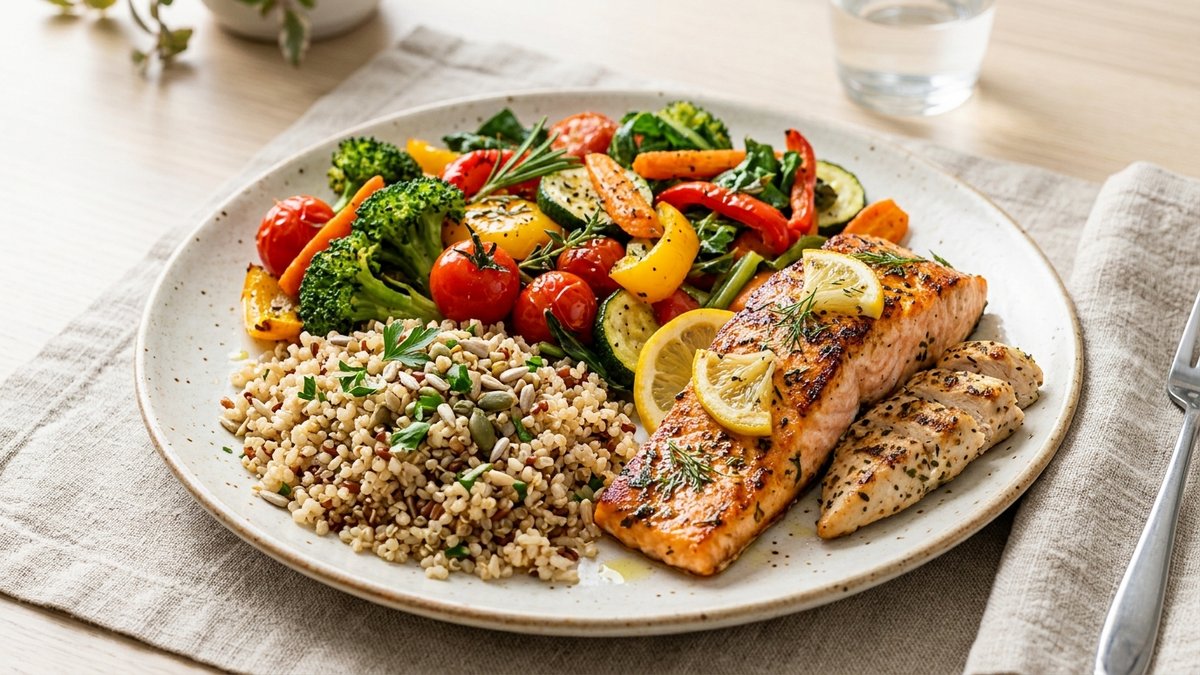
Cheap staples are easy to over-serve. A pot of rice or pasta invites a second helping, and the vegetable section is the first to shrink when you are tired. A visual guide removes the guessing. A portion-control plate has the 50/25/25 zones printed on it, so a glance tells you whether the meal is balanced before you eat it.
That matters for a budget in a practical way. When the plate shows you that 25% is the right size for rice, the bag lasts longer and the vegetables you bought actually get eaten. It also removes the need to weigh food: you fill each zone, and the proportions take care of themselves. People use this kind of plate for many reasons, including steady energy, better digestion and sustainable weight management, and it works for a family cooking one big pot as well as for a single serving.
You can build the habit with any plate by imagining the same lines. A dedicated plate simply makes the habit automatic during the first 2-3 weeks, when the proportions still feel unfamiliar.
Frequently Asked Questions
How much should I budget for balanced meals?
There is no universal figure, because prices differ by country, shop and season. A useful method is to track your cost per serving for one week. Divide each package price by the servings it delivers, then aim to lower the average by swapping one expensive item per meal for a staple such as lentils, eggs or frozen vegetables.
Are frozen vegetables as healthy as fresh?
Generally yes. Vegetables are usually frozen within hours of harvest, which preserves most of their vitamins and fiber. Fresh produce that sits for 5-7 days before you eat it can lose some nutrients. Frozen vegetables also cut waste, which makes them a strong choice for a tight budget.
Can I get enough protein on a tight budget?
Yes. Eggs (about 6 g each), canned fish (20 g or more per 100 g), lentils and beans (7-12 g per serving) are all low-cost options. Aiming for roughly 20-30 g at each meal is realistic with these foods. Individual needs vary, so ask your clinician if you have a specific health reason to adjust.
Do I need to count calories to eat balanced on a budget?
No. The plate method gives you structure without counting: 50% vegetables, 25% protein, 25% complex carbs. Many people find that this is enough to keep portions reasonable. If you have a medical reason to track intake, follow the guidance of your healthcare team.
What is the cheapest way to add fiber?
Oats, beans, lentils, cabbage, carrots and whole grains such as barley are all inexpensive. A daily total of 25-30 g is a common guideline, and increasing it gradually over 1-2 weeks, with plenty of water, helps your digestion adjust.
Key Takeaways
- Use the 50/25/25 plate as a fixed structure and flex the ingredients.
- Compare cost per serving, not cost per package.
- Frozen vegetables and dry legumes are the best-value staples.
- Aim for about 20-30 g of protein at each meal.
- Cook one base pot per week and assemble plates from it.
- See a clinician for any condition-specific dietary rules.
Portion guessing is where good intentions and a tight budget both slip. See how the Portion Plate puts the 50/25/25 proportions right on your dinner plate.