 PLATE + FIT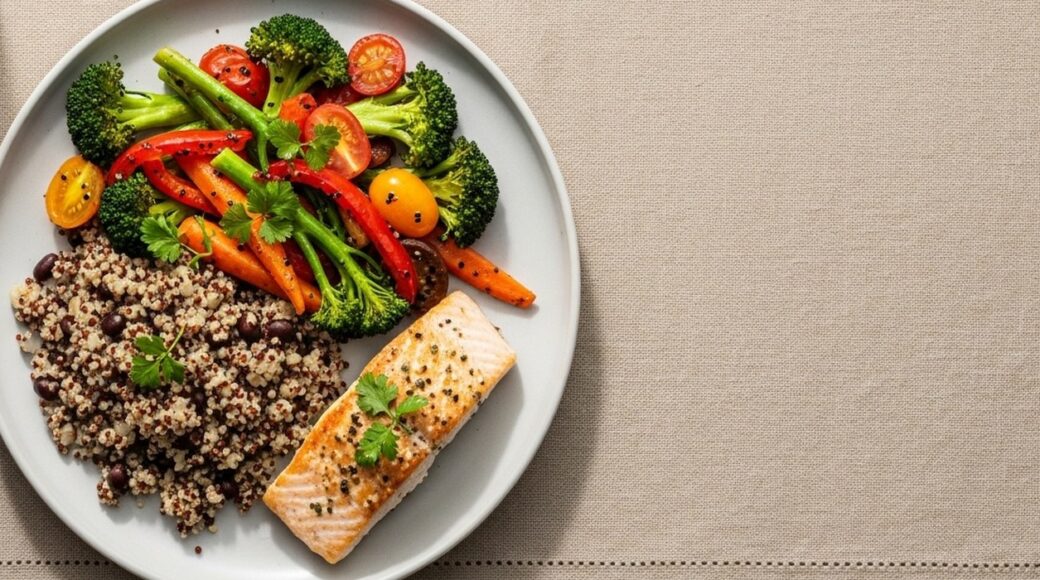
If your stomach starts growling an hour after lunch, you’re not imagining it and you’re not short on willpower. Managing hunger between meals comes down to a handful of predictable factors: what you ate, how much protein and fiber it contained, and how your blood sugar responded afterward. Most between-meal cravings aren’t a character flaw – they’re your body asking for something specific, usually protein, fiber, or both. In this guide, you’ll learn what actually drives hunger between meals, which foods keep you satisfied the longest, and seven practical habits you can start using at your very next meal. By the end, you’ll have a simple framework that holds up on busy days, without obsessing over willpower or counting every bite.
What’s Really Behind Hunger Between Meals
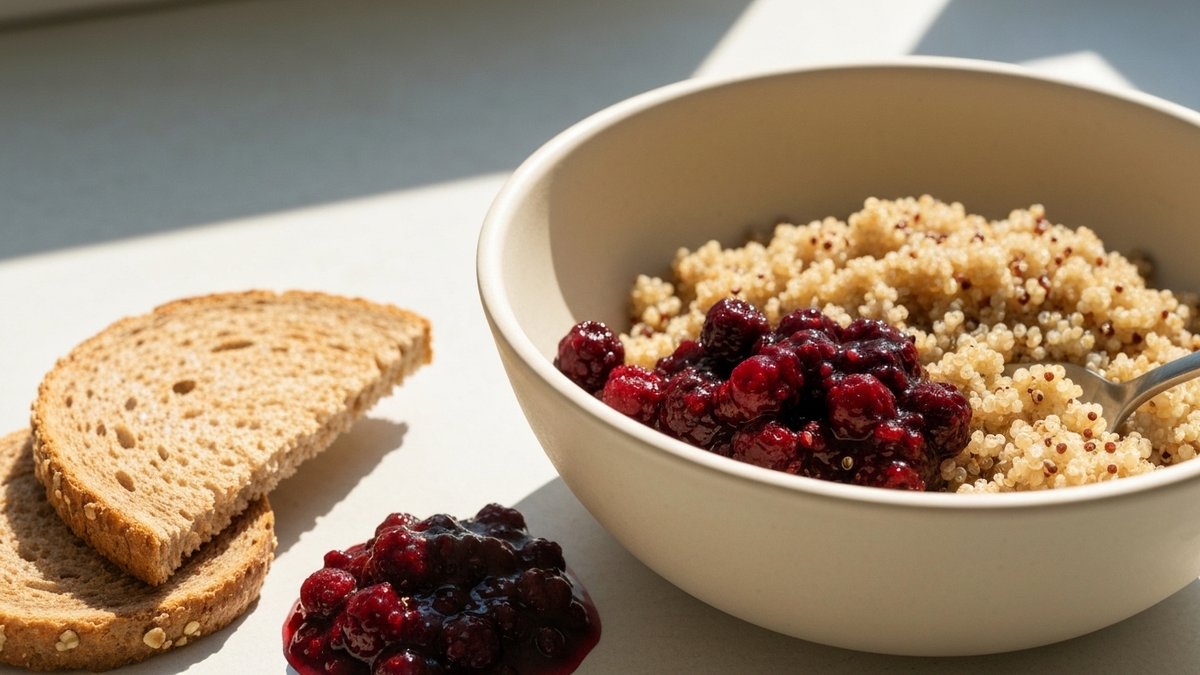
Hunger isn’t just an empty-stomach signal. It’s driven largely by ghrelin, a hormone that rises before a meal and should fall after you eat – and by how steady your blood sugar stays in the hours afterward. A meal built mostly from refined carbohydrates, like white toast and jam or a bagel with juice, spikes blood sugar quickly. Insulin then clears that sugar fast, blood sugar dips, and ghrelin climbs again – often within 60 to 90 minutes. That’s the biology behind managing hunger between meals: it’s less about how much you ate and more about how your body processed it.
A meal that pairs protein, fiber, and some fat slows this whole process down. Digestion takes longer, blood sugar rises and falls more gradually, and ghrelin stays suppressed for 3 to 4 hours instead of 1. This is the same logic behind the classic healthy-plate model: half the plate in vegetables, a quarter in protein, a quarter in whole grains or starchy vegetables. It’s not a diet rule so much as a blueprint for a meal that actually lasts, and it’s the simplest starting point for staying full without extra tracking.
Sleep and stress matter too. Short sleep raises ghrelin and lowers leptin, the hormone that signals fullness, which is part of why a rough night often means snack cravings the next afternoon. Stress works on a similar loop – cortisol can nudge appetite upward, especially for quick-energy foods. None of this means hunger between meals is purely mental – the hormones are real – but meal composition is the lever you can pull today, and it’s the one most people overlook when they’re focused only on portion size.
It also helps to notice the difference between true hunger and habit-driven eating. True hunger between meals builds gradually and responds to a real meal or snack. Habit-driven eating – reaching for something at your desk at 3 p.m. out of routine or boredom – often fades on its own if you wait ten minutes or drink some water first. Learning to tell the two apart is a quiet but useful skill long-term.
Protein, Fiber, and Fat: The Fullness Trio
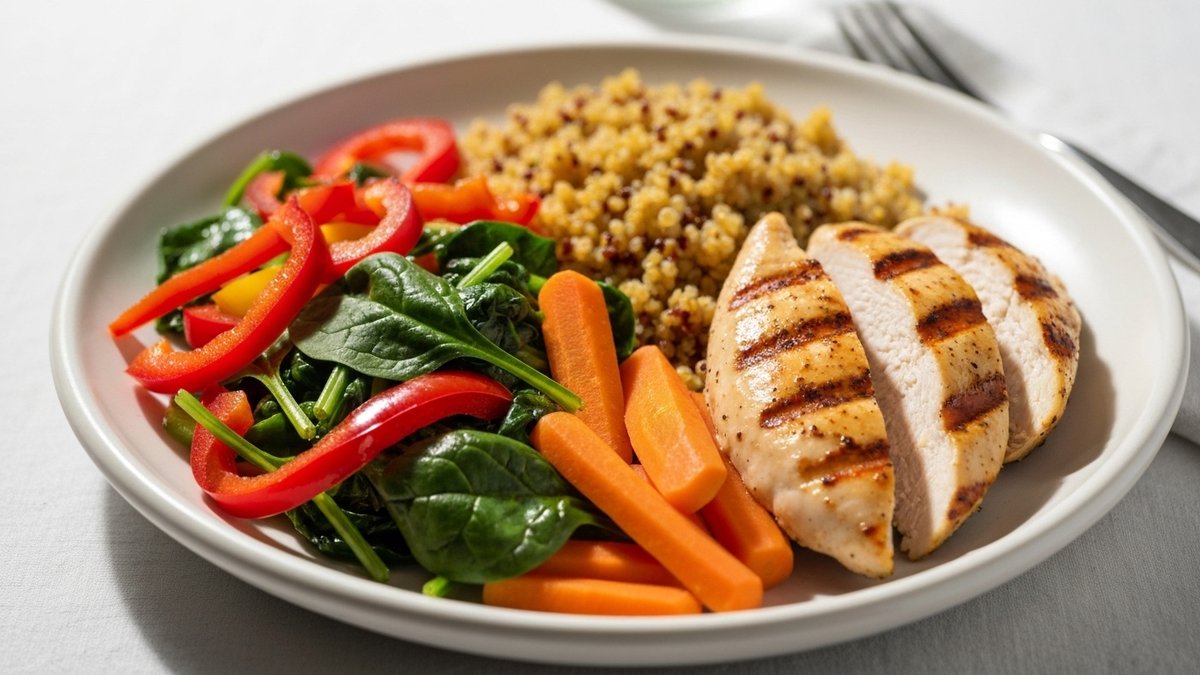
Three nutrients do most of the work when it comes to staying full: protein, fiber, and fat. Each slows digestion and blunts the blood sugar swing in a slightly different way, and combining them is more effective than relying on any one alone.
- Protein: chicken, fish, eggs, Greek yogurt, tofu, lentils, cottage cheese – the most filling macronutrient gram for gram, according to research summarized by the Harvard T.H. Chan School of Public Health
- Fiber: vegetables, beans, oats, berries, chia seeds – adds bulk and slows stomach emptying
- Healthy fat: olive oil, avocado, nuts, seeds – further slows digestion and improves satisfaction with a meal
- Water-rich foods: cucumber, tomatoes, melon, soups – add volume without many calories, which helps you feel physically full
A lunch of grilled chicken, a big salad with olive oil dressing, and a small serving of quinoa hits all three categories. A lunch of a plain white-bread sandwich with just cheese and mayo hits none of them – and it’s a near-guarantee you’ll be hunting for a snack by 3 p.m. The goal here isn’t eating less; it’s building meals where protein, fiber, and fat all show up together.
Breakfast is worth a second look here, since it sets the tone for hunger between meals the rest of the day. A pastry or sugary cereal alone tends to wear off by mid-morning, while eggs with vegetables, or oatmeal with nut butter and berries, tends to carry you comfortably to lunch. The same pattern – protein and fiber together, fat in a supporting role – works whether it’s 7 a.m. or 7 p.m.
7 Habits That Keep Hunger Between Meals in Check
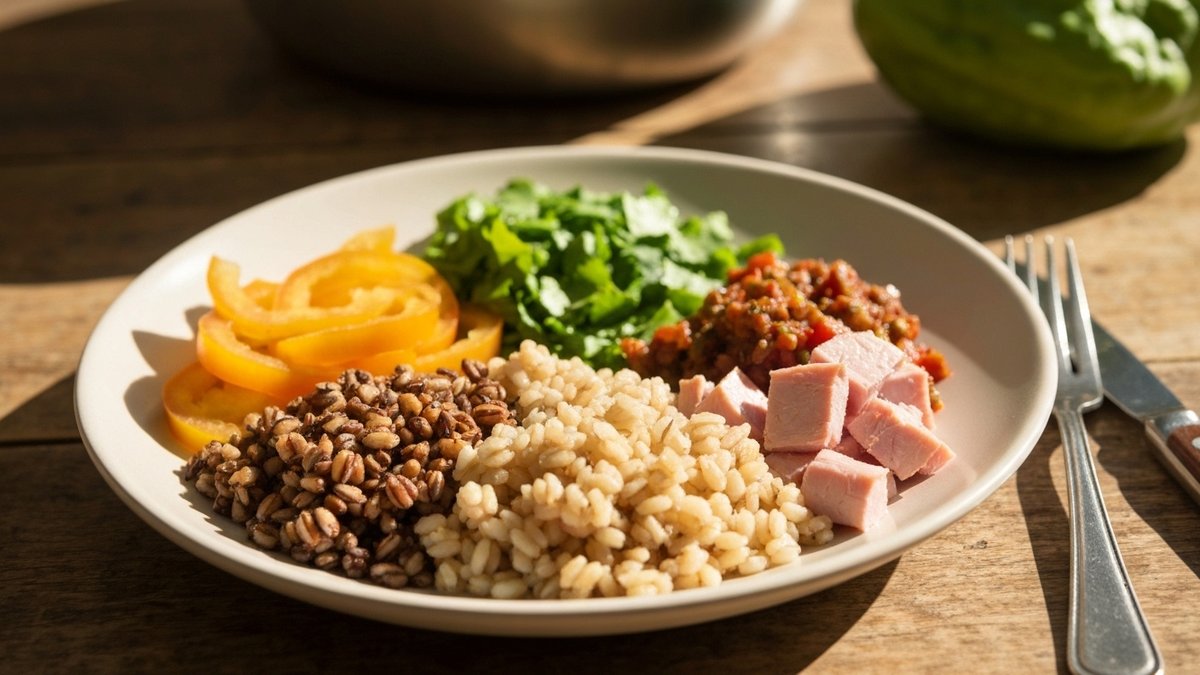
These are small, repeatable habits – not a strict plan – that make hunger between meals easier to manage, without extra tracking or willpower.
- Anchor every meal with a protein source first. Decide on your protein before anything else on the plate, then build the rest around it.
- Add a fiber-rich food to every meal, not just dinner. A side salad at lunch or berries at breakfast counts.
- Don’t fear fat at meals. A drizzle of olive oil or a quarter of an avocado slows digestion and helps you stay satisfied longer.
- Front-load water before deciding you need a snack. Mild dehydration mimics hunger more often than people expect.
- Keep a protein-plus-fiber snack on hand for genuine gaps. Apple with peanut butter or yogurt with nuts beats crackers alone.
- Watch the gap between waking and your first meal. Skipping breakfast often sets up a bigger blood sugar swing later in the day.
- Protect your sleep. Even one short night measurably raises next-day hunger signals, according to sleep-and-appetite research cited by the NHS.
These habits matter even more during a transition period, like adjusting to habits that help after stopping a GLP-1 medication, when hunger cues can return unpredictably and a reliable meal structure gives you something steady to fall back on. None of these seven habits require special products or strict counting – they’re small adjustments to meals you’re probably already eating, aimed squarely at making hunger between meals less frequent and less urgent.
How a Portion Plate Makes This Automatic
Reading about protein-fiber-fat ratios is one thing; putting that balance onto an actual plate, meal after meal, is another. This is where a physical guide helps more than another rule to remember. A pre-divided plate marks out the same proportions behind the fullness science above – roughly half vegetables, a quarter protein, a quarter whole grains or starchy vegetables – so you don’t have to eyeball it or do math at every meal.
Over time, that visual cue becomes a habit on its own. You stop wondering whether a meal has enough protein or fiber, because the sections on the plate already answer that question. If managing hunger between meals has felt like a constant background calculation, the portion-control plate takes the guesswork out of it – you fill the sections, and the balance that keeps you full for hours comes along automatically.
FAQ: Managing Hunger Between Meals
What causes hunger between meals if I just ate?
It’s usually meal composition, not timing. A meal heavy in refined carbs digests fast and leaves your blood sugar – and your hunger hormone ghrelin – swinging within an hour or two. A meal with enough protein, fiber, and fat digests slower and holds you steady for 3-4 hours instead.
How much protein do I need to stay full between meals?
Aim for roughly 25-30 grams of protein per meal – about a palm-sized portion of chicken, fish, tofu, or legumes. Protein is the most filling macronutrient gram for gram, and spreading it evenly across meals works better for hunger control than saving it all for dinner.
Are cravings between meals a sign of low blood sugar?
Sometimes. A sharp craving for something sweet an hour or two after eating – especially paired with shakiness or trouble focusing – often points to a blood sugar dip following a carb-heavy meal. Pairing carbs with protein and fiber next time usually smooths that curve out.
What’s the best snack to manage hunger between meals?
Look for a snack that pairs a carbohydrate with protein or fat: apple slices with peanut butter, Greek yogurt with berries, or a handful of nuts with fruit. The combination slows digestion and keeps you satisfied far longer than fruit or crackers alone.
Does drinking water help with hunger between meals?
It can. Mild dehydration produces sensations that feel a lot like hunger, and a glass of water before assuming you need a snack is a simple first check. It won’t replace a genuinely under-fueled meal, but it rules out a common false alarm.
Key Takeaways
- Hunger between meals is driven by meal composition, not timing
- Protein, fiber, and fat together slow digestion best
- Aim for about 25-30g protein at every meal
- Water and sleep both influence hunger signals
- A pre-portioned plate makes balance automatic
Still guessing your way through portion sizes at every meal? Managing hunger between meals gets a lot simpler with a pre-divided plate that keeps the protein-fiber-fat balance built in. Try a visual portion-control method and let the plate do the planning.